Mold Inspection & Testing in Boston
Unseen mold growth can silently degrade indoor air quality, compromise structural components, and create compliance liabilities before any visible colonies appear. Water Mold Fire Restoration of Boston provides scientific mold inspection, air quality sampling, and laboratory testing services for residential homes, historic estate properties, multi-family triple-deckers, and commercial buildings across Greater Boston.
Our certified environmental inspectors perform thorough visual diagnostics, structural moisture mapping, relative humidity monitoring, ambient air sampling, and direct surface testing. We locate hidden water defects and determine exact airborne spore concentrations to help you understand the health of your indoor environment.
Whether you are a property buyer evaluating a classic brick brownstone in the South End, a landlord navigating tenant concerns under the Massachusetts State Sanitary Code in Roxbury or Dorchester, or a building manager in Downtown Boston, we deliver independent, scientifically backed testing data to protect your real estate investments.
When to Schedule a Mold Inspection in Boston
Fungal spores are microscopic and naturally present in the air, but they amplify dramatically when they settle into damp, unventilated spaces. Visual identification alone is often insufficient, as mold frequently grows behind plaster coats, under floorboards, or inside ceiling voids after historic water intrusion.
A professional assessment provides clear clarity during real estate sales, following unresolved plumbing leaks, or when dealing with complex tenant-landlord property disputes.
We highly recommend professional mold testing in the following situations:
- Purchasing an older Boston property with a history of basement dampness
- Following a major water event, such as a frozen pipe burst or winter roof leak
- Detecting a chronic, sour, or musty odor with no obvious visual source
- Occupants experiencing recurring unexplained headaches, sneezing, or respiratory irritation
- Evaluating properties with old fieldstone or brick foundations prone to groundwater seepage
- Validating tenant air quality concerns under local municipal housing codes
- Verifying that a mold cleanup project was completely successful with post-clearance testing
- Following structural ice dam remediation to check for hidden attic water intrusion
Our Comprehensive Mold Testing Protocol
We approach mold testing with strict scientific precision, utilizing advanced diagnostic tools and independent laboratory testing to ensure accurate reporting.
Detailed Visual Assessment
Our certified inspectors examine the entire structure from cellar to attic, focusing on known vulnerabilities like cold exterior wall cavities, roof line valleys, structural rim joists, and porous masonry foundations.
Advanced Moisture Mapping
We use non-destructive digital moisture meters and infrared thermal imaging cameras to scan plaster, drywall, and wood assemblies, locating hidden reservoirs of water and cold thermal spots where mold can grow.
Indoor Air Quality (IAQ) Sampling
We collect precise air volume samples using calibrated spore traps within affected indoor areas. We also take an outdoor baseline sample to compare indoor spore counts against natural, regional ambient conditions.
Direct Surface Sampling
When visible discoloration or suspicious texturing is discovered, we perform direct tape-lifts or swab samples to identify the exact genus of the mold colony and confirm active fungal amplification.
Independent Laboratory Analysis
All gathered air and surface samples are delivered to an accredited independent laboratory. Professional mycologists analyze the samples to catalog spore types, total concentrations, and raw particle counts.
Comprehensive Environmental Reporting
You receive a detailed digital report containing all raw laboratory data, moisture maps, and photographic logs. It also includes an objective summary detailing any hidden issues along with clear, actionable recommendations for remediation if necessary.
Structural Vulnerabilities and Fungal Risks in Boston Buildings
Boston's beautiful, historic architecture possesses distinctive structural traits that require a specialized approach to environmental testing. Traditional brick and mortar brownstones found across Back Bay, Beacon Hill, and Charlestown frequently utilize multi-layer masonry envelopes. These masonry systems can trap water behind structural plaster layers if exterior brickwork is not maintained, feeding hidden mold growth out of sight.
Classic wood-frame triple-deckers in neighborhoods like Dorchester, Jamaica Plain, Allston, and South Boston often feature multi-tenant utility shafts and shared service stacks. Slow, hidden plumbing leaks inside these central service bays can go unnoticed for months, allowing mold to spread across multiple floors.
Additionally, regional soil types and coastal water tables often lead to high hydro-static pressure against porous fieldstone cellars. This pressure drives sub-surface moisture into lower crawl spaces and basements, which can then rise into upper living areas via the "stack effect." Our specialized testing protocols are designed to detect these unique regional conditions and pinpoint hidden moisture issues.
Commercial Mold Inspection and Environmental Testing
Maintaining exceptional indoor air quality is vital for commercial operators, educational institutions, property management firms, and healthcare facilities. Water Mold Fire Restoration of Boston provides specialized commercial mold testing and indoor air quality diagnostics designed to safeguard commercial spaces, maintain strict regulatory compliance, and limit property liabilities.
We provide clear, objective testing data for multi-family residential complexes, historical office towers, retail buildings, and institutional spaces across Greater Boston.
Commercial inspection services include:
- Multi-unit apartment building environmental testing
- Commercial HVAC system and indoor air duct inspection
- Industrial building moisture diagnostics and thermal mapping
- Institutional indoor air quality (IAQ) sampling matrices
- Post-remediation clearance verification and reporting
- Independent legal documentation for insurance and real estate disputes
Professional Solutions Following a Positive Test
If our lab analysis confirms elevated indoor spore counts or active mold growth, the underlying moisture problem must be corrected alongside safe physical removal of the mold. Our local branch offers seamless, certified mold remediation services tailored to safe contaminant extraction.
Because most fungal growth follows water intrusion, we also provide emergency water damage restoration services across Boston to dry properties thoroughly and protect structural components.
Serving Boston and Surrounding Neighborhoods
We provide professional mold inspection and air testing services throughout Greater Boston, including:
- Back Bay
- Beacon Hill
- South End
- North End
- Charlestown
- South Boston
- Dorchester
- Roxbury
- Jamaica Plain
- Allston
- Brighton
- East Boston
Frequently Asked Questions
A professional mold inspection includes a comprehensive top-to-bottom visual assessment, digital moisture mapping, thermal imaging scans, and ambient air or direct surface sampling. All samples are analyzed by an independent accredited laboratory.
We use calibrated vacuum pumps and specialized spore-trap cassettes to collect precise volumes of indoor air. These samples capture airborne mold spores, which are then analyzed and cataloged under a microscope by an independent laboratory.
Over-the-counter DIY kits simply settle spores onto a petri dish without measuring total air volume or analyzing ambient conditions. Because mold spores exist naturally outdoors, these kits almost always grow mold, failing to provide the data needed to determine if an active indoor mold problem exists.
Standard laboratory processing and final environmental report generation typically take 2 to 3 business days following the completion of on-site inspection and sample collection.
Yes. If water enters a wall cavity from an ice dam or plumbing leak, mold will grow on the paper backing of drywall or on historical wall wood lath, remaining completely hidden from view while releasing spores into the living spaces.
Contact Water Mold Fire Restoration of Boston
If you need an independent, certified mold inspection, indoor air quality test, or historic property moisture analysis, contact our Boston office today to schedule an inspector.
 IICRC Certified Firm
 Satisfaction Guaranteed!
 24/7 Emergency Service
 Expert Technicians
 Direct Insurance Billing
 Unsurpassed Customer Service
 No Damage We Can’t Manage!
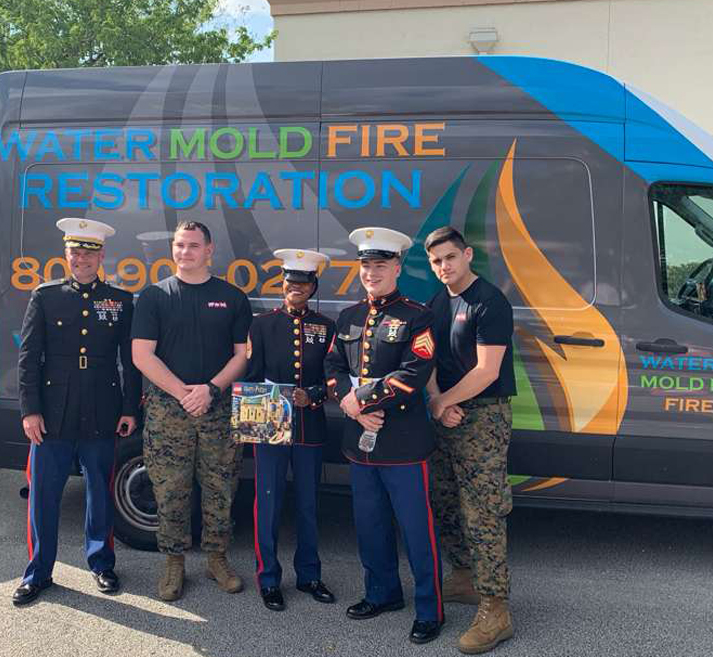
 Community & Military Support