24/7 Fire & Smoke Damage Restoration in Fort Lauderdale
A fire doesn't stop being a fire once the trucks leave. The structural damage is the obvious part; the harder part is everything the fire left behind thousands of gallons of firefighting water soaking drywall and flooring, acidic soot embedded in every porous surface, smoke odor migrating through the HVAC system into rooms that never touched flame, and a clock that's already started on secondary mold growth in this climate. Water Mold Fire Restoration of Fort Lauderdale handles all of it, in the right sequence: emergency board-up first, water mitigation second, soot and smoke cleaning third, odor neutralization, content restoration, and full reconstruction back to pre-loss condition. Our crews follow the IICRC S700 Standard for Professional Fire and Smoke Damage Restoration and dispatch 24/7 from our facility on NW 36th Avenue.
Why Fort Lauderdale Fires Need a Specialized Restoration Approach
Fort Lauderdale fires have characteristics that inland Midwest or Northeast losses simply do not. Our local crews are built around these conditions:
- Florida is the lightning capital of the United States. Central and South Florida see more cloud-to-ground lightning per square mile than anywhere else in the country, and Fort Lauderdale sits squarely in that corridor. We respond to attic ignitions, HVAC condenser strikes and in-wall electrical fires triggered by lightning every summer storm season.
- Hurricane-season ignition sources. When power goes out during named storms, candle fires, generator misuse, and ignition from downed conductors all spike. We saw a surge of these losses across Broward County during Hurricane Irma in 2017 and still see them after every tropical-storm-strength event.
- High-density condominium smoke migration. Fort Lauderdale has one of the largest condominium markets in Florida the Galt Ocean Mile, downtown high-rises, the Las Olas corridor and the Intracoastal corridor are dense with shared-wall, shared-HVAC-stack buildings. A fire in one unit routinely deposits smoke residue into 8–20 neighboring units. We handle multi-unit smoke restoration and coordinate with HOAs and property management.
- Marine and dockside fire losses. Fort Lauderdale is the yachting capital of the United States, with thousands of vessels docked along the New River, the Intracoastal and at Port Everglades. Engine-room, galley and shore-power-related fires on boats produce some of the most difficult smoke residue we encounter oily, dense and highly corrosive in salt air.
- Salt air accelerates soot corrosion. On coastal properties east of US-1, the combination of fire soot (already acidic) and humid salt air begins corroding electronics, fixtures, appliances and metal trim within hours. Stabilizing and cleaning these surfaces quickly is the difference between restoration and replacement.
- Humidity-driven secondary damage. Firefighting water plus 75%+ ambient humidity is an open invitation for mold growth on wet, smoke-saturated framing and drywall. Every fire job we run in Fort Lauderdale includes aggressive drying alongside the cleaning scope otherwise the mold claim arrives 30 days later.
Our Fire Damage Restoration Process
Every fire job we run in Fort Lauderdale follows the IICRC S700 framework. The exact scope varies with the size of the fire, the type of fuel that burned, and how the building was ventilated during and after the event, but the sequence is consistent.
- Emergency stabilization (Hour 1–24). Site safety walkthrough with the property owner and (where relevant) the fire marshal, structural board-up of openings, roof tarping over burn-throughs, and securing the property against weather and unauthorized entry.
- Firefighting water mitigation (Hours 1–72). Modern interior structure fires are extinguished with thousands of gallons of water. We extract, dry and dehumidify the affected areas immediately this prevents the mold problem that otherwise follows every fire in Fort Lauderdale's climate.
- Soot and smoke residue removal. We identify the smoke type (dry, wet, protein, or fuel-based) and match the cleaning method to it. Dry vacuuming, chemical sponges, solvent and detergent cleaning, soda blasting and dry-ice blasting all have their place using the wrong method embeds soot permanently.
- HVAC decontamination. Air handlers, returns, supply trunks, branch ducts and registers all hold smoke residue and odor. We HEPA-vacuum and chemically clean the system before any new air movement so the cleaned home does not re-contaminate itself.
- Smoke odor neutralization. Surface cleaning alone does not remove odor. We use a combination of thermal fogging, hydroxyl generators and (where appropriate) ozone treatment to break down odor compounds at the molecular level. The right modality depends on the smoke type and what materials remain.
- Content pack-out and restoration. Salvageable contents are inventoried, packed out and cleaned off-site in our facility. Electronics, fine art, textiles and documents each have their own restoration tracks.
- Reconstruction. Framing repair, drywall, insulation, flooring, cabinetry, electrical, paint and finish carpentry are all performed in-house. One project manager, one Broward County permit cycle, one final walkthrough.
The Types of Smoke We Clean
Not all smoke residue behaves the same. The fuel that burned determines how the smoke deposits and how it has to be cleaned:
- Dry smoke. High-temperature, fast-burning fires (paper, wood, natural fibers) leave a dry, powdery residue that responds well to vacuuming and dry sponge cleaning. The easiest smoke type to address.
- Wet smoke. Low-temperature, smoldering fires involving plastics, rubber, synthetic upholstery or roofing materials leave a dense, sticky, smeary residue. Wet smoke is the most difficult residue to clean and the most likely to require material removal rather than surface restoration.
- Protein smoke. Kitchen fires (especially grease and protein-based foods) leave an almost invisible residue that nonetheless carries a powerful and pervasive odor. Protein residue requires specialized degreasing chemistry and often full HVAC cleaning even on small-scope losses.
- Fuel oil & petroleum smoke. Less common in Fort Lauderdale (most homes are electric or natural gas), but vehicle, boat-engine and generator fires produce dense, oily residues that demand aggressive solvent cleaning and material replacement.
Smoke Odor Removal in Fort Lauderdale Homes
The single most common complaint we hear from Fort Lauderdale homeowners weeks after a fire is "everything looks fine, but I still smell smoke." That's because smoke odor compounds embed in porous materials drywall paper, upholstery, carpet pad, grout, painted wood and continue to off-gas for months. Surface cleaning addresses only what is visible. Real odor removal requires breaking down the odor molecule itself.
Depending on the loss, our technicians use thermal fogging (a petroleum-distillate fog that penetrates the same pathways smoke took), hydroxyl generation (safe for occupied spaces and effective against organic odor compounds), and ozone treatment (powerful, best for unoccupied spaces and concentrated odor sources). We typically combine modalities one tool rarely handles a whole-house odor scope on its own.
Florida Fire Insurance & ALE Coverage
Fire is a named peril on virtually every Florida HO-3 policy and is one of the most reliably covered losses in homeowners insurance. Most policies include three buckets of coverage that come into play after a fire: structural repair (Coverage A), personal property (Coverage C), and Additional Living Expenses (Coverage D / ALE) for hotel, rental and meal costs while you cannot live in the property. We document the loss thoroughly from the first hour on site, work directly with your adjuster and all major Florida carriers (including Citizens), and can coordinate pack-out, temporary housing and contents inventory as part of the same claim file.
Where We Respond to Fire Damage in Fort Lauderdale
Our fire and smoke restoration crews respond throughout Fort Lauderdale and the surrounding Broward communities including Las Olas Isles, Rio Vista, Victoria Park, Coral Ridge, Harbor Beach, Bay Colony, the Galt Ocean Mile, Sailboat Bend, Flagler Village, Progresso, downtown high-rises and condo buildings along the Intracoastal plus Wilton Manors, Oakland Park, Lauderdale-by-the-Sea, Pompano Beach, Plantation, Davie, Sunrise, Tamarac and Hollywood. We also handle marine fire losses along the New River, the Intracoastal Waterway and Port Everglades.
Fort Lauderdale Fire Damage Restoration FAQs
Our Fort Lauderdale crews dispatch 24/7 from our NW 36th Avenue facility and target an on-site arrival of 60 minutes or less for emergency calls across Broward County. For active scenes, we coordinate with Fort Lauderdale Fire Rescue and the property owner's insurance carrier before any cleaning begins and we can have an emergency board-up and roof tarp crew on site while the structure cools.
No. Soot is acidic, oily and abrasive. Wiping it with household cleaners or a damp cloth will embed it permanently into porous surfaces drywall, painted wood, fabric, carpet and turn a cleanable surface into one that has to be removed. The same goes for HVAC systems: running the air conditioning after a fire pulls smoke residue into every room of the home. Turn the HVAC off, leave the soot alone, and call us.
Fire is a named peril on virtually every Florida HO-3 policy and one of the most reliably covered losses in homeowners insurance. Your policy generally pays for structural repair, contents replacement and Additional Living Expenses (ALE) while you are displaced from the property. We document the loss thoroughly, work directly with your adjuster and major Florida carriers (including Citizens), and can coordinate temporary housing and pack-out as part of the claim.
Emergency stabilization (board-up, water extraction, soot containment) happens in the first 24 to 72 hours. Cleaning, deodorization and content pack-out typically run 1 to 3 weeks depending on the extent of smoke migration. Reconstruction is the longest phase small kitchen fires might rebuild in 2 to 4 weeks, while substantial structural losses can take 3 to 6 months given Fort Lauderdale's material lead times and Broward County permit cycles.
Smoke moves with airflow and temperature differentials. In a Fort Lauderdale home where the A/C runs nearly year-round, the HVAC system redistributes smoke particulates and odor compounds through every duct, register and air handler in the building within minutes. Smoke also penetrates porous materials drywall, fabric, wood, grout and continues to off-gas for weeks or months afterward.
Yes. Florida is the lightning capital of the United States and Fort Lauderdale sits in one of the most strike-dense corridors in the state. Lightning strikes can ignite attic fires, fry HVAC condensers and air handlers, and cause electrical fires inside wall cavities. We respond to lightning and electrical fire losses regularly and coordinate with licensed electricians during reconstruction.
Call Fort Lauderdale's Fire & Smoke Damage Restoration Team
Water Mold Fire Restoration of Fort Lauderdale5400 NW 36th Ave, Suite A
Fort Lauderdale, FL 33309
954-800-0801 · 24/7 Emergency Service
Active fire, recent fire, or a unit upstairs that just burned and smoked yours out? Call 954-800-0801 and a crew will be on the way before the structure has finished cooling.
← Back to all Fort Lauderdale restoration services
 IICRC Certified Firm
 Satisfaction Guaranteed!
 24/7 Emergency Service
 Expert Technicians
 Direct Insurance Billing
 Unsurpassed Customer Service
 No Damage We Can’t Manage!
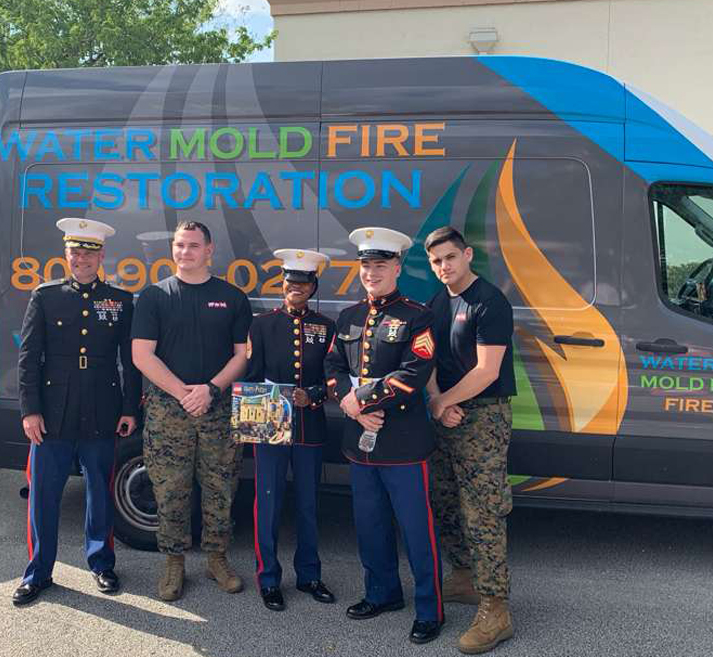
 Community & Military Support