24/7 Fire Damage Restoration, Smoke & Odor Removal in Minneapolis
A fire in Minneapolis doesn't stop being a fire once the trucks leave. The structural damage is the obvious part; the harder part is everything the fire left behind — thousands of gallons of firefighting water soaking plaster walls and hardwood floors, acidic soot embedded in porous surfaces, smoke odor migrating through HVAC chases and party walls into neighboring units of a Northeast Minneapolis duplex or downtown condo, and a clock that has already started on secondary mold growth in the wet framing and drywall. Water Mold Fire Restoration of Minneapolis handles all of it, in the right sequence: board-up first, water mitigation second, soot and smoke cleaning third, odor neutralization, content restoration, full reconstruction. Our crews are IICRC Firm Certified, follow the IICRC S700 industry standard for fire and smoke damage restoration, and dispatch 24/7 from our facility on Central Avenue NE in Northeast Minneapolis.
Why Twin Cities Fires Need a Specialized Restoration Approach
Minneapolis fires have characteristics that warm-weather and year-round mild-climate losses simply do not. Our crews are built around these conditions:
- Heating-season ignition sources (Oct–Apr). Twin Cities residential fire volume peaks every winter, and the Minneapolis heating season runs longer than Chicago's — from late October through early April. Polar vortex cold (late January 2019, February 2021, January 2024) drives sustained furnace operation, sharply increased space heater use, dryer-vent buildup from heavy fabric loads, and holiday-season candles and decorative lighting. Wood-burning stoves and fireplace use add another increment in older Northeast Minneapolis duplexes, South Minneapolis bungalows, Saint Paul Victorians and lake cabins across the metro.
- Vintage knob-and-tube and ungrounded wiring. Twin Cities pre-1940 housing stock — Northeast Minneapolis duplexes and triplexes, South Minneapolis bungalows, American Foursquares across both cities, Saint Paul Victorians in Summit Hill and Macalester-Groveland, Crocus Hill rowhouses — was originally wired with knob-and-tube electrical systems. Many buildings have been partially upgraded to modern Romex or conduit, but pockets of original knob-and-tube remain in attics, behind walls and in ceiling boxes citywide. Splices in junction boxes degrade over a century of thermal cycling and become arcing-fault ignition sources.
- Northeast Minneapolis duplex & triplex cross-unit smoke contamination. Northeast Minneapolis's distinctive duplex and triplex stock shares interior connecting stairs, common HVAC chases, party walls and (in many buildings) shared utility rooms. A fire in the garden unit deposits smoke residue into the first and second floors through these shared paths within minutes. We work multi-unit cross-contamination scenarios regularly and coordinate between owners, property managers and condo associations.
- Downtown high-rise condo & Mill District loft smoke migration. Downtown Minneapolis, the North Loop, the Mill District and downtown Saint Paul condo stock all see cross-unit smoke contamination through shared HVAC stacks, common corridors and stairwell pressurization. A single-unit fire routinely deposits smoke residue into multiple neighboring units. Cross-unit cleanup, HOA coordination and freight-elevator scheduling become as critical as the actual cleaning. Mill District loft conversions in century-old brick-and-timber flour mills hold smoke residue differently than modern construction and require modified cleaning chemistries.
- Wood-burning stoves & fireplace fires. Older Twin Cities housing stock and the lake-cabin inventory ringing Minnetonka, White Bear Lake and Forest Lake all carry wood-burning heating sources that produce a steady baseline of chimney fires, creosote ignitions, hearth burnouts and stovepipe failures. We handle these alongside the broader heating-season fire category.
- Kitchen and protein fires. Year-round category, but the Twin Cities' dense restaurant scene (Northeast Minneapolis, North Loop, Uptown, Eat Street, downtown Saint Paul) produces a steady stream of commercial-kitchen fire calls alongside the residential Thanksgiving-and-holiday-season volume. Protein-fire smoke is invisible and pervasive and requires specialized degreasing chemistry.
- Lake cabin fires. Cabins around Lake Minnetonka, White Bear Lake, Forest Lake, the Brainerd Lakes corridor and smaller suburban lakes are a recurring seasonal category. Wood-burning stoves, fireplace inserts, propane heaters and original-era electrical systems in older cabin stock are all ignition sources. Many cabins are unoccupied much of the year, which extends discovery time and produces larger losses.
- Firefighting water + mold risk. Fire suppression releases thousands of gallons of water that soaks framing, drywall, insulation, hardwood floors and plaster walls. In Twin Cities vintage construction with thick plaster and dense framing — and in cold ambient temperatures that slow evaporation — that water doesn't dry out passively. Every Minneapolis fire job includes aggressive drying alongside the cleaning scope, often with supplemental heat in winter conditions, to prevent the mold problem that otherwise follows on a 48-72 hour clock.
Our Fire Damage Restoration Process
- Emergency stabilization (Hour 1-24). Site safety walkthrough, board-up of openings, roof tarping over burn-throughs, securing the property against Minneapolis winter weather exposure.
- Firefighting water mitigation (Hours 1-72). Extract, dry and dehumidify affected areas to prevent the mold problem that otherwise follows every fire. Winter jobs add supplemental heat to support evaporation in cold ambient conditions.
- Soot and smoke residue removal. Smoke type identification (dry, wet, protein, fuel-based) drives the cleaning method.
- HVAC decontamination. Air handlers, returns, supply trunks and registers — critical in Northeast Minneapolis duplexes and downtown condos where smoke travels through shared HVAC paths.
- Smoke odor neutralization. Thermal fogging, hydroxyl generators, ozone treatment.
- Content pack-out. Salvageable contents inventoried, packed out, cleaned off-site.
- Reconstruction. Framing, drywall, plaster repair, insulation, hardwood floor refinishing, cabinetry, electrical, paint and finish carpentry, coordinated with licensed Twin Cities trade subcontractors and properly permitted through the relevant city building department.
The Types of Smoke We Clean
- Dry smoke. High-temperature, fast-burning fires (paper, wood, electrical attic fires). Powdery residue. Easiest to clean.
- Wet smoke. Smoldering fires with plastics, rubber, synthetic upholstery, roofing materials. Dense, sticky, smeary residue. Hardest to clean.
- Protein smoke. Kitchen fires (grease, protein-based foods). Invisible residue, pervasive odor. Specialized degreasing chemistry required.
- Fuel oil & petroleum smoke. Furnace, water heater, oil-tank and generator fires. Oily residues, aggressive solvent cleaning.
- Creosote & wood-stove smoke. Wood-burning stove and fireplace fires. Dense, oily, deeply-staining residue that penetrates plaster and grout.
Smoke Odor Removal in Twin Cities Homes
The most common complaint we hear from Minneapolis homeowners weeks after a fire is "everything looks fine, but I still smell smoke." Smoke odor compounds embed in porous materials and continue to off-gas for months. Surface cleaning addresses only what's visible. Real odor removal requires breaking down the odor molecule itself — thermal fogging, hydroxyl generation, ozone treatment. We typically combine modalities because one tool rarely handles a whole-house or whole-unit odor scope on its own. Vintage Twin Cities plaster walls, original wood subfloors and the dense framing of Northeast Minneapolis duplexes and South Minneapolis bungalows hold smoke odor especially stubbornly and benefit from extended hydroxyl treatment cycles.
Minnesota Fire Insurance & ALE Coverage
Fire is a named peril on virtually every Minnesota HO-3 policy. Most policies include structural repair (Coverage A), personal property (Coverage C) and Additional Living Expenses (Coverage D / ALE) for hotel, rental and meal costs while you cannot live in the property. Minnesota insurance market conditions are stable — no hurricane-driven carrier exodus, consistent rate structure across the major carriers — and standard homeowners fire coverage remains intact. We work with all the major Minnesota carriers and coordinate directly with your adjuster.
Where We Respond to Fire Damage in the Twin Cities
All of Minneapolis (Northeast, Downtown, North Loop, Mill District, Loring Park, Uptown, Whittier, Lyn-Lake, Powderhorn, Phillips, Cedar-Riverside, U of M area, Como, Prospect Park, Seward, Longfellow, Nokomis, Linden Hills, Lake Harriet, Bde Maka Ska, Kenwood, Lowry Hill, Bryn Mawr, Camden, Near North, Folwell, the bungalow belt). All of Saint Paul (Summit Hill, Macalester-Groveland, Highland Park, Crocus Hill, Como, Frogtown, Saint Anthony Park, Hamline-Midway, the East Side). Suburban Edina, Saint Louis Park, Bloomington, Eden Prairie, Minnetonka, Wayzata, Plymouth, Maple Grove, Brooklyn Park, Roseville, Richfield, Eagan, Burnsville, Apple Valley, Woodbury, and lake-cabin properties around Lake Minnetonka, White Bear Lake and Forest Lake.
Minneapolis Fire Damage Restoration FAQs
60-minute target on-site arrival across the Twin Cities. We coordinate with the Minneapolis Fire Department, Saint Paul FD, Edina FD, Bloomington FD or the relevant suburban department before cleaning begins.
Heating-season ignition sources spike from late October through early April: sustained furnace operation, space heater use, dryer-vent buildup, wood-burning stoves and fireplaces, holiday-season candles, and stressed vintage knob-and-tube and ungrounded electrical systems in pre-WWII housing.
No. Soot is acidic, oily and abrasive. Wiping embeds it permanently. Running the furnace or air handler after a fire spreads residue — particularly dangerous in duplexes and condos with shared chases. Turn HVAC off, leave the soot alone, call us.
Fire is named peril on virtually every Minnesota HO-3 policy. Coverage typically includes structural, contents and ALE while displaced. Minnesota market conditions are stable.
Yes — one of our most frequent categories. Shared interior stairs, HVAC chases and party walls deposit smoke residue into neighboring units within minutes. We coordinate between owners, property managers and condo associations for multi-unit cleanup.
Yes. Lake Minnetonka, White Bear Lake, Forest Lake, the Brainerd Lakes corridor. Wood-burning stoves, fireplace inserts, propane heaters and original-era electrical are common ignition sources. We dispatch directly to cabin properties for stabilization, cleanup and reconstruction.
Stabilization 24-72 hours. Cleaning and deodorization 1-3 weeks. Reconstruction 2 weeks to 6 months depending on scope and Minneapolis or Saint Paul Department of Buildings permit timing.
Smoke moves through shared HVAC, stairwells, party-wall penetrations and gap leakage within minutes. Smoke compounds embed in porous materials and off-gas for weeks. HVAC decontamination plus active odor neutralization required at the building level.
Embeds in porous materials and off-gases for weeks/months. Real odor removal requires breaking down the odor molecule itself through thermal fogging, hydroxyl generation and ozone — typically in combination.
Call Minneapolis's Fire Damage, Smoke & Odor Removal Team
Water Mold Fire Restoration of Minneapolis1920 Central Avenue NE
Minneapolis, MN 55418
651-395-7036 · minneapolis@watermoldfire.net
24/7 Emergency Service
IICRC Firm Certified
Active fire, recent fire, duplex unit fire that smoked you out, kitchen fire, wood-stove or fireplace fire, or lake cabin fire anywhere in the Twin Cities? Call 651-395-7036 and a crew will be on the way before the structure has finished cooling.
← Back to all Minneapolis restoration services
 IICRC Certified Firm
 Satisfaction Guaranteed!
 24/7 Emergency Service
 Expert Technicians
 Direct Insurance Billing
 Unsurpassed Customer Service
 No Damage We Can’t Manage!
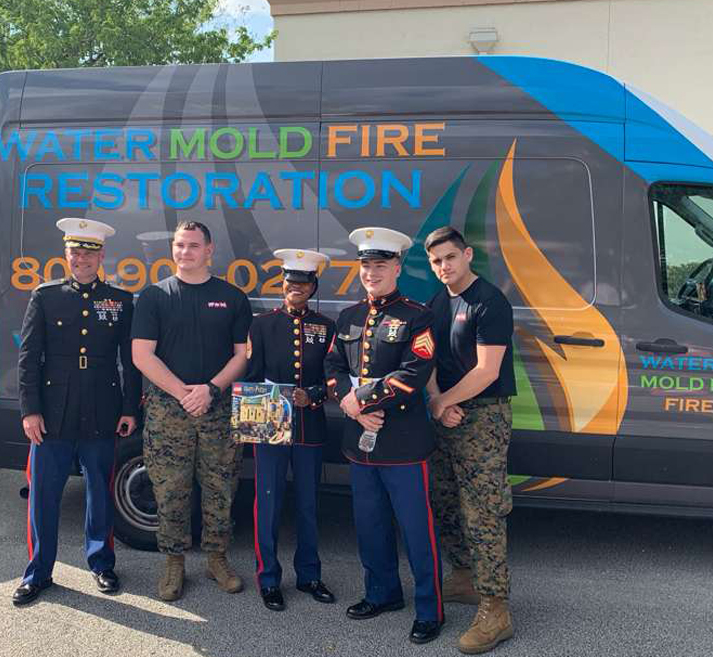
 Community & Military Support