
 24/7 Emergency Service
If you question whether or not you have a mold problem in your house, there are several common signs to watch out for and be aware of. The key to keeping your home free of a mold infestation is to keep moisture and humidity levels under control. Mold spores will always be present. They are so small that they can’t be seen with the naked eye. All that you can do is to control uncontained water and maintain humidity levels under 60 percent.
Signs of Mold in Your Home
If you or a family member has started experiencing allergic reactions that cannot be explained, especially if they occur only when you are in your home, a mold problem could be the reason. Some of the more common allergic reactions are coughing fits, sneezing, and a runny nose.
Often, when mold is growing in an area of your home, you will be able to detect its odor. Mold gives off a musty, earthy odor that you can often smell before you can actually see the mold. Don’t ignore any strange odors in your home. Attempt to discover the source of the odor.
Visibly seeing the mold is an indication also. It may seem silly to say that you can identify a mold problem by seeing it, but sometimes the growth is small enough that at first you don’t notice it for what it is. Mold can be colors that you wouldn’t necessarily expect it to be. Some molds are white and wispy, others are gray or greenish-blue. Not all molds are black in color.
If your home always has a damp feeling or has long-term moisture problems, mold growth could become an issue. Remember, the food sources are already present in your home; paper, cardboard, wood, drywall, wallpaper, etc. As was stated earlier, the key to controlling mold is controlling moisture. Look for areas of peeling or bubbling paint or wallpaper
Say No to Bleach
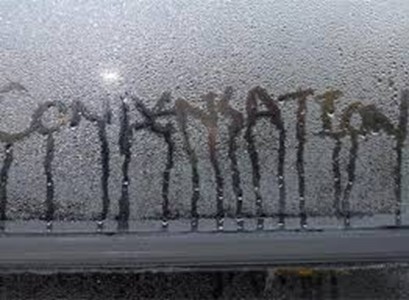
Condensation, whether it is on windows, HVAC ductwork, or plumbing pipes is a sign of high humidity that can lead to mold growth. Condensation can be caused by high humidity or an unknown water leak.
Removing Mold In Your House
As soon as any mold is discovered in your home it should be removed. If only a small area is affected, less than 10 square feet or about a 9 x 9 area, you can probably take care of its removal on your own. Vacuum it first, then clean the area with an antimicrobial cleaner, or cut it out and bag it from disposal. But you should only do this yourself if you and no one else residing in your home have no known mold sensitivities.
When the mold covers an area greater than 10 square feet, a mold remediation expert should be called in. This larger removal project should be contained inside a barrier, removed, and the affected areas treated with a specialized mold cleaning agent. Everything that remains inside the contained area should then be dried down to acceptable moisture levels so that the mold doesn’t return.
If you find mold in your home contact Water Mold Fire Restoration at 800-905-0277. We have certified mold remediation teams standing by, 24/7, that will safely eliminate your home’s mold problem If you are seeking additional information concerning mold remediation you can also contact us via email at help@watermoldfire.net.