Property Restoration in Nashville, TN
Water Mold Fire Restoration of Nashville serves homeowners, condo associations, property managers and business owners across Davidson County, Williamson County, Rutherford County, Sumner County and the Greater Nashville metro. From the East Nashville historic bungalows of Lockeland Springs, Edgefield and Five Points, to the 12 South bungalow district, the Germantown row stock, the Belle Meade and Forest Hills mansion inventory along Belle Meade Boulevard and West End Avenue, the Music Row historic district and the new high-rise condo towers of the Gulch, SoBro and downtown, the planned-community new construction of Berry Hill and Wedgewood-Houston, and the rapidly-growing tract stock filling Franklin, Brentwood, Mt. Juliet and Murfreesboro, Greater Nashville's building inventory is uniquely varied. Our local crews dispatch 24/7 from our South Nashville facility. We are IICRC Firm Certified.
Why Nashville Properties Need a Local Restoration Company
Nashville's restoration profile is dominated by recurring severe weather. The defining event in modern Nashville restoration history remains the May 2010 Nashville Flood, when 13+ inches of rain fell in 48 hours and the Cumberland River crested at 51.86 feet — the most catastrophic flood event in Nashville history. The flood inundated downtown, the Music Row area, Bellevue, Antioch, and properties along the Cumberland and Harpeth River corridors, producing over $2 billion in damage and years of subsequent restoration work. The March 2020 Nashville tornado outbreak tracked through North Nashville, Germantown, East Nashville, Donelson, Hermitage and Mt. Juliet during the overnight hours, producing widespread structural destruction. March 2023 brought another deadly tornado track through Middle Tennessee. Severe summer thunderstorm rainfall regularly overwhelms older intown sewer infrastructure. Occasional winter ice storms (notably February 2021 and February 2015) produce frozen-pipe-burst waves in homes less prepared for sustained sub-freezing temperatures. Humid subtropical summer (July-August relative humidity routinely 75%+) makes mold colonization a constant post-water-loss risk. Tennessee does not require state licensure for restoration specialties; IICRC Firm Certification is the meaningful credential.
Our Nashville Services
Our Nashville Credentials
Tennessee does not require a state-level license to perform water damage restoration, mold remediation, mold inspection or fire damage restoration. IICRC Firm Certification is the recognized industry credential — firm-level certification meaning the company operates under IICRC standards across water damage (IICRC S500), mold remediation (IICRC S520) and fire and smoke damage (IICRC S700).
Nashville Neighborhoods & Metro Coverage
East Nashville: Lockeland Springs, Edgefield, Five Points, East End, Inglewood, Cleveland Park, McFerrin Park, Maxwell Heights. North Nashville: Germantown, Salemtown, Buena Vista, North Nashville, Bordeaux. Central / Downtown: The Gulch, SoBro, Downtown, Capitol Hill, Rolling Mill Hill. South Nashville: 12 South, Sevier Park, Belmont, Hillsboro Village, Green Hills, Forest Hills, Belle Meade, Berry Hill, Wedgewood-Houston, Crieve Hall, Nipper's Corner. West Nashville: West End, Sylvan Park, Charlotte Park, The Nations. Surrounding Davidson County: Antioch, Bellevue, Hermitage, Donelson, Madison, Goodlettsville. Surrounding metro: Williamson County (Franklin, Brentwood, Nolensville), Rutherford County (Murfreesboro, Smyrna, La Vergne), Sumner County (Hendersonville, Gallatin), Wilson County (Mt. Juliet, Lebanon).
Contact Water Mold Fire Restoration of Nashville
Water Mold Fire Restoration of NashvilleNashville, TN 37211
615-200-6875 · nashville@watermoldfire.net
24/7 Emergency Service · IICRC Firm Certified
 IICRC Certified Firm
 Satisfaction Guaranteed!
 24/7 Emergency Service
 Expert Technicians
 Direct Insurance Billing
 Unsurpassed Customer Service
 No Damage We Can’t Manage!
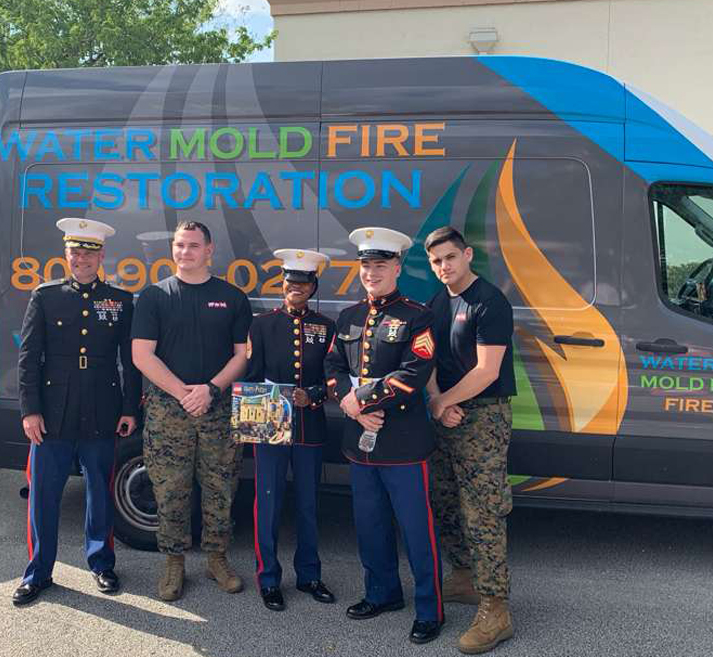
 Community & Military Support