24/7 Fire Damage Restoration, Smoke & Odor Removal in St. Louis
A fire in St. Louis doesn't stop being a fire once the trucks leave. The structural damage is the obvious part; the harder part is everything the fire left behind — thousands of gallons of firefighting water soaking plaster walls and hardwood floors, acidic soot embedded in porous surfaces, smoke odor migrating through HVAC chases and party walls into neighboring units of a South City four-family flat or downtown condo, and a clock that has already started on secondary mold growth in the wet framing and drywall. Water Mold Fire Restoration of St. Louis handles all of it, in the right sequence: board-up first, water mitigation second, soot and smoke cleaning third, odor neutralization, content restoration, full reconstruction. Our crews are IICRC Firm Certified, follow the IICRC S700 industry standard for fire and smoke damage restoration, and dispatch 24/7 from our facility on Randall Street in the Bevo Mill area of south St. Louis.
Why St. Louis Fires Need a Specialized Restoration Approach
St. Louis fires have characteristics that suburban stand-alone-house markets simply do not. Our crews are built around these conditions:
- Four-family flat & brick rowhouse shared-wall fire migration. The St. Louis brick four-family flat — the city's signature pre-WWII multi-unit residential building — and the South City brick rowhouse share party walls, plumbing risers, common chases and (in many buildings) shared utility basements. A fire in one unit can transmit heat, smoke and under the worst conditions flame into the adjoining unit or the unit above through these shared structural paths. Smoke residue deposits into neighboring units within minutes. Cross-unit cleanup, landlord-tenant coordination and party-wall reconstruction are recurring St. Louis fire-job considerations that detached-house markets don't face.
- Heating-season ignition sources (Oct–Mar). Missouri winters drive sustained furnace operation, sharply increased space heater use, dryer-vent buildup from heavy fabric loads, fireplace and wood-burning stove use in older South City and Central West End stock, and the holiday-season increment from decorative lighting and candles. St. Louis Fire Department residential fire volume peaks every winter, and pre-WWII brick stock with original electrical systems is particularly stressed.
- Vintage knob-and-tube and ungrounded wiring. St. Louis's pre-1940 housing stock — South City rowhouses and four-family flats, Bevo Mill and Holly Hills brick cottages, Carondelet and Dutchtown pre-WWII brick, Soulard and Lafayette Square Victorians, The Hill Italianates, Central West End mansion stock — was originally wired with knob-and-tube electrical systems. Many buildings have been partially upgraded to modern Romex or conduit, but pockets of original knob-and-tube remain in attics, behind walls and in ceiling boxes citywide. Splices in junction boxes degrade over a century of thermal cycling and become arcing-fault ignition sources.
- Tornado & severe storm electrical ignitions. The St. Louis metro sits at the eastern edge of Tornado Alley and the western edge of Dixie Alley. The May 16, 2024 EF3 tornado that tracked through portions of north and west St. Louis brought down power lines, damaged service entrances, severed gas lines and stressed electrical systems across affected properties — producing the familiar post-storm pattern of downed-conductor ignitions, panel fires and stressed-wiring fires in the days and weeks after. We worked these calls through the spring and summer of 2024.
- Downtown condo & loft smoke migration. Downtown St. Louis loft and condo stock — the Washington Avenue Loft District, the Mill Creek Valley redevelopment area, the riverfront and Laclede's Landing conversions, the Park Pacific, the West End condo buildings — share HVAC stacks, common corridors and stairwell pressurization that move smoke between units within minutes. Cross-unit cleanup, HOA coordination and freight-elevator scheduling become as critical as the actual cleaning.
- Kitchen and protein fires. Year-round category, but St. Louis's dense restaurant scene (The Hill, Cherokee Street, South Grand, Forest Park Southeast / The Grove, Central West End, Soulard, Washington Avenue, Clayton, Webster Groves, Kirkwood) produces a steady stream of commercial-kitchen fire calls alongside the residential Thanksgiving-and-holiday-season volume. Protein-fire smoke is invisible and pervasive and requires specialized degreasing chemistry.
- Historic district reconstruction constraints. Reconstruction work in St. Louis landmark and historic districts — Soulard, Lafayette Square, Compton Heights, The Hill, Central West End historic blocks, Old North St. Louis, Carondelet, Tower Grove Heights — requires coordination with the relevant landmarks commission for envelope-affecting and exterior work. Material matching for original brick, mortar, slate, copper, wood trim and original windows adds significant time and cost to rebuild scopes.
- Firefighting water + mold risk. Fire suppression releases thousands of gallons of water that soaks framing, drywall, insulation, hardwood floors and original plaster walls. In St. Louis's humid summer climate and the dense pre-WWII brick construction common across the City, that water doesn't dry out passively. Every St. Louis fire job includes aggressive drying alongside the cleaning scope to prevent the mold problem that otherwise follows on a 48-72 hour clock.
Our Fire Damage Restoration Process
- Emergency stabilization (Hour 1-24). Site safety walkthrough, board-up of openings, roof tarping over burn-throughs, securing the property against weather exposure and party-wall openings to neighboring four-family flat units.
- Firefighting water mitigation (Hours 1-72). Extract, dry and dehumidify affected areas to prevent the mold problem that otherwise follows every fire in St. Louis's humid summer climate.
- Soot and smoke residue removal. Smoke type identification (dry, wet, protein, fuel-based) drives the cleaning method.
- HVAC decontamination. Air handlers, returns, supply trunks and registers — critical in St. Louis four-family flats and downtown condos where smoke travels through shared HVAC and party-wall paths.
- Smoke odor neutralization. Thermal fogging, hydroxyl generators, ozone treatment.
- Content pack-out. Salvageable contents inventoried, packed out, cleaned off-site.
- Reconstruction. Framing, drywall, plaster repair, insulation, hardwood floor refinishing, cabinetry, electrical, paint and finish carpentry, coordinated with licensed Missouri trade subcontractors and properly permitted through the City of St. Louis Building Division or the relevant St. Louis County or municipal building department, with landmarks-commission coordination on historic-district properties.
The Types of Smoke We Clean
- Dry smoke. High-temperature, fast-burning fires (paper, wood, electrical attic fires). Powdery residue. Easiest to clean.
- Wet smoke. Smoldering fires with plastics, rubber, synthetic upholstery, roofing materials. Dense, sticky, smeary residue. Hardest to clean.
- Protein smoke. Kitchen fires (grease, protein-based foods). Invisible residue, pervasive odor. Specialized degreasing chemistry required.
- Fuel oil & petroleum smoke. Furnace, water heater and basement-storage fires. Oily residues, aggressive solvent cleaning.
- Creosote & wood-stove smoke. Wood-burning stove and fireplace fires in older South City and Central West End stock. Dense, oily, deeply-staining residue that penetrates plaster and grout.
Smoke Odor Removal in St. Louis Homes
The most common complaint we hear from St. Louis homeowners weeks after a fire is "everything looks fine, but I still smell smoke." Smoke odor compounds embed in porous materials and continue to off-gas for months. Surface cleaning addresses only what's visible. Real odor removal requires breaking down the odor molecule itself — thermal fogging, hydroxyl generation, ozone treatment. We typically combine modalities because one tool rarely handles a whole-house or whole-unit odor scope on its own. Vintage St. Louis plaster walls, original wood subfloors and the dense framing of pre-WWII brick rowhouses, four-family flats and Bevo Mill cottages hold smoke odor especially stubbornly and benefit from extended hydroxyl treatment cycles.
Missouri Fire Insurance & ALE Coverage
Fire is a named peril on virtually every Missouri HO-3 policy. Most policies include structural repair (Coverage A), personal property (Coverage C) and Additional Living Expenses (Coverage D / ALE) for hotel, rental and meal costs while you cannot live in the property. Missouri insurance market conditions are stable — no hurricane-driven carrier exodus, consistent rate structure across the major carriers — and standard homeowners fire coverage remains intact. We work with all the major Missouri carriers and coordinate directly with your adjuster.
Where We Respond to Fire Damage in St. Louis & the Metro
The City of St. Louis — Bevo Mill, Holly Hills, Dutchtown, Carondelet, Patch, Boulevard Heights, St. Louis Hills, Princeton Heights, Southampton, Tower Grove South, Tower Grove East, Shaw, Compton Heights, Benton Park, Cherokee Street, Soulard, Lafayette Square, The Hill, Botanical Heights, Midtown, Grand Center, Forest Park, Forest Park Southeast, Central West End, Downtown, Washington Avenue Loft District, Laclede's Landing, Old North St. Louis, Hyde Park, College Hill, Penrose, JeffVanderLou, The Ville. St. Louis County: Clayton, University City, Webster Groves, Kirkwood, Maplewood, Brentwood, Richmond Heights, Ladue, Frontenac, Town and Country, Chesterfield, Ballwin, Ellisville, Wildwood, Manchester, Crestwood, Affton, Mehlville, Florissant, Hazelwood, Maryland Heights, Bridgeton, Creve Coeur, Olivette. St. Charles County: St. Charles, St. Peters, O'Fallon, Wentzville.
St. Louis Fire Damage Restoration FAQs
60-minute target on-site arrival across the City, St. Louis County and the inner metro. We coordinate with the St. Louis Fire Department, the relevant St. Louis County fire protection district, Webster Groves FD, Kirkwood FD or the relevant municipal department before cleaning begins.
Four-family flats and brick rowhouses share party walls, plumbing risers, common chases and shared utility basements. A fire in one unit transmits heat, smoke and (under the worst conditions) flame into the adjoining unit or the unit above through these shared paths. Smoke residue deposits into neighboring units within minutes.
Heating-season ignition sources spike from late October through March: furnace operation, space heaters, dryer-vent buildup, wood-burning stoves and fireplaces, holiday-season candles, and stressed vintage knob-and-tube and ungrounded electrical systems in pre-WWII brick stock.
Yes. The May 16, 2024 EF3 tornado brought down power lines, damaged service entrances and stressed electrical systems across affected north and west St. Louis properties. Downed-conductor ignitions, panel fires and stressed-wiring fires followed in the days and weeks after.
No. Soot is acidic, oily and abrasive. Wiping embeds it permanently. Running the HVAC after a fire spreads residue — particularly dangerous in four-family flats and condos with shared chases. Turn HVAC off, leave the soot alone, call us.
Fire is named peril on virtually every Missouri HO-3 policy. Coverage typically includes structural, contents and ALE while displaced. Missouri market conditions are stable.
Yes. Washington Avenue Loft District, Mill Creek Valley redevelopment, riverfront and Laclede's Landing conversions, Park Pacific and other downtown stock all share HVAC and corridor paths. We coordinate with HOAs and engineering staff for multi-unit cleanup.
Stabilization 24-72 hours. Cleaning and deodorization 1-3 weeks. Reconstruction 2 weeks to 6 months depending on scope and the relevant City of St. Louis or St. Louis County permit timing. Historic-district properties add landmarks-commission review time.
Smoke moves through shared HVAC, stairwells, party-wall penetrations and gap leakage within minutes. Smoke compounds embed in porous materials and off-gas for weeks. HVAC decontamination plus active odor neutralization required at the building level.
Embeds in porous materials and off-gases for weeks/months. Real odor removal requires breaking down the odor molecule itself through thermal fogging, hydroxyl generation and ozone — typically in combination.
Call St. Louis's Fire Damage, Smoke & Odor Removal Team
Water Mold Fire Restoration of St. Louis3958 Randall Street
Saint Louis, MO 63116
314-282-4140 · stlouis@watermoldfire.net
24/7 Emergency Service
IICRC Firm Certified
Active fire, recent fire, four-family flat fire that smoked you out from next door, downtown condo fire, kitchen fire or post-tornado electrical fire anywhere in St. Louis or the metro? Call 314-282-4140 and a crew will be on the way before the structure has finished cooling.
← Back to all St. Louis restoration services
 IICRC Certified Firm
 Satisfaction Guaranteed!
 24/7 Emergency Service
 Expert Technicians
 Direct Insurance Billing
 Unsurpassed Customer Service
 No Damage We Can’t Manage!
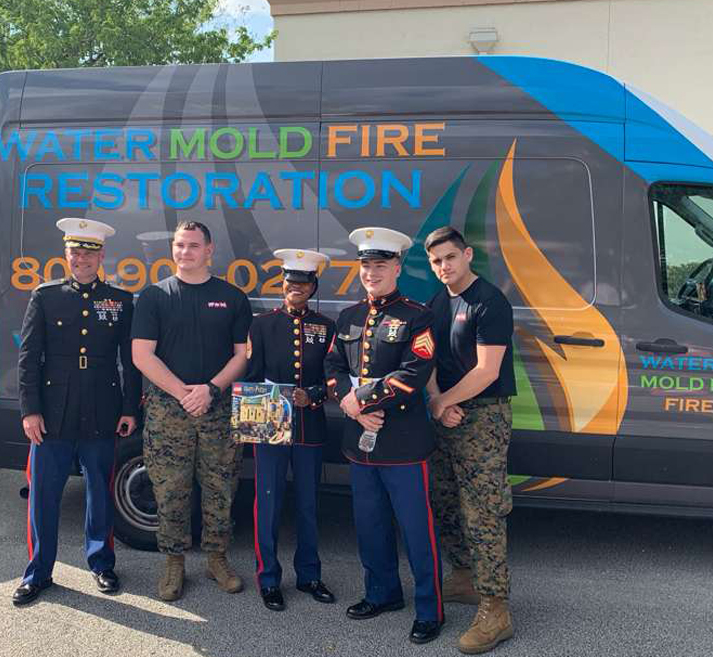
 Community & Military Support