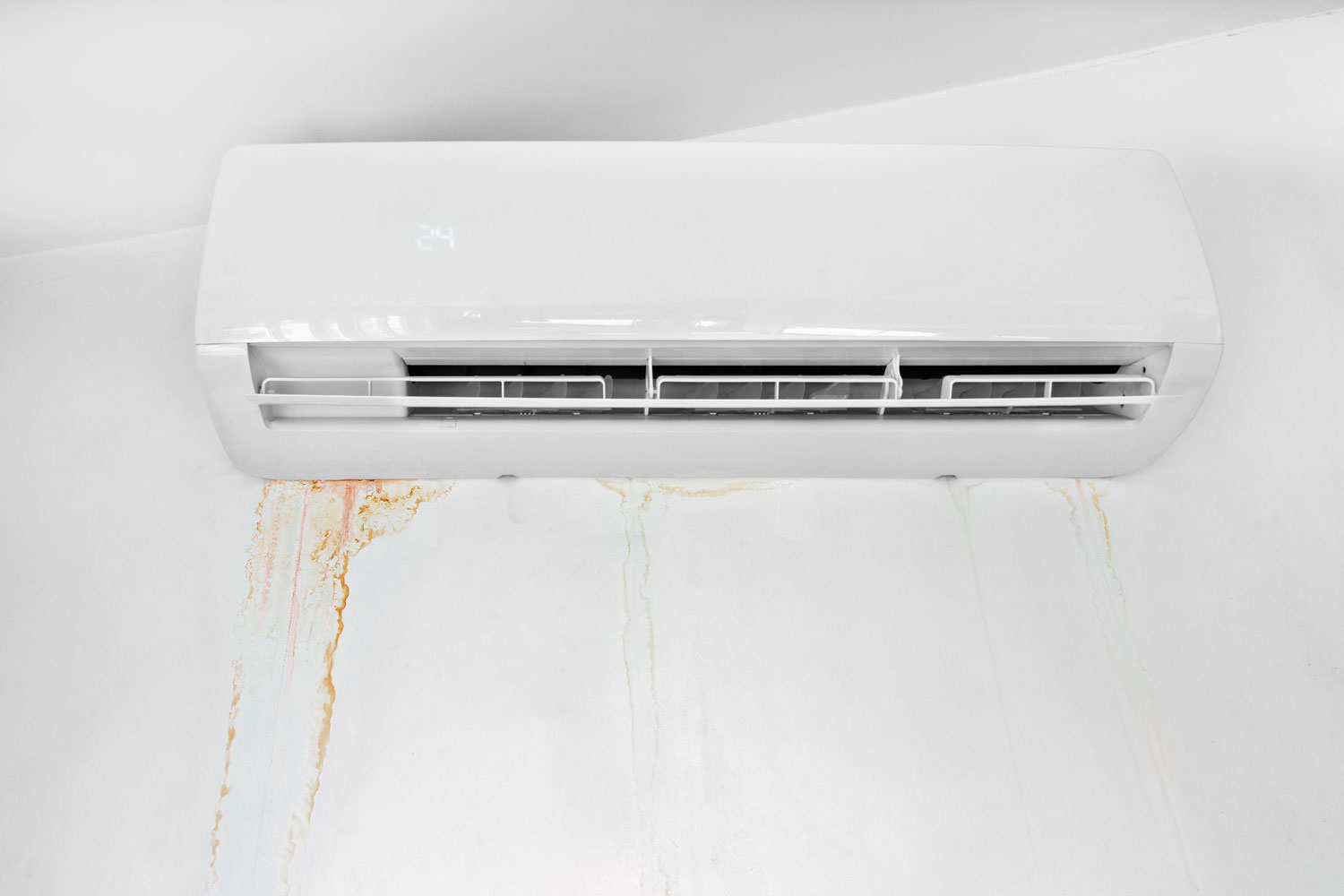
The air conditioner has become an indispensable appliance in almost every household. While it circulates cool air during the summer months, it can also be a hotspot for significant water damage and cause the growth of toxic mold.
As air conditioners cool the air water condenses on the unit’s coils. This moisture drains into a drip pan and then flows out of the A/C unit through a condensation line. If the drip pan or the condensation line becomes blocked or clogged the water has nowhere to go but out onto your floor.
A/C Warning Signs
- Visible leaks and water seepage.
- A musty smell while the appliance is running.
- Visible signs of mold.
- Recurring allergy symptoms.
Where Does It Occur?
1. Drip Pans – In addition to cool air, an A/C unit also condenseslarge amounts of moisture from the air. When humid air passes over the evaporator coil of the A/C unit, it condenses the moisture, whichthen collects in the drip pan. If the drip pan gets clogged, the water will eventually overflow and cause water damage to the surrounding areas.
2. Evaporator Coils - evaporator coils form fertile breeding grounds for mold. This is due to the constant heating and cooling of the coil and the collection of dust on the coils. When an air conditioner is turned on, the coil uses a liquid coolant to cool the hot air. When turned off, the coil stops its cooling function. This back and forth causes condensation on the coil. As dust and dirt build up on the coils, mold can begin to grow on them. This produces a musty smell that is also known as the "Dirty Sock Syndrome".
Tips to Prevent Mold and Water Damage
One of the most important steps of A/C maintenance includes keeping the system free of dust and dirt. Here is what you can do to avoid A/C problems:
- Check and replace A/C filters once a month.
- Clean the drain pans of any debris that may accumulate.
- Flush out condensation lines on a regular basis during warmer months when the unit is in operation.
- Haveayearly checkup from an air conditioner service technician at the start of spring or summer.
If it's too late and you find water from your A/C unit has damaged your home, call Water Mold Fire Restoration. You can reach us at 800-905-0277 any time day or night. Our nationally certified water damage technicians will come to your home, inspect the damage, and provide you with a FREE - NO OBLIGATION estimate to extract the water and dry out your home. Or if you prefer, email us at help@watermoldfire.net.
Trusting a professional service to inspect and handle such situations is highly advisable. You can contact Water Mold Fire Restoration Services in case you spot any water damage or mold-related issues. You can do so by emailing us at help@watermoldfire.net or call 800-905-0277.