Texas-Licensed Mold Removal & Remediation in Austin
Texas regulates mold-related services under the Texas Occupations Code and 25 TAC Chapter 295, administered by the Texas Department of Licensing and Regulation (TDLR). Water Mold Fire Restoration of Austin operates as a Texas-Licensed Mold Company under RCO1374, and we perform mold remediation in accordance with the IICRC S520 Standard for Professional Mold Remediation alongside the Texas regulatory framework. Austin's humid subtropical climate, recurring severe-weather events (Winter Storm Uri 2021, July 2024 Hill Country flash flooding, Memorial Day 2015 floods, Halloween 2013 Onion Creek, Hurricane Harvey 2017), the lake-home shoulder-season moisture cycle, and a building stock that runs from 1920s Hyde Park bungalows to Hill Country contemporary to downtown high-rise condos all produce conditions where mold colonization follows any sustained moisture event. Dispatched 24/7 from our Northwest Austin facility on Taylor Draper Lane.
Why Austin Properties Develop Mold
- Post-Winter-Storm-Uri frozen-pipe-burst mold. Feb 2021 produced millions of frozen-pipe bursts statewide; Austin was hit alongside the entire state. Many bursts went undetected for days while owners had no power; saturated drywall and framing seeded mold within 48 hours. Post-Uri mold work ran over a year.
- Post-Hill-Country-flash-flood mold. Hill Country flash flooding (July 2024, Memorial Day 2015 Blanco River, Halloween 2013 Onion Creek) deposits Category 3 contaminated water across affected properties. Even with prompt extraction, residual moisture seeds aggressive mold colonization in framing and finishes.
- Lake home shoulder-season moisture. Lake Travis, Lake Austin and Hill Country lake properties that sit unconditioned during off-seasons accumulate humidity in walls, crawlspaces, three-season porches and HVAC systems. Lake-level rise during major flood inflow seeds additional mold.
- Hyde Park, Travis Heights & Old West Austin historic bungalow mold. Pre-WWII Austin stock has lath-and-plaster walls, original tile roofs, and stucco-on-frame envelopes that hold moisture differently than modern construction.
- Westlake Hills & Hill Country property mold. Hill Country contemporary architecture with complex rooflines, large window expanses, and indoor-outdoor living spaces produces specific moisture-management challenges.
- A/C condensate & HVAC mold. Year-round Austin cooling produces constant condensate. Air handlers are mold incubators when condensate drains clog or systems short-cycle.
- Downtown high-rise condo HVAC cross-contamination. Austonian, Independent, 360 Condos, the Spring, Bowie and downtown stock share HVAC stacks that distribute spores between units.
- Slab leak mold. Pre-1990 Allandale, Brentwood, Crestview, Hyde Park, Travis Heights and Tarrytown slab-on-grade copper supply leaks wick into baseboards and cabinets.
Texas Mold Licensing & What It Means for You
Texas mold rules (25 TAC Chapter 295) require a written mold remediation protocol prepared by a TX-licensed Mold Assessment Consultant (MAC) before remediation work begins on most projects, and the same individual or company cannot perform both assessment and remediation on the same project beyond limited exceptions. We operate as a Texas-Licensed Mold Company under RCO1374 and coordinate with independent TX-licensed mold assessment consultants for the pre-remediation protocol and post-remediation verification.
Our Mold Remediation Process (IICRC S520 + TX Rules)
- Review of the TX-licensed mold assessor's written protocol for jobs falling under the TX assessment requirement.
- Containment setup — 6-mil poly barriers, sealed HVAC vents, negative air with HEPA scrubbers.
- PPE — Tyvek, gloves, eye protection, HEPA respirators.
- Removal of contaminated porous materials.
- HEPA filtration & surface cleaning with EPA-registered antimicrobials.
- Moisture source repair — plumbing, roofing, HVAC, slab leak repair.
- Post-remediation verification by an independent TX-licensed mold assessment consultant.
- Reconstruction. Drywall, flooring, cabinetry, paint and finish carpentry.
Where We Remediate Mold in Austin & the Hill Country
Central Austin (Downtown, Hyde Park, Brentwood, Crestview, Allandale, Tarrytown), South Austin (Travis Heights, Bouldin Creek, SoCo, Zilker, Onion Creek), N/NW Austin (Mueller, Spicewood Springs, NW Hills, Domain, Great Hills), West Austin / Hill Country (Westlake Hills, Rollingwood, Bee Cave, Lakeway, Lake Travis, Spicewood, Dripping Springs), Williamson County (Round Rock, Cedar Park, Leander, Georgetown, Pflugerville), Hays County (Buda, Kyle, San Marcos).
Austin Mold Remediation FAQs
Yes. Texas-Licensed Mold Company RCO1374, TDLR-regulated under 25 TAC Ch 295.
Yes. Feb 2021 millions of frozen-pipe bursts statewide. Post-Uri mold work ran over a year.
Humid subtropical summer, year-round A/C condensate, recurring severe weather (Uri, Hill Country flash floods), pre-1990 slab leak stock, lake-home shoulder-season moisture.
For most jobs above the TX size threshold, yes. 25 TAC Ch 295 requires written protocol by a TX-licensed Mold Assessment Consultant.
Yes. Lake Travis, Lake Austin and Hill Country lake corridors. Shoulder-season unconditioned moisture and post-flood-inflow saturation.
Yes. Pre-WWII Austin lath-and-plaster and original construction requires adapted remediation approaches.
Small contained jobs run hundreds; large losses can run into the thousands.
Small contained: 1-3 days. Larger jobs: 3-7 days plus reconstruction.
Call Austin's TX-Licensed Mold Remediation Team
Water Mold Fire Restoration of Austin11266 Taylor Draper Ln
Austin, TX 78759
512-540-5768 · austin@watermoldfire.net
Texas-Licensed Mold Company RCO1374
Visible growth, musty smell, post-Uri freeze recovery, post-Hill-Country-flash-flood mold, or lake-home shoulder-season concern? Call 512-540-5768 and we'll schedule an on-site evaluation.
← Back to all Austin restoration services
 IICRC Certified Firm
 Satisfaction Guaranteed!
 24/7 Emergency Service
 Expert Technicians
 Direct Insurance Billing
 Unsurpassed Customer Service
 No Damage We Can’t Manage!
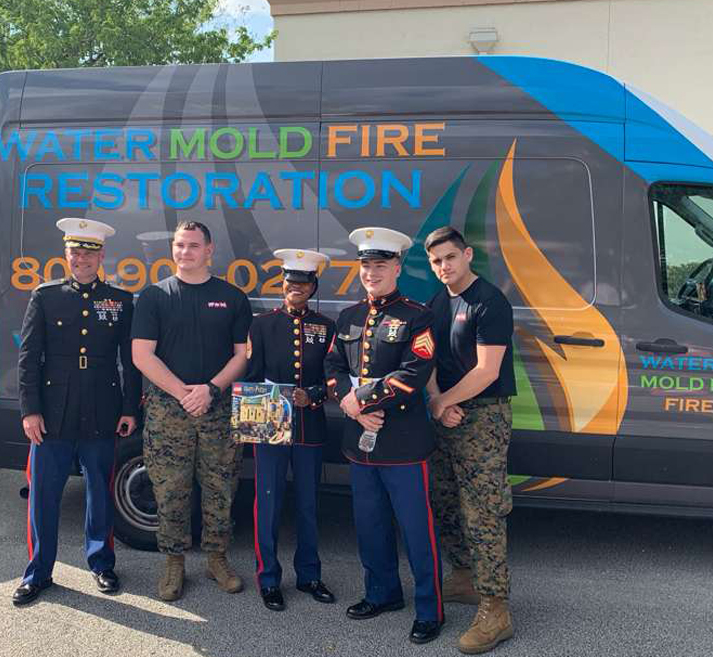
 Community & Military Support