24/7 Water Damage & Flood Cleanup for Austin Homes & Businesses
Water damage in Austin arrives from a Hill Country mix of flash flooding, frozen pipe events, severe summer thunderstorms and the interior plumbing failures common to any humid-climate market. The defining recent events were Winter Storm Uri in February 2021 (subzero temperatures, ERCOT grid failure, millions of frozen-pipe bursts statewide); July 2024 Hill Country flash flooding; Memorial Day 2015 Blanco River catastrophic flooding in Wimberley and the Hays County corridor; Halloween 2013 Onion Creek flooding in South Austin; and Hurricane Harvey in August 2017, whose historic rainfall affected Austin alongside the Texas coast. Beyond major events, Austin sees the steady baseline: A/C condensate overflows during the long Texas cooling season, slab leaks in pre-1990 Allandale and Brentwood single-family stock, summer thunderstorm sewer backups, and high-rise condo plumbing cascades through downtown's Austonian, Independent and 360 Condos. Water Mold Fire Restoration of Austin handles all of it — IICRC-certified crews dispatched 24 hours a day from our Northwest Austin facility on Taylor Draper Lane.
The Austin Conditions That Drive Most Water Losses
- Hill Country flash flooding. Central Texas Hill Country sits at the heart of one of the most flash-flood-prone regions in the United States. Thin soils over limestone bedrock, steep terrain and intense rainfall produce flash flooding that can rise 20+ feet in hours. Onion Creek (Halloween 2013), Shoal Creek (chronic downtown flash flooding), the Blanco River (Memorial Day 2015 catastrophic event in Wimberley) and the Pedernales and Colorado Rivers all produce recurring flooding. The July 2024 Hill Country flash flood event is the recent benchmark.
- Frozen pipe bursts & Winter Storm Uri aftermath. February 2021 produced the largest single insurance event in Texas history. Subzero Austin temperatures, ERCOT grid failure, multi-day power outages, and frozen-pipe bursts across the metro. Recurring smaller cold snaps every winter produce a steady baseline.
- Downtown high-rise condo plumbing cascades. The Austonian, Independent, 360 Condos, the Spring, the Bowie, Seaholm Residences and the surrounding downtown Austin condo stock share plumbing risers. Upper-floor supply line breaks cascade vertically.
- Lake Travis & Lake Austin lake-home water damage. Hill Country lakefront properties on Lake Travis, Lake Austin, Lake LBJ and the surrounding lake corridor take seasonal exposure from storm rainfall, lake-level rise during flood inflow (Lake Travis can rise 30+ feet during major flood events), and boat-house/dock-side damage.
- Slab leaks in pre-1990 single-family stock. Allandale, Brentwood, Crestview, Hyde Park, Travis Heights and Tarrytown pre-1990 stock sits on slab-on-grade with copper supply lines. Austin clay-rich soil chemistry accelerates pinhole formation.
- A/C condensate overflows. Year-round Austin cooling produces constant condensate. Clogged drain lines and short-cycling oversized units produce slow ceiling leaks.
- Original-era plumbing in pre-WWII Austin stock. 1920s-30s Hyde Park bungalows, Travis Heights and Old West Austin historic stock still carries original galvanized supply pipe and cast-iron drain stacks where they haven't been rehabbed.
- Sewer backups during heavy rain. Central Austin sewer infrastructure overwhelms during severe summer thunderstorm rainfall, producing Category 3 backflow.
Hill Country Flash Flood Cleanup
Hill Country flash flooding is a uniquely Central Texas restoration scope. The combination of thin soils over limestone bedrock, steep terrain, narrow creek channels and the occasional convergence of deep Gulf moisture with upper-level disturbances produces rainfall events that drop several inches of rain in under an hour over small areas. Creeks that run dry most of the year rise 20+ feet within an hour or two; the Blanco River rose more than 40 feet during Memorial Day 2015; Onion Creek inundated South Austin homes during Halloween 2013; the July 2024 Hill Country event produced widespread flooding across Travis, Hays and surrounding counties.
Our Hill Country flash flood cleanup process treats the water as Category 3 contaminated floodwater — it carries agricultural runoff, hydrocarbons, sewage and biological contaminants from the entire upstream watershed. We arrive in full PPE, extract standing water with truck-mounted pumps, remove and dispose of contaminated porous materials, apply EPA-registered antimicrobials, and deploy commercial drying equipment. Lake-corridor and creek-corridor properties typically require flood insurance through the NFIP or a private flood carrier; we coordinate documentation for the flood-insurance claim alongside any wind-driven rain portion of the loss that's covered by homeowners.
Our Water Damage Restoration Process
Every job we run in Austin follows the IICRC S500 Standard for Professional Water Damage Restoration:
- Emergency response & assessment (Hour 1). Crew dispatch, source identification and shutoff, thermal imaging and moisture mapping.
- Water extraction (Hours 1–6). Truck-mounted and portable extractors. Cat 3 sewer-backup and flash-flood losses get full PPE and porous-material removal.
- Structural drying & dehumidification (Days 1–5). Air movers and LGR dehumidifiers. Austin's humid summer often extends drying past inland norms.
- Antimicrobial treatment & mold prevention. EPA-registered antimicrobials.
- Daily monitoring & documentation. Moisture readings, temperature and RH logged daily.
- Reconstruction. Drywall, flooring, cabinetry, paint and finish carpentry, permitted through City of Austin Development Services or the relevant municipal building department. Hyde Park, Travis Heights and Old West Austin historic properties handled with finish-matching for original construction.
Water Damage Categories We Handle
- Category 1 (clean water). Broken supply lines, refrigerator and ice-maker lines, water heater failures, frozen pipe bursts on supply side.
- Category 2 (gray water). Dishwasher and washing machine discharge, toilet overflows (no feces), A/C condensate.
- Category 3 (black water). Sewer backups, Hill Country flash floodwater, Onion Creek and Shoal Creek floodwater, Colorado River backflow. Requires material removal, full PPE and verified post-remediation cleaning.
Texas Insurance & Documentation in Austin
Texas's homeowners insurance market is largely stable. Sudden and accidental water damage is covered under standard HO-3 policies. Sewer backup requires a separate endorsement. Hill Country flash flood and creek-corridor surface flooding requires separate NFIP or private flood insurance. Winter Storm Uri-related water claims tightened freeze-loss carrier scrutiny. We build every Austin job file the way a Texas adjuster needs to see it.
Where We Respond in Austin & the Hill Country
Central Austin (Downtown, East Austin, Hyde Park, Brentwood, Crestview, Allandale, Rosedale, Tarrytown), South Austin (Travis Heights, Bouldin Creek, SoCo, Zilker, Onion Creek corridor), North & NW Austin (Mueller, Spicewood Springs, NW Hills, the Domain, Great Hills), West Austin / Hill Country (Westlake Hills, Rollingwood, Bee Cave, Lakeway, Lake Travis, Spicewood, Dripping Springs), Williamson County (Round Rock, Cedar Park, Leander, Georgetown, Liberty Hill, Pflugerville, Hutto), Hays County (Buda, Kyle, San Marcos).
Austin Water Damage Restoration FAQs
60-minute target arrival across Travis County, Williamson County, the Hill Country and the Greater Austin metro. During major events we triage active leaks and Cat 3 losses first.
Thin soils, limestone bedrock, steep terrain and intense localized rainfall produce flash flooding that can rise 20+ feet in hours. Onion Creek (2013), Blanco River (2015), July 2024 Hill Country event are recent benchmarks.
Subzero temps, ERCOT grid failure, multi-day power outages, frozen-pipe bursts across the Austin metro. Statewide $20B+ in insurance damage — largest TX insurance event in history.
Sudden and accidental water damage covered under standard HO-3. Sewer backup requires separate endorsement. Hill Country flash flood and creek-corridor flooding requires NFIP/private flood.
Yes. Austonian, Independent, 360 Condos, the Spring, the Bowie, Seaholm Residences and downtown stock. We work with condo boards and property managers.
Yes. Lake Travis, Lake Austin, Lake LBJ corridors. Storm exposure, lake-level rise during flood inflow, boat-house and dock-side damage.
Pre-1990 Allandale, Brentwood, Crestview, Hyde Park, Travis Heights, Tarrytown stock has copper supply under slab. Clay soil chemistry accelerates pinhole formation.
Call the restoration company first. TX policies require mitigation. Mold colonizes within 24-48 hours in Austin's humid climate.
Call Austin's Water Damage Restoration Team
Water Mold Fire Restoration of Austin11266 Taylor Draper Ln
Austin, TX 78759
512-540-5768 · austin@watermoldfire.net
24/7 Emergency Service
Active frozen pipe burst, Hill Country flash flood, slab leak, condo cascade or lake-home water loss? Call 512-540-5768 and a crew will be rolling.
← Back to all Austin restoration services
 IICRC Certified Firm
 Satisfaction Guaranteed!
 24/7 Emergency Service
 Expert Technicians
 Direct Insurance Billing
 Unsurpassed Customer Service
 No Damage We Can’t Manage!
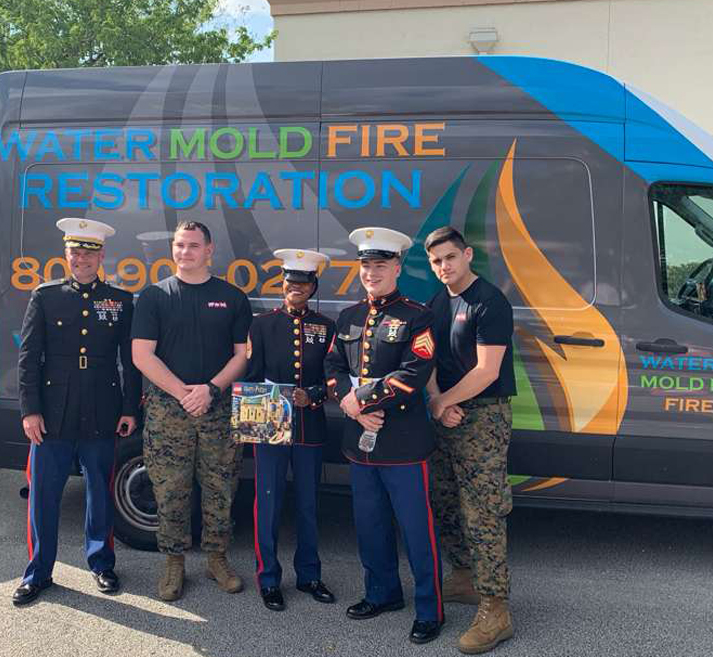
 Community & Military Support