24/7 Fire & Smoke Damage Restoration in Dallas
A fire in Dallas doesn't stop being a fire once the trucks leave. The structural damage is the obvious part; the harder part is everything the fire left behind — firefighting water soaking drywall and hardwood floors, acidic soot embedded in porous surfaces, smoke odor migrating through HVAC systems into rooms (and in DFW high-rise condos, into other people's units) that never touched flame, and a clock that's already started on secondary mold growth in DFW's humid subtropical climate. Water Mold Fire Restoration of Dallas handles all of it, in the right sequence: board-up first, water mitigation second, soot and smoke cleaning third, odor neutralization, content restoration, full reconstruction. Our crews follow the IICRC S700 Standard for Professional Fire and Smoke Damage Restoration and dispatch 24/7 from our East Dallas facility on Richmond Avenue near Lakewood.
Why Dallas Fires Need a Specialized Restoration Approach
- Tornado & severe storm electrical ignitions. DFW sits at the southern edge of Tornado Alley. The May 2024 outbreak and October 2019 North Dallas EF3 (which cut through Preston Hollow) brought down power lines, damaged service entrances, severed gas lines and stressed electrical systems across affected properties — producing downed-conductor ignitions, panel fires and stressed-wiring fires in the days and weeks after each event. Post-tornado electrical fire response is a recurring DFW spring and fall category.
- Texas lightning & warm-season electrical ignitions. North Texas sees significant lightning activity during the spring and summer convective season. Lightning ignites attic fires, fries HVAC condensers and air handlers, and triggers in-wall electrical fires — particularly in pre-WWII Lakewood, M Streets and Park Cities historic stock with original or partially-upgraded electrical systems.
- Lakewood Tudor & East Dallas historic property fires. Lakewood Tudor Revival, M Streets bungalows, Munger Place Prairie Foursquares and Junius Heights historic stock all have lath-and-plaster walls, original tile and slate roofs, and pre-WWII framing that behaves differently in fires and during cleanup than modern construction. Restoration in these properties requires approaches adapted to the construction.
- Park Cities mansion fires. Highland Park and University Park mansion stock with complex rooflines, original tile, slate and copper construction details, and stately period interiors requires finish-matching reconstruction and (in some cases) landmarks-commission coordination.
- DFW high-rise condo cross-unit smoke migration. Uptown, Downtown, Victory Park, Turtle Creek and Oak Lawn condo and apartment towers share HVAC stacks, common corridors and stairwell pressurization. A single-unit fire deposits smoke residue into multiple neighboring units within minutes.
- Kitchen and protein fires. DFW's restaurant scene (Knox/Henderson, Lower Greenville, Bishop Arts, Uptown, Deep Ellum, Plano's Legacy West, Frisco's Star) produces commercial-kitchen fire calls alongside the residential Thanksgiving-and-holiday-season volume.
- Firefighting water + mold risk. Fire suppression releases thousands of gallons of water. DFW's humid summer keeps moisture from drying passively. Every Dallas fire job includes aggressive drying alongside the cleaning scope.
- Coordination with DFR and DFW departments. Dallas Fire-Rescue, Highland Park DPS, University Park FD, Plano FD, Frisco FD, Richardson FD, and the relevant suburban departments as the jurisdiction requires.
Our Fire Damage Restoration Process
- Emergency stabilization (Hour 1-24). Site safety, board-up, roof tarping, securing the property.
- Firefighting water mitigation (Hours 1-72). Extract, dry and dehumidify to prevent secondary mold.
- Soot and smoke residue removal. Smoke type identification drives the cleaning method.
- HVAC decontamination. Air handlers, returns, supply trunks, registers.
- Smoke odor neutralization. Thermal fogging, hydroxyl generators, ozone treatment.
- Content pack-out. Salvageable contents inventoried, cleaned off-site.
- Reconstruction. Framing, drywall, plaster repair, insulation, flooring, cabinetry, electrical, paint and finish carpentry. Permitting through City of Dallas Building Inspection or the relevant suburban department, with landmarks-commission coordination on Lakewood / Park Cities historic-district properties.
The Types of Smoke We Clean
- Dry smoke. High-temperature, fast-burning fires. Powdery residue. Easiest to clean.
- Wet smoke. Smoldering fires with plastics, rubber. Dense, sticky residue. Hardest to clean.
- Protein smoke. Kitchen fires. Invisible residue, pervasive odor. Specialized degreasing chemistry.
- Fuel oil & petroleum smoke. Vehicle, generator fires.
Smoke Odor Removal in Dallas Homes
Smoke odor compounds embed in porous materials and continue to off-gas for months. Surface cleaning addresses only what's visible. Real odor removal requires breaking down the odor molecule itself — thermal fogging, hydroxyl generation, ozone treatment. We typically combine modalities because one tool rarely handles a whole-house odor scope on its own. Lakewood Tudor and Park Cities historic stock with original plaster walls and wood subfloors holds smoke odor especially stubbornly.
Texas Fire Insurance & ALE Coverage
Fire is a named peril on virtually every Texas HO-3 policy. Most policies include structural repair (Coverage A), personal property (Coverage C) and Additional Living Expenses (Coverage D / ALE) for hotel, rental and meal costs while you cannot live in the property. Texas insurance market is largely stable for fire coverage, though carriers have adjusted wind/hail deductibles in DFW. We work with all major Texas carriers.
Where We Respond to Fire Damage in Dallas & DFW
East Dallas (Lakewood, M Streets, Munger Place), Park Cities (Highland Park, University Park, Preston Hollow), North Dallas, Uptown / Downtown / Deep Ellum, Oak Cliff (Bishop Arts, Kessler Park), Northern suburbs (Plano, Frisco, McKinney, Allen, Richardson, Addison, Carrollton), Eastern suburbs (Garland, Mesquite, Rowlett), Mid-Cities (Irving, Grand Prairie, Arlington, Las Colinas).
Dallas Fire Damage Restoration FAQs
60-minute target arrival across DFW metro. We coordinate with DFR, Highland Park DPS, University Park FD, Plano FD, Frisco FD, Richardson FD or the relevant suburban department.
Yes. May 2024 outbreak, Oct 2019 N. Dallas EF3 both produced downed-conductor ignitions, panel fires and stressed-wiring fires in the days and weeks after.
No. Soot embeds permanently. Running HVAC spreads residue — particularly dangerous in DFW high-rise condos. Turn HVAC off, leave soot alone, call us.
Fire is named peril on virtually every TX HO-3 policy. Coverage includes structural, contents and ALE.
Yes. Uptown, Downtown, Victory Park, Turtle Creek, Oak Lawn condo towers have shared HVAC stacks. We coordinate with DFW condo boards and engineering staff.
Yes. North Texas warm-season lightning ignites attic fires, fries HVAC, triggers in-wall electrical fires — particularly in pre-WWII Lakewood Tudor and M Streets stock.
Yes. Pre-WWII East Dallas and Park Cities stock with lath-and-plaster and original construction requires approaches adapted to the construction. Landmarks Commission coordination where applicable.
Stabilization 24-72 hours. Cleaning and deodorization 1-3 weeks. Reconstruction 2 weeks to 6 months. Historic-district properties add review time.
Call Dallas's Fire & Smoke Damage Restoration Team
Water Mold Fire Restoration of Dallas6215 Richmond Avenue
Dallas, TX 75214
972-559-4244 · dallas@watermoldfire.net
24/7 Emergency Service
Active fire, recent fire, tornado-driven electrical fire, kitchen fire or condo unit fire that smoked yours out? Call 972-559-4244 and a crew will be on the way before the structure has finished cooling.
← Back to all Dallas restoration services
 IICRC Certified Firm
 Satisfaction Guaranteed!
 24/7 Emergency Service
 Expert Technicians
 Direct Insurance Billing
 Unsurpassed Customer Service
 No Damage We Can’t Manage!
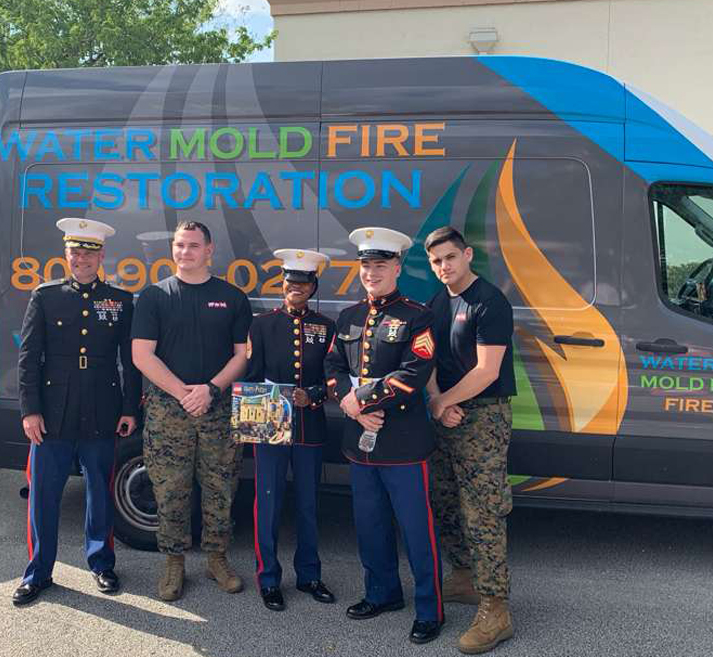
 Community & Military Support