Texas-Licensed Mold Removal & Remediation in Dallas
Texas regulates mold-related services under the Texas Occupations Code and 25 TAC Chapter 295, administered by the Texas Department of Licensing and Regulation (TDLR). Both mold assessment and mold remediation require state-issued credentials. Water Mold Fire Restoration of Dallas operates as a Texas-Licensed Mold Company under RCO1374, and we perform mold remediation in accordance with the IICRC S520 Standard for Professional Mold Remediation alongside the Texas regulatory framework. Dallas's humid subtropical climate, the DFW severe-weather profile (Winter Storm Uri 2021 freeze aftermath, May 2024 tornado outbreak, recurring hail events), and a building stock that runs from 1920s East Dallas Tudor Revival landmarks to Park Cities mansion stock to modern Uptown condo towers all produce conditions where mold colonization follows any sustained moisture event. Our crews dispatch 24/7 from our East Dallas facility on Richmond Avenue near Lakewood and coordinate with independent TX-licensed mold assessors as Texas mold rules require.
Why Dallas Properties Develop Mold
- Post-Winter-Storm-Uri frozen-pipe-burst mold. February 2021's Winter Storm Uri produced the largest single insurance event in Texas history — an estimated millions of frozen-pipe-burst water losses across the state. Many DFW properties flooded while owners had no power and no way to shut off water until the thaw; drywall, framing and insulation sat saturated for days or weeks. Mold colonized within 48 hours. The post-Uri mold remediation wave was the largest single-event mold response in DFW history and we are still occasionally working catch-up jobs years later.
- Post-tornado water intrusion mold. The May 2024 DFW tornado outbreak and October 2019 North Dallas EF3 (which cut through Preston Hollow) opened envelopes that admitted wind-driven rain for weeks afterward, seeding attic and wall-cavity mold long after the storm passed.
- Post-hail-roof-leak attic mold. DFW's severe hail exposure damages roofs; the resulting water intrusion often doesn't surface until subsequent rainfall finds the opening. Wet attic insulation seeds mold that becomes visible weeks or months later during roof projects or listing inspections.
- A/C condensate & HVAC mold. Year-round DFW cooling produces constant condensate. Clogged drain lines, undersized returns and short-cycling oversized units develop biofilm and mold in plenums and ductwork that spreads spores building-wide.
- Lakewood Tudor and M Streets historic home mold. Pre-WWII East Dallas stock — Lakewood Tudor Revival, M Streets bungalows, Munger Place Prairie Foursquares, Junius Heights stock — has lath-and-plaster walls and stucco-on-frame envelopes that hold moisture differently than modern CBS or wood frame construction.
- Park Cities mansion stock. Highland Park and University Park 1920s-50s mansion stock with original tile roofs, plaster walls and complex rooflines produces moisture patterns that require documented mapping before remediation.
- DFW high-rise condo HVAC cross-contamination. Uptown, Downtown, Victory Park, Turtle Creek and Oak Lawn condo towers have shared HVAC stacks that distribute spores between units when one unit has hidden moisture.
- Slab leak mold. Pre-1990 East Dallas, Oak Cliff and North Dallas slab-on-grade stock with copper supply lines under the slab produces chronic leaks that wick into baseboards and wall cavities, seeding mold before visible staining.
Texas Mold Licensing & What It Means for You
Texas regulates mold assessment and mold remediation under the Texas Occupations Code and 25 TAC Chapter 295, administered by TDLR. Mold remediation work above a certain square footage threshold requires a written assessment protocol prepared by a licensed Texas Mold Assessment Consultant (MAC) before remediation begins, and the same individual or company cannot perform both assessment and remediation on the same project beyond limited exceptions. We operate as a Texas-Licensed Mold Company under RCO1374 and coordinate with independent TX-licensed mold assessment consultants for the pre-remediation protocol and post-remediation verification on jobs that fall under the assessment requirement. If your insurance carrier, HOA or property manager asks for our Texas license, give them RCO1374.
Our Mold Remediation Process (IICRC S520 + TX Rules)
- Review of the TX-licensed mold assessor's written protocol for jobs that fall under the TX assessment requirement.
- Containment setup — 6-mil poly barriers, sealed HVAC vents, negative air pressure with HEPA scrubbers.
- Personal protective equipment — Tyvek, gloves, eye protection, HEPA respirators.
- Removal of contaminated porous materials — drywall, insulation, carpet, pad, baseboards, cabinetry.
- HEPA filtration & surface cleaning with EPA-registered antimicrobials.
- Moisture source repair — plumbing, roofing, HVAC, slab leak repair, post-tornado envelope repair, coordinated as part of the same job.
- Post-remediation verification by an independent TX-licensed mold assessment consultant before reconstruction begins.
- Reconstruction. Drywall, flooring, cabinetry, paint and finish carpentry. Historic Lakewood, M Streets and Park Cities properties handled with finish-matching for Tudor, Spanish Colonial and Prairie Foursquare details.
Where We Remediate Mold in Dallas & DFW
East Dallas (Lakewood, M Streets, Munger Place, Casa Linda, Forest Hills, Junius Heights, White Rock Lake), Park Cities (Highland Park, University Park, Preston Hollow), North Dallas (Far North, Bent Tree, Greenway Parks, Walnut Hill, Lake Highlands), Uptown / Downtown / Deep Ellum, Oak Cliff (Bishop Arts, Kessler Park), Northern suburbs (Plano, Frisco, McKinney, Allen, Richardson, Addison, Carrollton), Eastern suburbs (Garland, Mesquite, Rowlett), Mid-Cities (Irving, Grand Prairie, Arlington, Las Colinas).
Dallas Mold Remediation FAQs
Yes. Texas-Licensed Mold Company RCO1374, under TDLR. Texas mold rules (25 TAC Ch 295) require state credentials, different from voluntary-credential states.
Yes — the largest single-event mold response in DFW history. Feb 2021 produced millions of frozen-pipe bursts statewide; saturated materials sat for days. Post-Uri mold work ran over a year and continues occasionally.
Humid subtropical summer, year-round A/C condensate, recurring severe weather (Uri, May 2024 tornadoes, hail), pre-1990 slab supply line leaks, pre-WWII historic galvanized plumbing.
For most jobs above the TX size threshold, yes. 25 TAC Ch 295 requires written protocol by a TX-licensed mold assessment consultant. We coordinate with independent MACs.
IICRC S520 industry consensus standard integrated with Texas mold remediation rules under TDLR.
Yes. Lakewood Tudor, M Streets bungalows, Munger Place Foursquares require approaches adapted to lath-and-plaster and stucco-on-frame construction.
Small contained jobs run hundreds; post-Uri or post-tornado whole-house remediation can run into the thousands. Written estimates after on-site evaluation.
Small contained: 1-3 days. Larger jobs: 3-7 days plus reconstruction.
Call Dallas's TX-Licensed Mold Remediation Team
Water Mold Fire Restoration of Dallas6215 Richmond Avenue
Dallas, TX 75214
972-559-4244 · dallas@watermoldfire.net
Texas-Licensed Mold Company RCO1374
Visible growth, musty smell, post-Uri freeze recovery, post-tornado attic mold, hail-roof-leak ceiling cavity mold, or DFW condo HVAC contamination? Call 972-559-4244 and we'll schedule an on-site evaluation.
← Back to all Dallas restoration services
 IICRC Certified Firm
 Satisfaction Guaranteed!
 24/7 Emergency Service
 Expert Technicians
 Direct Insurance Billing
 Unsurpassed Customer Service
 No Damage We Can’t Manage!
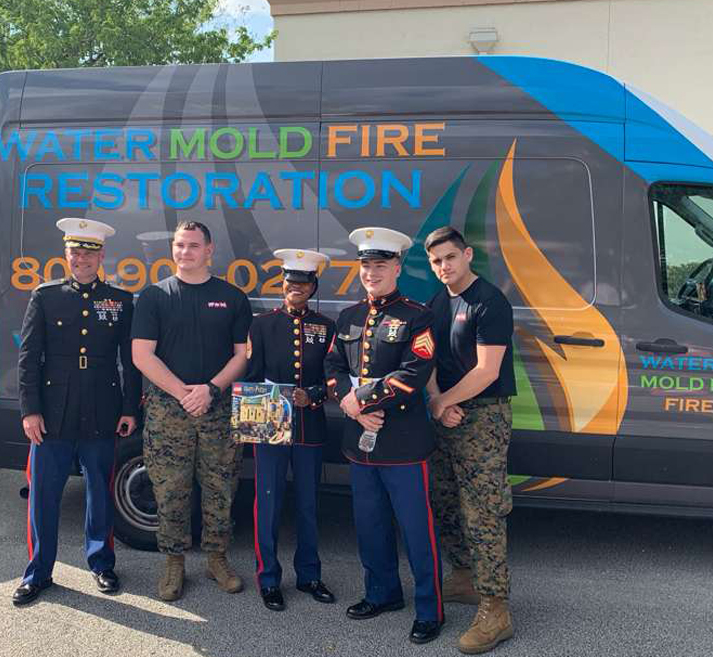
 Community & Military Support