Mold Inspection & Testing in Dallas
Texas regulates mold assessment under the Texas Occupations Code and 25 TAC Chapter 295 (administered by TDLR). Mold assessment in Texas requires state-issued credentials for both the assessor and the company. Water Mold Fire Restoration of Dallas operates as a Texas-Licensed Mold Company under RCO1374, and we perform assessments to ASTM and IICRC documentation standards using AIHA-accredited laboratories for sample analysis. We perform inspections and testing for real estate transactions, post-Winter-Storm-Uri verification, post-tornado and post-hail assessments, Lakewood Tudor and M Streets historic property work, Park Cities mansion stock, insurance claims, indoor air quality concerns and post-remediation verification across Dallas County, the Park Cities and the DFW metro. For assessment work that falls under the Texas independent-assessor requirement on remediation jobs above the size threshold, we coordinate with TX-licensed Mold Assessment Consultants holding the individual MAC credential.
When Dallas Properties Need a Mold Inspection
- Pre-purchase real estate inspections. Lakewood Tudor, M Streets bungalows, Munger Place Prairie Foursquares, Park Cities mansion stock, Uptown condos and pre-1990 single-family slab stock all carry hidden-mold profiles standard home inspections won't surface.
- Post-Winter-Storm-Uri assessments. Many DFW homeowners had mitigation performed under enormous time pressure after Feb 2021. Independent assessment confirms whether drying succeeded.
- Post-tornado assessments. May 2024 outbreak, Oct 2019 N. Dallas EF3 envelope damage admits wind-driven rain that seeds weeks-later attic and ceiling-cavity mold.
- Post-hail-roof-leak attic assessments. DFW hail damages roofs; water intrusion seeds attic mold that surfaces in subsequent rainfall.
- Lakewood, M Streets, Park Cities historic assessments. Pre-WWII East Dallas and Park Cities stock with lath-and-plaster and original construction benefits from documented moisture mapping.
- Insurance claim documentation. Texas carriers require documentation on water and storm claims of significant size.
- Indoor air quality (IAQ) testing. Unexplained respiratory symptoms, musty smell, new-occupant complaints, due-diligence baseline testing.
- Post-Remediation Verification (PRV). Required by TX rules on remediation jobs above the size threshold; recommended on insurance-driven and large-scope work.
Texas Mold Regulation & Why Independence Matters
Texas mold rules (25 TAC Chapter 295) require a written mold remediation protocol prepared by a TX-licensed Mold Assessment Consultant (MAC) before remediation work begins on most projects, and the same individual or company cannot perform both assessment and remediation on the same project beyond limited exceptions. The regulatory design parallels Florida's (Chapter 468) and exists for the same reason: an assessor who is also bidding the remediation has incentive to oversize findings, and a remediator self-clearing has incentive to undersize. We hold the Texas mold company license under RCO1374 and coordinate with independent TX-licensed Mold Assessment Consultants for assessment work that requires the MAC credential.
Our Mold Inspection & Testing Process
- Pre-inspection consult. Property history, recent water events, occupant concerns.
- On-site visual inspection with photo documentation.
- Moisture mapping & thermal imaging.
- Air sampling (spore trap). Outdoor baseline + indoor samples.
- Surface sampling. Tape lifts, swabs, bulk samples.
- AIHA-accredited lab analysis. 3-5 business days; rush 24-48 hours.
- Written assessment report with photos, moisture mapping, thermal images, lab results, interpretation, and (where mold is confirmed) a remediation protocol.
Where We Inspect & Test in Dallas & DFW
East Dallas (Lakewood, M Streets, Munger Place, Casa Linda, Forest Hills, Junius Heights, White Rock Lake), Park Cities (Highland Park, University Park, Preston Hollow), North Dallas, Uptown / Downtown / Deep Ellum, Oak Cliff, Northern suburbs (Plano, Frisco, McKinney, Richardson), Eastern suburbs (Garland, Mesquite), Mid-Cities (Irving, Arlington, Las Colinas).
Dallas Mold Inspection FAQs
Yes. TDLR licenses individual Mold Assessment Consultants (MAC) and Mold Assessment Companies under 25 TAC Ch 295. We hold the company credential RCO1374 and coordinate with TX-licensed MACs for assessment work requiring the individual credential.
Strongly recommended for Uri-affected properties, tornado-affected properties, pre-WWII Lakewood / M Streets / Munger Place / Park Cities stock, and pre-1990 slab supply line stock.
Yes — one of our most active assessment categories since 2021. Independent verification that emergency mitigation succeeded.
Yes. Envelope damage admits wind-driven rain that seeds weeks-later attic and ceiling-cavity mold. Insurance carriers increasingly require documentation.
Inspection is visual/instrument-based; testing is lab analysis. Most DFW assessments include both.
Yes. Pre-WWII East Dallas and Park Cities stock with lath-and-plaster and original construction benefits from documented moisture mapping.
Standard single-unit with 2-3 air samples: low hundreds. Larger scopes cost more.
On-site 1-3 hours. Lab 3-5 business days, 24-48 hours rush.
Schedule a Dallas Mold Inspection
Water Mold Fire Restoration of Dallas6215 Richmond Avenue
Dallas, TX 75214
972-559-4244 · dallas@watermoldfire.net
Texas-Licensed Mold Company RCO1374
Real estate closing, post-Uri verification, post-tornado attic concern, Lakewood Tudor pre-purchase or insurance documentation? Call 972-559-4244 to schedule.
← Back to all Dallas restoration services
 IICRC Certified Firm
 Satisfaction Guaranteed!
 24/7 Emergency Service
 Expert Technicians
 Direct Insurance Billing
 Unsurpassed Customer Service
 No Damage We Can’t Manage!
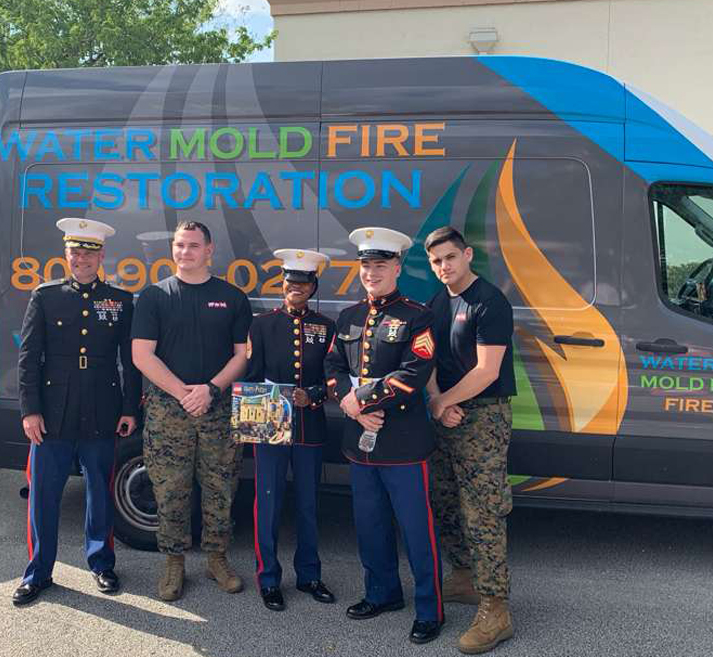
 Community & Military Support