Mold Remediation in Jersey City
Active structural mold contamination ruins building materials and continuously releases airborne micro-toxins and particulates into your breathing zone. Water Mold Fire Restoration of Jersey City delivers comprehensive, scientific mold remediation and structural decontamination solutions for residential properties, historic buildings, and commercial facilities across Hudson County.
Fungal growth develops due to long-term hidden water leaks, coastal ambient humidity, poor internal ventilation, or unaddressed basement seepage. Our certified remediation technicians utilize physical containment setups, negative air pressure scrubbers, and industrial HEPA systems to isolate and extract active fungal clusters safely without cross-contaminating unaffected rooms.
Indications of Structural Mold Contamination
Fungal ecosystems are highly opportunistic and often manifest in hard-to-reach zones like wall cavities, crawl spaces, sub-flooring, and ceiling plenums before coming to light. Property owners should watch out for lingering musty or damp smells, dark staining or spotting on wall materials, buckling paint, warped baseboards, or persistent humidity issues within the building.
- Persistent musty, damp, or earthy odors
- Dark green, gray, or velvety black discoloration along drywall and baseboards
- Fungal colonization on structural timber assemblies and flooring joists
- Efflorescence and white powdery salt stains on brick masonry foundation walls
- Recurring surface mold blooms on mechanical HVAC supply vents
- Saturated wall materials originating from chronic behind-the-wall plumbing leaks
Environmental Drivers of Mold Growth in Jersey City
North Jersey’s distinct changing seasons and localized coastal geography combine to create a prime environment for indoor mold issues. Throughout the warm, humid summer months, the dense marine layer moving off the Hudson River and Upper New York Bay creates high relative indoor humidity, particularly in historic homes lacking modern centralized vapor barriers or balanced HVAC ventilation.
In neighborhoods like Bergen-Lafayette, McGinley Square, and Journal Square, older structural basements built with porous fieldstone or classic brick foundations allow moisture to steadily pass through the walls via capillary action. When this masonry dampness mixes with unventilated stagnant air, it provides an ideal habitat for fungal spores to colonize cellulose-based building materials like drywall backing, carpet padding, and wood framing.
Our Controlled Mold Remediation Protocol
1. Localized Moisture Analysis and Spatial Diagnostics
We use precision moisture meters and infrared diagnostics to pinpoint the absolute liquid source driving the mold growth, ensuring that the environmental root-cause is fixed permanently.
2. Dynamic Containment and Negative Air Isolation
We build physical air-tight chambers using heavy 6-mil poly sheeting and establish continuous negative air pressure with industrial air scrubbers, ensuring no loose mold spores escape into unaffected rooms during cleaning.
3. High-Efficiency HEPA Air Scrubbing
Industrial air filtration systems equipped with medical-grade HEPA filters run continuously throughout the containment zone to scrub microscopic airborne fungal spores and fine particulate matter out of the indoor air.
4. Removal and Disposal of Saturated Porous Materials
Saturated drywall, insulation, and wood materials that cannot be safely salvaged are carefully bagged, sealed, and removed from the containment zone following strict environmental safety standards.
5. Intensive Abrasive Cleaning and Antimicrobial Sanitization
Remaining wood and concrete framing surfaces undergo comprehensive HEPA vacuuming, detailed physical wire-brushing or sanding, and applications of specialized EPA-registered fungicidal coatings to destroy any remaining root-structures.
Targeted Toxic Fungal Removal Services
While many property owners use the blanket term "black mold" to describe dark fungal growth, specific toxigenic species like *Stachybotrys chartarum* thrive on chronically water-logged building materials. These species require cautious, expert handling because improper surface wiping or reckless drywall demolition will release heavy plumes of volatile spores into your indoor air. Our technicians treat all dark fungal outbreaks with the highest level of containment safety, completely avoiding short-sighted cosmetic treatments in favor of comprehensive source removal.
Commercial Mold Mitigation and Air Quality Management
Fungal contamination in commercial buildings, public schools, medical offices, and retail properties poses notable occupational safety concerns and operational liabilities. Water Mold Fire Restoration of Jersey City implements structured, OSHA-compliant containment strategies for commercial facilities. We work closely with property management firms to clean up large-scale HVAC mold contamination, manage structural dampness, and restore safe indoor air quality with minimal disruption to daily operations.
Stop Mold Outbreaks with Fast Leak Mitigation
The absolute best defense against chronic indoor mold contamination is rapid, effective water damage control. If your building has recently experienced storm leaks, pipe fractures, or severe flooding, checking out our dedicated water damage restoration protocols can help you step in before spores have a chance to multiply. Additionally, we provide fully independent mold inspection testing profiles to confirm and document baseline indoor conditions.
Frequently Asked Questions
No. Consumer chlorine bleach cannot penetrate the roots of mold growing on porous building materials like wood or drywall; it only wipes out the surface color while adding water down into the material, which often accelerates deep fungal root growth.
Most professional mold remediation setups take between 3 and 6 days. The exact timeline depends on the total square footage of the containment zone, how many structural materials must be removed, and the time required to thoroughly dry out underlying structural elements.
If the mold growth is limited to a small, isolated room that can be fully contained with negative pressure, you can generally stay on-site. For extensive multi-room remediation projects or work impacting central HVAC systems, temporary relocation is often recommended.
Contact Our Jersey City Mold Specialists
Address: 100 Paterson Plank Rd, Jersey City, NJ 07307
Phone: 201-528-3997
 IICRC Certified Firm
 Satisfaction Guaranteed!
 24/7 Emergency Service
 Expert Technicians
 Direct Insurance Billing
 Unsurpassed Customer Service
 No Damage We Can’t Manage!
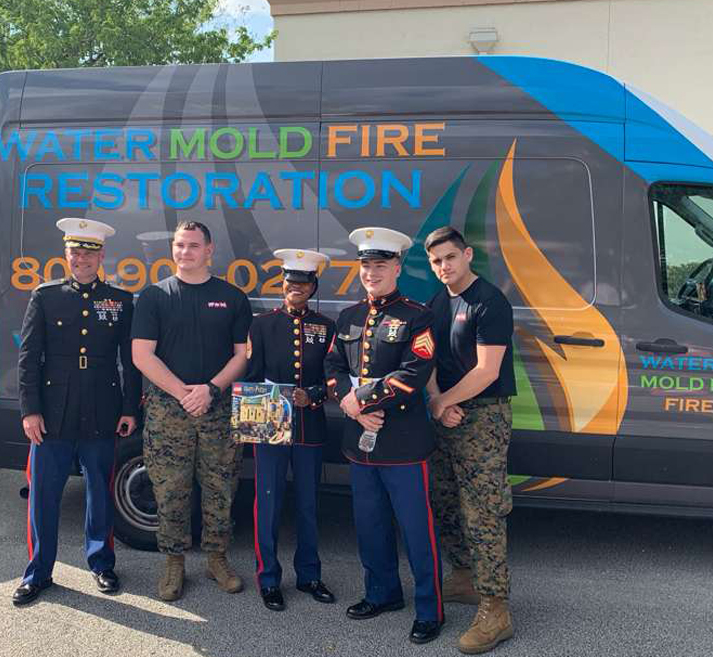
 Community & Military Support