Property Restoration & Cleaning in St. Louis, MO
Water Mold Fire Restoration of St. Louis serves homeowners, condo associations, property managers and business owners across the City of St. Louis, St. Louis County and the surrounding metro. From the red-brick rowhouses and signature four-family flats of Bevo Mill, Dutchtown, Holly Hills, Carondelet and the broader South City bungalow belt, to the Victorian "gingerbread" rowhouses of Lafayette Square, the pre-Civil-War brick stock of Soulard, the Italianate cottages of The Hill, the mansion stock of the Central West End and Forest Park Southeast, and the postwar Capes and ranches that fill the inner-ring St. Louis County suburbs, the St. Louis metro's building inventory is uniquely varied — and each era fails in uniquely different ways when water, mold or fire damage hits. Our local crews dispatch 24/7 from our facility on Randall Street in the Bevo Mill area of south St. Louis, with response coverage across the City, into St. Louis County (Clayton, University City, Webster Groves, Kirkwood, Maplewood, Richmond Heights, Ladue), and across the metro to Florissant, Chesterfield, Ballwin and St. Charles. We are IICRC Firm Certified — the firm-level certification from the recognized industry standards body for water damage, mold and fire restoration.
Why St. Louis Properties Need a Local Restoration Company
St. Louis sits at the largest river confluence in North America — the Mississippi and Missouri Rivers meet just north of the city — and the metro's climate, infrastructure and building stock create restoration challenges no out-of-area franchise was trained to handle. The defining recent event for the St. Louis restoration industry was the July–August 2022 historic flash flooding: eight to nine inches of rain fell on parts of the metro in roughly six hours on July 26, 2022, the heaviest single-day rainfall in city history, killing two people and inundating tens of thousands of basements across South City, the central corridor and the inner-ring suburbs. The May 16, 2024 EF3 tornado tracked through portions of north and west St. Louis, producing structural damage, fire ignitions and the secondary water damage that tornado season routinely leaves behind. And the 1993 Great Flood at the Mississippi-Missouri confluence remains the largest river flood in U.S. history by area inundated — St. Louis area properties along the rivers carry permanent restoration memory from that event, from the 2019 spring Missouri River flooding, and from every major Mississippi event since.
St. Louis's other defining residential risks are seasonal and infrastructural. Combined sewer overflows still affect older parts of the City and the inner-ring suburbs — the Metropolitan St. Louis Sewer District's multi-decade Project Clear infrastructure overhaul is specifically designed to mitigate the basement-backup problem that any St. Louis homeowner with a finished basement has lived with for generations. Hailstorms are a recurring metro category: St. Louis sits in the corridor that produces the highest density of severe hail in the country, and major hail events drive periodic waves of roof, gutter and envelope damage that turns into water and mold problems weeks later. Winter freeze-thaw cycles produce predictable frozen-pipe bursts in unheated South City brick basements, exterior-wall plumbing of pre-WWII four-family flats, and the rural-edge properties out to Wildwood and St. Charles County. And the summer humidity — St. Louis sits in a humid continental climate with July and August relative humidity routinely above 70% — gives mold every condition it needs to colonize wet materials within 48 hours of any leak. Year-round restoration, not seasonal.
Our St. Louis Services
Our St. Louis Credentials
Missouri does not require a state-level license to perform water damage restoration, mold remediation, mold inspection or fire damage restoration. The state regulates many building trades and permits construction work through the relevant municipal building divisions, but does not license restoration specialties specifically. That means St. Louis property owners have to evaluate restoration companies on the credentials that actually matter: industry certification and adherence to the published consensus standards.
IICRC Firm Certified. Firm-level certification from the Institute of Inspection, Cleaning and Restoration Certification — the recognized industry standards body for water damage restoration (industry standard IICRC S500), mold remediation (industry standard IICRC S520) and fire and smoke damage restoration (industry standard IICRC S700). Firm certification means the company itself operates under IICRC standards, not just individual technicians holding cards. IICRC Firm status is recognized by insurance carriers, indoor air quality professionals and the courts as the meaningful restoration credential where state licensure is not required.
St. Louis Neighborhoods & Metro Coverage
Our St. Louis crews respond throughout the City of St. Louis, St. Louis County and the surrounding metro. South City: Bevo Mill, Holly Hills, Dutchtown, Carondelet, Patch, Boulevard Heights, Princeton Heights, Lindenwood Park, St. Louis Hills, North Hampton, Southampton, Tower Grove South, Tower Grove East, Shaw, Compton Heights, Benton Park, Cherokee Street, Soulard, Lafayette Square, The Hill, Botanical Heights, McRee Town. Central Corridor: Midtown, Grand Center, Saint Louis University area, Forest Park, Forest Park Southeast (The Grove), DeBaliviere Place, Skinker-DeBaliviere, Central West End, Visitation Park, West End. North City: Old North St. Louis, Hyde Park, College Hill, Penrose, Walnut Park, JeffVanderLou, The Ville, Greater Ville. Downtown: Downtown West, Washington Avenue Loft District, Laclede's Landing, the Gateway Mall corridor. St. Louis County: Clayton, University City, Webster Groves, Kirkwood, Maplewood, Brentwood, Richmond Heights, Ladue, Frontenac, Town and Country, Chesterfield, Ballwin, Ellisville, Wildwood, Manchester, Crestwood, Sunset Hills, Affton, Mehlville, Florissant, Hazelwood, Maryland Heights, Bridgeton, Creve Coeur, Olivette. St. Charles County: St. Charles, St. Peters, O'Fallon, Wentzville, Lake Saint Louis.
Contact Water Mold Fire Restoration of St. Louis
Water Mold Fire Restoration of St. Louis3958 Randall Street
Saint Louis, MO 63116
314-282-4140 · stlouis@watermoldfire.net
24/7 Emergency Service
IICRC Firm Certified
 IICRC Certified Firm
 Satisfaction Guaranteed!
 24/7 Emergency Service
 Expert Technicians
 Direct Insurance Billing
 Unsurpassed Customer Service
 No Damage We Can’t Manage!
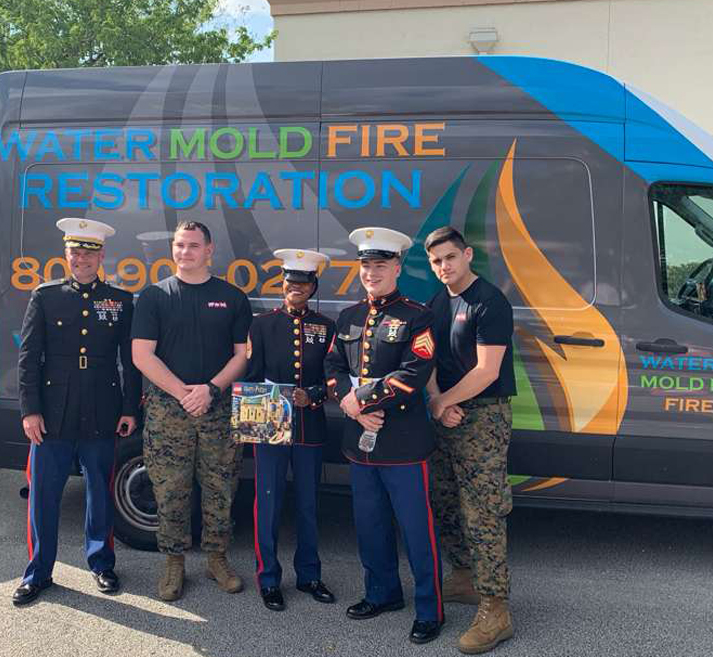
 Community & Military Support