24/7 Water Damage & Flood Cleanup for Washington DC Homes & Businesses
Water damage in Washington DC arrives from more directions than most East Coast cities. It comes up through English basement floors in Capitol Hill and Logan Circle rowhouses during summer thunderstorm sewer backups. It drives sideways through Foggy Bottom and West End high-rise windows during a hurricane remnant pushing up the mid-Atlantic. It wells up out of an aging cast-iron stack in a 1910s Adams Morgan Victorian. It comes down through ceiling planes after an ice-dam freeze in a Wardman rowhouse, after the July 8, 2019 3-4-inch-in-an-hour rainfall that flooded basements across Northwest DC, and after every major mid-Atlantic storm event since. Water Mold Fire Restoration of Washington DC handles all of it — IICRC Firm Certified crews dispatched 24 hours a day from our Foggy Bottom office on Pennsylvania Avenue NW with truck-mounted extractors, commercial-grade dehumidifiers, thermal imaging cameras and the documentation discipline DC insurance carriers expect.
The DC Conditions That Drive Most Water Losses
We see the same loss patterns repeat across all four quadrants of the District and the surrounding DMV, and most of them trace back to Washington's specific climate, infrastructure and building stock:
- Combined sewer backups during heavy rain. Older parts of DC's sewer system carry stormwater and sanitary sewage in the same pipes — a 19th-century design that the DC Water Clean Rivers Project and the Anacostia River Tunnel were specifically built to mitigate. Even with that infrastructure online, heavy summer thunderstorm rainfall still drives backflow up through basement floor drains, laundry standpipes and showers across the historic rowhouse neighborhoods. Category 3 contaminated water containing raw sewage. The July 8, 2019 flash flooding was the most visible recent example; the steady baseline is dozens of smaller backups every summer storm season.
- English basement & garden unit flooding. DC rowhouses across Capitol Hill, Logan Circle, Shaw, U Street, Adams Morgan, Mount Pleasant, Columbia Heights, Petworth and Park View nearly all have below-grade English basements or garden-level rental units. These spaces sit below the rough sewer-line elevation, which means any backup or surface flooding lands there first. Finished English basements with drywall, flooring, cabinetry and sometimes full kitchens take losses that go well beyond what a mechanical basement would see.
- Hurricane remnants & tropical storm flooding. DC sits at the northern edge of the East Coast tropical track. Even when a hurricane doesn't make landfall in the mid-Atlantic, remnants pushing up from the Gulf or moving across the Carolinas regularly drop major rainfall and wind damage on the DMV. Hurricane Isabel (September 2003) pushed Potomac tidal surge into Georgetown's lower streets, the Southwest Waterfront and Old Town Alexandria. Hurricane Agnes (June 1972) remains the worst flood event in DC area history. Tropical Storm Lee, Hurricane Sandy remnants, Hurricane Florence remnants and every active Atlantic season since has produced its own wave of DC area claims.
- The June 2012 derecho. The June 29, 2012 mid-Atlantic derecho remains the signature recent storm event in DC restoration memory: 80-100 mph straight-line winds across the metro in a single Friday evening, more than a million customers without power for as long as ten days during peak summer heat, thousands of trees down on homes and vehicles, and a wave of secondary water damage and mold work that ran for months after as inadequately-dried storm damage produced cascading problems.
- Frozen pipe bursts (Jan–Feb). DC is not Minneapolis, but a January polar vortex visit still releases enough cold to fail vulnerable plumbing. Exterior-wall supply lines in pre-WWII rowhouses, unheated Wardman row basements, English basement laundry rooms plumbed against an exterior wall, and lake-house style weekend properties in the surrounding DMV all freeze and burst when temperatures hold below 15°F for multiple days. We see a frozen-pipe wave every cold-snap winter.
- Rowhouse shared-wall water migration. DC's rowhouse density — Capitol Hill, Georgetown, Logan Circle, Shaw, U Street, Adams Morgan, Mount Pleasant, Columbia Heights, Petworth, Park View, Bloomingdale, Eckington, Brookland, H Street — means a leak in one party-wall cavity can produce visible damage in the neighbor's finished interior days later. Shared chimney chases and common plumbing stacks compound the cross-house exposure. Older rowhouses with original galvanized supply pipe and cast-iron drain stacks have particular failure rates.
- High-rise condo plumbing failures. Foggy Bottom, the West End, Dupont, downtown, NoMa, Capitol Riverfront, the Southwest Wharf and the modern condo towers of Rosslyn and Crystal City all share plumbing risers. A supply line break on an upper floor sends water through every unit below it. Cross-unit coordination, HOA approval and freight-elevator scheduling become as critical as the cleanup itself.
- A/C condensate overflows. DC summers run long and humid, A/C systems carry heavy condensate loads, and clogged drain lines and short-cycling oversized units produce slow ceiling leaks that often go undetected for weeks — one of the most common interior loss sources across the DC condo and rowhouse market.
English Basement Flooding & Sewer Backup Cleanup in DC
DC's English basement is the city's signature residential space and its most consistent water-damage exposure. Below the main rowhouse floor, often with a separate exterior entrance, frequently rented out as a garden unit or used as an in-law suite, the English basement sits below sewer-line elevation in most blocks. When a heavy summer rain event overwhelms the combined sewer infrastructure, the path of least resistance is back up through the lowest connected drain — the English basement floor drain, the laundry standpipe, the basement shower. Category 3 contaminated water enters across the entire floor.
Our English basement and sewer backup cleanup process is built around that reality. We arrive in full PPE for any backup involving sewer water, extract standing water with truck-mounted pumps, remove and dispose of contaminated porous materials (drywall to the flood line, carpet, padding, insulation, particle-board cabinetry, sometimes finished framing), apply EPA-registered antimicrobials to remaining structural materials, and deploy commercial drying equipment sized for the volume DC basement floods actually produce. We work with DC carriers on the sewer backup endorsement and document cause-of-loss carefully so the right portion of the job is billed to the right carrier.
Important note on insurance: standard DC HO-3 homeowners policies do not include sewer/drain backup coverage. That coverage comes from a separate endorsement most carriers offer (typically $5,000-$25,000 in limits). Surface flooding from heavy rain that overwhelms the storm drain system, or rising Potomac or Anacostia water, requires NFIP or private flood insurance. Properties in the Georgetown waterfront, the Southwest Waterfront, Hains Point and other low-lying river corridors are typically in NFIP-mapped flood zones.
Our Water Damage Restoration Process
Every job we run in DC follows the IICRC S500 Standard for Professional Water Damage Restoration — the published industry consensus standard:
- Emergency response & assessment (Hour 1). Crew dispatch, source identification and shutoff, thermal imaging and moisture mapping. Documentation begins on minute one.
- Water extraction (Hours 1–6). Truck-mounted and portable extractors pull standing water. Category 3 sewer-backup losses get full PPE and porous-material removal.
- Structural drying & dehumidification (Days 1–5). Air movers and LGR dehumidifiers create dry-air conditions. DC's summer ambient humidity often extends this stage 24-48 hours past drier-climate norms.
- Antimicrobial treatment & mold prevention. EPA-registered antimicrobials applied to wet materials — non-negotiable in DC's humid climate.
- Daily monitoring & documentation. Moisture readings, temperature and RH logged daily until materials hit dry standard.
- Reconstruction. Drywall, flooring, cabinetry, paint and finish carpentry, coordinated with licensed DC trade subcontractors and properly permitted through the DC Department of Buildings, with Historic Preservation Office coordination on historic-district properties.
Water Damage Categories We Handle
- Category 1 (clean water). Broken supply lines, refrigerator and ice-maker lines, water heater failures, frozen pipe bursts on the supply side, rainwater intrusion through a clean envelope.
- Category 2 (gray water). Dishwasher and washing machine discharge, toilet overflows (no feces), A/C condensate through contaminated pans, sump pump failures going stale.
- Category 3 (black water). Sewer backups (the dominant DC residential basement category), Potomac or Anacostia tidal floodwater, surface floodwater from storm events. Requires material removal, full PPE and verified post-remediation cleaning.
DC Insurance & Documentation
Washington's homeowners insurance market is more stable than the Southeast hurricane markets and the Gulf Coast, but the policy structure has its own DC-specific traps. Sudden and accidental water damage from supply-line and appliance failures is covered under a standard HO-3 policy. Sewer/drain backup coverage is a separate endorsement many DC homeowners only realize they needed after the first basement backup — typical limits of $5,000-$25,000 may be insufficient for a fully finished English basement with kitchen and bath. Sump pump failure is typically tied to the sewer backup rider. Surface flooding from a heavy storm that overwhelms storm drains, and rising Potomac or Anacostia water, requires separate NFIP or private flood insurance. We build every DC job file the way an adjuster needs to see it: thermal images, moisture maps, daily readings, photo logs and a clear written scope, and we coordinate directly with your adjuster.
Where We Respond in Washington DC & the DMV
All four quadrants of the District. Northwest: Foggy Bottom, West End, Georgetown, Burleith, Glover Park, Palisades, Spring Valley, AU Park, Tenleytown, Friendship Heights, Chevy Chase DC, Cleveland Park, Woodley Park, Kalorama, Dupont Circle, Logan Circle, U Street, Shaw, Mount Vernon Triangle, Penn Quarter, Chinatown, Downtown, Adams Morgan, Mount Pleasant, Columbia Heights, Petworth, Park View, Brightwood, Takoma DC. Northeast: Brookland, Edgewood, Eckington, NoMa, Trinidad, H Street, Atlas District, Capitol Hill North, Michigan Park, Woodridge, Riggs Park, Fort Lincoln, Deanwood. Southeast: Capitol Hill South, Navy Yard, Capitol Riverfront, Anacostia, Historic Anacostia, Congress Heights, Hillcrest, Fairlawn. Southwest: Southwest Waterfront, the Wharf, Buzzard Point, L'Enfant Plaza, Bellevue. Northern Virginia: Arlington, Rosslyn, Courthouse, Clarendon, Ballston, Crystal City, Pentagon City, Alexandria, Old Town, Del Ray, McLean, Falls Church, Vienna, Tysons. Suburban Maryland: Bethesda, Chevy Chase MD, Silver Spring, Takoma Park, College Park, Hyattsville, Mount Rainier, Rockville.
DC Water Damage Restoration FAQs
Our DC crews dispatch 24/7 from our Foggy Bottom office on Pennsylvania Avenue NW and target an on-site arrival of 60 minutes or less across all four quadrants and the inner DMV. During major storm events — the June 2012 derecho, the July 8, 2019 Northwest DC flash flooding, hurricane remnants — we triage active leaks and Category 3 sewer-backup losses first.
Sudden and accidental water damage is generally covered under a standard DC HO-3 policy. Sewer backup is NOT — that requires a separate endorsement (typically $5,000-$25,000 in limits). Rising flood water (Potomac or Anacostia surge, surface flooding) requires separate NFIP or private flood insurance.
Older DC sewer infrastructure is combined — stormwater and sanitary sewage share pipes. Heavy summer thunderstorm rainfall drives backflow up through basement floor drains, laundry standpipes and showers. English basements sit below sewer-line elevation and take the brunt. The July 8, 2019 flash flooding was the recent benchmark.
Yes — Category 3 ("black water"). Contains raw sewage and pathogens. Requires full PPE, porous-material removal, antimicrobial treatment and verified cleaning.
Yes — one of our most active scopes. Rowhouses share party walls and plumbing chases that move moisture between houses. Condo buildings in Foggy Bottom, the West End, NoMa and Capitol Riverfront have vertical risers that cascade water through every unit below an upper-floor break.
Extraction and drying 3 to 5 days, often longer in pre-WWII rowhouse construction with solid brick walls and original plaster. Reconstruction adds 1 to 4 weeks depending on scope and DC Department of Buildings permit timing. Historic district properties add Historic Preservation Office review time.
Call the restoration company first. DC policies require mitigation. Mold colonizes within 24-48 hours, especially in DC's humid summer climate. We document cause-of-loss for your adjuster, then coordinate with your insurer.
Call DC's Water Damage Restoration Team
Water Mold Fire Restoration of Washington DC2200 Pennsylvania Avenue NW
Washington, DC 20037
202-650-0299 · washingtondc@watermoldfire.net
24/7 Emergency Service
IICRC Firm Certified
Active sewer backup, English basement flood, frozen pipe burst, or any water loss in DC or the DMV? Call 202-650-0299 and a crew will be rolling.
← Back to all Washington DC restoration services
 IICRC Certified Firm
 Satisfaction Guaranteed!
 24/7 Emergency Service
 Expert Technicians
 Direct Insurance Billing
 Unsurpassed Customer Service
 No Damage We Can’t Manage!
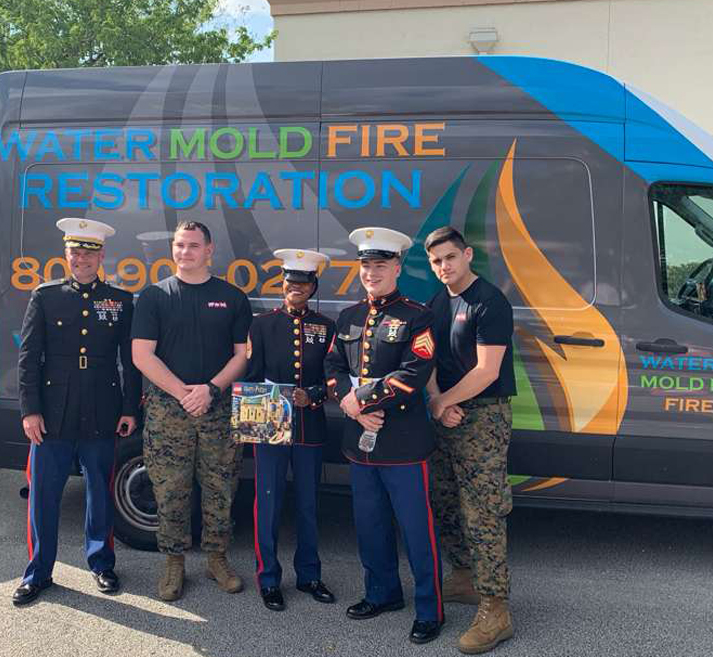
 Community & Military Support