Mold Inspection & Testing in Albuquerque
New Mexico does not license mold assessment professionals at the state level — unlike Florida (which licenses both assessors and remediators under Chapter 468 of the Florida Statutes), Texas, New York and a handful of other states. That means Albuquerque property owners evaluating an assessment quote have to weigh credentials that actually substantiate the work: industry certification, use of AIHA-accredited laboratories for sample analysis, and adherence to published assessment standards (ASTM and IICRC). Water Mold Fire Restoration of Albuquerque is IICRC Firm Certified, performs assessments to ASTM and IICRC documentation standards, and uses AIHA-accredited labs for all sample analysis. We perform inspections and testing for real estate transactions, swamp cooler attic assessments, post-monsoon water-loss inspections, stucco-cavity and flat-roof IAQ concerns, adobe and pueblo revival historic property assessments, insurance claims and post-remediation verification across the City of Albuquerque, Bernalillo County, Rio Rancho and the surrounding metro.
When Albuquerque Properties Need a Mold Inspection
In a market where rooftop swamp coolers are nearly universal, flat roofs are an architectural signature, stucco-and-frame construction is dominant, and the high-desert "dry climate" assumption regularly causes owners to underestimate moisture problems, "I want to know what's actually in this property" is one of the most reasonable things an Albuquerque property owner or buyer can ask. The most common scenarios:
- Pre-purchase real estate inspections. Albuquerque's housing inventory — adobe and pueblo revival homes in the North Valley, Country Club and Old Town, stucco-and-frame ranches across the Northeast Heights and Foothills, mid-century modern in Ridgecrest and Nob Hill, Victorian and bungalow stock in the Huning Highland Historic District, contemporary construction in Mesa del Sol and the Westside, mountainfront custom homes in Sandia Heights and Four Hills, and East Mountain properties out to Tijeras and Sandia Park — carries hidden-mold profiles that standard home inspections will not surface. Most ABQ home inspectors do not perform air sampling and are limited to visual checks and moisture meter readings. An independent mold assessment tells you what's actually in the attic, in the stucco cavities, in the swamp cooler ductwork and in the HVAC system before you close.
- Swamp cooler attic assessments. Rooftop swamp coolers leak in ways the homeowner can't see or hear from inside the house, depositing water in attic insulation and on roof decking until mold colonizes. An attic-focused assessment with air sampling and visual inspection of the swamp cooler installation is one of our most valuable services for ABQ buyers, and for owners who suspect their swamp cooler ran improperly through the past season. Pre-attic-conversion assessments also catch existing mold problems before owners commit to costly finish work in a space that turns out to have moisture issues.
- Stucco-cavity assessments. Wind-driven monsoon rain pushes water through hairline stucco cracks at corners, window heads, door frames and parapet caps. The water sits in wall cavities behind the stucco and seeds mold before producing visible interior damage. Properties with original stucco systems from the 1950s through the 1980s, and properties with visible stucco cracking near windows and parapets, benefit from moisture mapping and targeted air sampling to determine whether mold has colonized.
- Post-monsoon assessments. Monsoon flash flooding produces Category 3 surface water that seeds mold quickly. Even with prompt extraction, residual moisture behind drywall, in framing cavities and in HVAC systems can produce hidden mold weeks after the original water event. Post-monsoon verification assessments are a recurring late-summer and fall service category for us.
- Post-flat-roof-leak assessments. Flat-roof drainage failures during monsoon storms produce attic and ceiling-cavity mold that often isn't visible from inside the house for weeks or months. Pre-roof-repair and pre-sale assessments confirm the extent of any existing damage.
- Adobe & pueblo revival assessments. Solid adobe construction, pueblo revival, territorial style and Spanish colonial revival homes behave differently from frame-and-stucco modern stock. North Valley, Country Club, Old Town, Corrales and Placitas adobe properties require moisture mapping and sampling protocols adapted to the construction, plus documentation that supports any anticipated landmarks-commission review for envelope-affecting remediation work.
- Indoor air quality (IAQ) testing. Unexplained respiratory symptoms, persistent musty smell, new-occupant complaints in a rental, or due-diligence baseline testing for a buyer with allergy or asthma concerns. We perform IAQ-focused sampling protocols beyond the standard mold scope when warranted.
- Insurance claim documentation. New Mexico insurance carriers increasingly require independent mold assessment documentation on water claims of significant size before closing them out. Our reports are written to meet that standard.
- Post-Remediation Verification (PRV). Independent verification that a completed mold remediation actually worked. EPA, IICRC and ASTM all recommend PRV by an independent third party on significant jobs.
New Mexico Mold Regulation & Why Independence Still Matters
New Mexico does not license mold assessment or mold remediation contractors. The New Mexico Environment Department publishes consumer guidance documents on indoor mold, but no individual or company license is required to perform either service. This is different from Florida, where Chapter 468, Part XVI of the Florida Statutes requires separate Mold Assessor and Mold Remediator licenses and prohibits the same company from doing both on the same project.
New Mexico doesn't impose that separation by law, but the published industry consensus — the EPA's Mold Remediation in Schools and Commercial Buildings guidance, the IICRC industry standards for mold remediation and assessment, and the ASTM standards for moisture and mold assessment — all recommend that mold assessment and mold remediation be performed by independent parties on significant jobs. The reasoning is the same in New Mexico as it is in Florida: an assessor who is also bidding the remediation contract has an incentive to oversize the findings, and a remediator performing its own clearance has an incentive to undersize them.
We follow that best practice voluntarily. We perform our own mold remediation service in New Mexico (a legal scope here), and we perform assessment and testing on the same property when warranted. For insurance-driven and large-scope jobs, we recommend independent third-party post-remediation verification — and we can coordinate with independent indoor air quality assessors when that separation matters to the claim or to the parties involved.
Our Mold Inspection & Testing Process
- Pre-inspection consult. Reason for assessment, property history, recent water events (swamp cooler leak, monsoon flood, flat-roof failure, plumbing burst, stucco intrusion), occupant health concerns.
- On-site visual inspection. Systematic walkthrough with photo documentation. Attic spaces (especially around swamp cooler penetrations), kitchen and bathroom plumbing chases, basement or crawlspace where present, stucco-cavity exterior, HVAC closets and supply runs.
- Moisture mapping & thermal imaging. Calibrated meters and thermographic camera locate hidden moisture in walls, ceilings, floor cavities, attic decking, stucco cavities and around plumbing penetrations.
- Air sampling (spore trap). Outdoor baseline + indoor samples for lab comparison.
- Surface sampling. Tape lifts, swabs, bulk samples for direct identification.
- AIHA-accredited lab analysis. Standard 3-5 business days; rush 24-48 hours.
- Written assessment report. Photos, moisture mapping, thermal images, lab results, interpretation, and (where mold is confirmed) a recommended remediation scope.
Types of Testing We Perform
- Air sampling (spore trap). Indoor vs. outdoor airborne spore comparison.
- Surface sampling. Species ID via tape lift, swab, settled dust.
- Bulk sampling. Direct examination of suspect materials.
- HVAC sampling. Air handler and duct sampling for system contamination — particularly important in ABQ homes that have transitioned from swamp cooler to refrigerated air.
- Attic sampling. Swamp-cooler-leak and flat-roof-failure attic mold detection.
- Stucco-cavity sampling. Wall-cavity moisture and mold assessment behind stucco systems.
- Crawlspace sampling. Mid-century ABQ stock with raised-foundation crawlspaces.
- Indoor Air Quality (IAQ) testing. Broader sampling for occupant health concerns.
- Post-Remediation Verification. Independent verification against the original remediation scope.
Where We Inspect & Test in Albuquerque & the Metro
The City of Albuquerque — Huning Highland, Downtown, EDo, Old Town, Sawmill District, Wells Park, Nob Hill, University Heights, Ridgecrest, Uptown, the Heights, Foothills, Far Northeast Heights, Glenwood Hills, Tanoan, Sandia Heights, Four Hills, Taylor Ranch, Paradise Hills, Volcano Cliffs, Westgate Heights, Ladera, Mesa Verde, Country Club, North Valley, Los Ranchos de Albuquerque, South Valley, International District, Mesa del Sol. Sandoval County: Rio Rancho, Corrales, Bernalillo, Placitas. East Mountains: Tijeras, Sandia Park, Cedar Crest, San Antonito, Edgewood, Moriarty. Valencia County: Los Lunas, Belen, Bosque Farms, Peralta. Real estate closings and insurance deadlines often run tight — we schedule rush appointments where the calendar allows.
Albuquerque Mold Inspection & Testing FAQs
No. New Mexico does not require state licensure for mold assessment or remediation. The meaningful credentials are IICRC Firm certification, adherence to ASTM and IICRC assessment standards, and use of AIHA-accredited laboratories.
Strongly recommended for any property with a rooftop swamp cooler, any flat-roof home, any pre-WWII Huning Highland or Nob Hill home, any adobe or pueblo revival property, and any property in NFIP-mapped flood zones. Standard ABQ home inspections typically do not include air sampling.
Inspection is visual/instrument-based; testing is lab analysis of samples collected during inspection. Most Albuquerque assessments include both.
EPA, IICRC and ASTM all recommend independent third-party PRV on significant jobs — even though NM doesn't require it (Florida does). Conflict-of-interest removal: an assessor bidding the remediation has incentive to oversize; a remediator self-clearing has incentive to undersize.
Yes, especially before buying a home with a rooftop swamp cooler, and after any season in which the cooler was known to leak. Attic-focused mold assessment with air sampling tells you what's actually above the ceiling.
Yes, if water sat more than 24-48 hours before mitigation, or if mitigation was rushed during a citywide event. Monsoon flash flooding produces Category 3 water that seeds mold quickly.
Yes. Adobe, pueblo revival, territorial and Spanish colonial revival construction requires moisture mapping and sampling protocols adapted to the construction. North Valley, Country Club, Old Town, Corrales and Placitas properties.
Standard single-family / condo inspection with 2-3 air samples runs low hundreds; larger properties and building-wide scopes cost more. Written quote before sampling.
On-site 1-3 hours. Lab analysis 3-5 business days standard, 24-48 hours rush available.
Schedule an Albuquerque Mold Inspection
Water Mold Fire Restoration of Albuquerque1925 Coal Place SE
Albuquerque, NM 87106
505-312-4758 · albuquerque@watermoldfire.net
IICRC Firm Certified
Real estate closing, swamp cooler attic assessment, post-monsoon verification, stucco-cavity concern, or adobe-property pre-purchase evaluation? Call 505-312-4758 to schedule.
← Back to all Albuquerque restoration services
 IICRC Certified Firm
 Satisfaction Guaranteed!
 24/7 Emergency Service
 Expert Technicians
 Direct Insurance Billing
 Unsurpassed Customer Service
 No Damage We Can’t Manage!
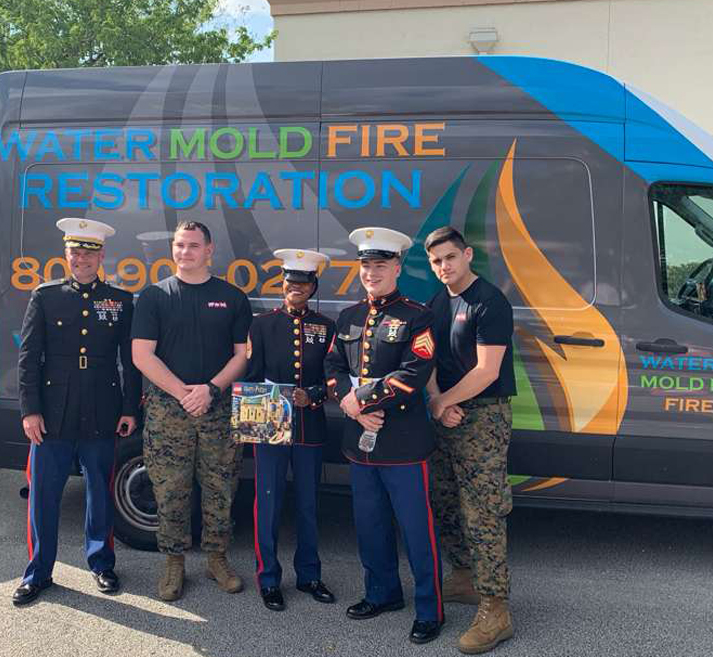
 Community & Military Support