24/7 Water Damage & Flood Cleanup for Albuquerque Homes & Businesses
Water damage in Albuquerque arrives from a different set of sources than most American cities. It comes down through ceiling planes after a swamp cooler float valve sticks open on the roof and quietly drains hundreds of gallons into attic insulation. It enters through flat-roof parapet drainage that clogged with cottonwood debris before the monsoon storm hit. It surges up through garages and ground floors during monsoon-season flash flooding, when a single afternoon thunderstorm can drop one to two inches of rain on a Northeast Heights neighborhood in under an hour. It backs up through floor drains when an arroyo overtops near the South Valley or the West Side. It splits a copper supply line on a north-facing wall when a polar-front cold snap drops the high desert below 15°F. Water Mold Fire Restoration of Albuquerque handles all of it — IICRC Firm Certified crews dispatched 24 hours a day from our facility on Coal Place SE in the Huning Highland area, with truck-mounted extractors, commercial-grade dehumidifiers, thermal imaging cameras and the documentation discipline New Mexico insurance carriers expect.
The Albuquerque Conditions That Drive Most Water Losses
We see the same loss patterns repeat across the City of Albuquerque, Bernalillo County, Rio Rancho and the surrounding metro, and most of them trace back to ABQ's specific high-desert climate, infrastructure and building stock:
- Swamp cooler (evaporative cooler) failures. Swamp coolers are installed on a high percentage of Albuquerque homes because the city's low ambient humidity makes them efficient. They sit on roofs and depend on a continuous water supply line wetting absorbent pads. Float valves stick open and overflow; water lines crack during winter freezes; pads degrade and clog drainage; seasonal startup or shutdown done improperly leaves connections leaking. A failed swamp cooler dumps hundreds of gallons through ceiling planes, attic insulation, interior walls and rooms below. Spring startup and fall shutdown produce peak call volume. The leaks often go undetected for hours or days because the unit is on the roof and the owner can't hear or see the failure from inside the house.
- Monsoon-season flash flooding (Jul–Sep). The North American Monsoon brings intense, localized afternoon and evening thunderstorms to the metro from mid-June through mid-September. Individual storm cells drop one to two inches of rain in under an hour, overwhelming storm drains, overtopping AMAFCA-managed arroyos, and producing flash flooding through normally-dry channels that cut residential neighborhoods. The South Valley, low-lying Heights neighborhoods, Bosque-adjacent properties and any home in an arroyo flood zone all see recurring monsoon water damage.
- Flat-roof drainage failures. Flat roofs with parapet drainage are a signature Albuquerque architectural detail across pueblo revival, territorial, Spanish colonial revival and southwest mid-century stock. They drain through scuppers, internal drains and parapet penetrations that have to stay clear. Cottonwood debris, monsoon-blown dirt and bird nesting clog drainage and back water up against the roof membrane. Stucco-parapet flashings crack from UV exposure and freeze-thaw cycles at 5,300 feet of elevation. Even small membrane failures hold standing water during monsoon events and leak into attic spaces and ceiling cavities.
- Stucco cavity water intrusion. Stucco-and-frame construction is the dominant ABQ residential building system. Stucco fails differently than brick or siding: hairline cracks at corners, window heads and door frames allow wind-driven monsoon rain into the wall cavity, where the moisture can sit for weeks before producing visible interior damage. Stucco mesh and lath corrosion behind older stucco compounds the problem. ABQ homes from the 1950s through the 1980s with original stucco systems are particularly common candidates.
- Arroyo overflow & bosque flooding. Albuquerque's arroyo network — managed by AMAFCA — carries enormous monsoon flows through channels that cross residential neighborhoods across the metro. Properties adjacent to arroyos and in the Rio Grande Bosque corridor see periodic overtopping and surface flooding during major monsoon events. The October 2018 early-season warm rain on snow event and recurring smaller arroyo overtopping incidents through every monsoon season produce a steady baseline of flood-cleanup work.
- High-desert freeze events. Albuquerque's high-desert climate produces extreme temperature swings; freeze events do happen, especially when polar air pushes south down the Front Range. The 2011 cold snap (with temperatures hitting -15°F and widespread gas-service interruptions) is the recent benchmark; less severe winter freezes produce a steady annual baseline of pipe-burst calls. Exterior-wall supply lines, unheated garage plumbing, hose bibs and improperly winterized swamp cooler water lines are the typical failure points.
- Sewer backups. Sewer backups happen during heavy rain events and during line failures upstream. The Albuquerque Bernalillo County Water Utility Authority manages city wastewater infrastructure; older parts of the City of Albuquerque carry combined or partially-combined sewer service that produces backflow during major monsoon events. Category 3 contaminated water under industry standards.
- Original-era plumbing in pre-WWII ABQ stock. Huning Highland Historic District, Nob Hill, Country Club and the older North Valley neighborhoods carry pre-WWII construction with galvanized supply pipe and cast-iron drain stacks. Pinhole leaks, hub-joint failures and slow chronic leaks behind plaster walls compound over months before owners notice the moisture.
Monsoon Flash Flooding & Arroyo Overflow Cleanup
Albuquerque flooding doesn't behave like flooding in cities with steady rainfall. The North American Monsoon delivers most of the city's annual precipitation in a roughly three-month window through intense, localized thunderstorms that can drop one to two inches of rain on a single neighborhood in under an hour. When that happens, AMAFCA's arroyo network carries the runoff — but arroyos that run dry 350 days a year fill rapidly during monsoon storms, occasionally overtopping, and the storm drain system is sized for typical rather than extreme events. Surface water finds its way into low-lying garages, ground floors and basements (where they exist) on properties adjacent to arroyos, in the South Valley, in low spots of the Heights, and in the Bosque-adjacent neighborhoods along the Rio Grande corridor.
Our monsoon flood cleanup process is built around that reality. Surface floodwater is Category 3 contaminated water under industry standards — it carries soil, agricultural runoff from upstream watersheds, hydrocarbons from street surfaces, and biological contaminants. We arrive in full PPE, extract standing water with truck-mounted pumps, remove and dispose of contaminated porous materials, apply EPA-registered antimicrobials to remaining structural materials, and deploy commercial drying equipment sized for the volume monsoon floods actually produce. ABQ's low ambient humidity helps evaporation compared to humid markets, but at 5,300 feet of elevation dehumidifier efficiency drops slightly, which we account for in equipment sizing.
Important note on insurance: standard New Mexico HO-3 homeowners policies do not cover surface flooding or arroyo overflow. That coverage comes from a separate NFIP or private flood policy. Properties in NFIP-mapped flood zones along the Rio Grande corridor and adjacent to major arroyos are typically required to carry flood insurance by their mortgage lenders. Many ABQ homeowners outside mapped flood zones don't carry flood coverage and learn after a monsoon event that their homeowners policy doesn't apply.
Swamp Cooler Leak Cleanup in Albuquerque
Swamp coolers — evaporative coolers, the rooftop cooling technology that depends on Albuquerque's low ambient humidity to work — are installed on a high percentage of ABQ homes and are one of the single most common water-damage sources we respond to. The unit sits on the roof; a continuous water supply line keeps absorbent pads wet; a blower draws warm outside air through the wet pads, dropping its temperature by evaporation; the cooled air is forced into the house through ductwork. When the system works it uses water efficiently. When it fails, it dumps a large volume of water into ceiling planes, attic insulation, interior walls and rooms below before anyone notices.
Common failure modes we see across Albuquerque: stuck float valves that overflow the unit continuously; cracked water supply lines from winter freeze events that thaw and start leaking in spring startup; degraded or clogged pads that cause drainage problems; failed pumps that flood the unit; and seasonal transitions (spring startup or fall shutdown) done improperly that leave connections leaking. The leaks usually go undetected for hours or days because the unit is out of sight on the roof. We respond to swamp cooler water damage year-round; volume spikes during spring startup (April-May) and fall shutdown (October-November) windows.
Our Water Damage Restoration Process
Every job we run in Albuquerque follows the IICRC S500 Standard for Professional Water Damage Restoration — the published industry consensus standard:
- Emergency response & assessment (Hour 1). Crew dispatch, source identification and shutoff (swamp cooler supply line, broken pipe, roof breach), thermal imaging and moisture mapping. Documentation begins on minute one.
- Water extraction (Hours 1–6). Truck-mounted and portable extractors pull standing water. Category 3 sewer-backup and monsoon flood losses get full PPE and porous-material removal.
- Structural drying & dehumidification (Days 1–5). Air movers and LGR dehumidifiers create dry-air conditions. Equipment sized for ABQ's 5,300-foot elevation and low ambient humidity.
- Antimicrobial treatment & mold prevention. EPA-registered antimicrobials applied to wet materials — even in ABQ's dry climate, trapped moisture behind finishes seeds mold within 48 hours.
- Daily monitoring & documentation. Moisture readings, temperature and RH logged daily until materials hit dry standard.
- Reconstruction. Drywall, stucco patch, flooring, cabinetry, paint and finish carpentry, coordinated with licensed New Mexico trade subcontractors and properly permitted through the City of Albuquerque Planning Department or the relevant Bernalillo or Sandoval County department.
Water Damage Categories We Handle
- Category 1 (clean water). Broken supply lines, refrigerator and ice-maker lines, water heater failures, sudden swamp cooler supply line breaks, rainwater intrusion through a clean envelope.
- Category 2 (gray water). Dishwasher and washing machine discharge, toilet overflows (no feces), A/C condensate through contaminated pans, gradual swamp cooler leaks that have stood in attic insulation.
- Category 3 (black water). Sewer backups, monsoon surface floodwater, arroyo overflow, Rio Grande bosque flooding. Requires material removal, full PPE and verified post-remediation cleaning.
New Mexico Insurance & Documentation
New Mexico's homeowners insurance market is generally stable, though wildfire exposure has tightened the market for properties in wildland-urban interface zones along the Sandia foothills and the East Mountains. Sudden and accidental water damage from supply-line and appliance failures is covered under a standard HO-3 policy. Swamp cooler failures are typically covered as sudden plumbing failures, though carriers may dispute long-term gradual leaks where they argue the homeowner should have caught the problem sooner. Sewer/drain backup coverage is a separate endorsement many New Mexico homeowners only realize they need after the first monsoon-season backup. Surface flooding from monsoon rain that overwhelms storm drains, and arroyo overflow, requires separate NFIP or private flood insurance. We build every ABQ job file the way a New Mexico adjuster needs to see it: thermal images, moisture maps, daily readings, photo logs and a clear written scope, and we coordinate directly with your adjuster.
Where We Respond in Albuquerque & the Metro
The City of Albuquerque — Huning Highland, Downtown, EDo, Old Town, Sawmill District, Wells Park, Nob Hill, University Heights, Ridgecrest, Spruce Park, Uptown, the Heights, Foothills, Far Northeast Heights, Glenwood Hills, Heritage East, Tanoan, Sandia Heights, Four Hills, Taylor Ranch, Paradise Hills, Volcano Cliffs, Westgate Heights, Ladera, Mesa Verde, Country Club, North Valley, Los Ranchos de Albuquerque, South Valley, International District, Trumbull Village, Mesa del Sol. Sandoval County: Rio Rancho, Corrales, Bernalillo, Placitas, Algodones. East Mountains: Tijeras, Sandia Park, Cedar Crest, San Antonito, Edgewood, Moriarty. Valencia County: Los Lunas, Belen, Bosque Farms, Peralta.
Albuquerque Water Damage Restoration FAQs
Our ABQ crews dispatch 24/7 from our Huning Highland facility on Coal Place SE and target an on-site arrival of 60 minutes or less across the City, Bernalillo County, Rio Rancho and the inner East Mountains. During monsoon-season flash flood events we triage active leaks and Category 3 sewer-backup losses first.
The North American Monsoon brings intense, localized afternoon thunderstorms to the metro from mid-June through mid-September. Individual storms drop one to two inches of rain in under an hour, overwhelming storm drains and overtopping AMAFCA arroyos, producing flash flooding in low-lying neighborhoods.
Swamp coolers sit on roofs and depend on a continuous water supply. Float valves stick open, lines crack, pads clog, seasonal transitions go wrong. Failed units leak hundreds of gallons through ceiling planes, attic insulation, walls and rooms below. Spring startup and fall shutdown produce peak call volume.
Flat roofs drain through scuppers, internal drains and parapet penetrations that have to stay clear. Cottonwood debris, monsoon-blown dirt and bird nesting clog drainage; stucco-parapet flashings crack from UV and freeze-thaw at elevation. Even small failures hold standing water during monsoon events.
Sudden and accidental water damage is generally covered under a standard NM HO-3 policy. Sewer backup is NOT — that requires a separate endorsement. Rising flood water (arroyo overflow, monsoon surface flooding) requires separate NFIP or private flood insurance.
Yes, less commonly than northern markets but real. Polar-air cold snaps below 15°F (2011 was the recent benchmark) fail exterior-wall supply lines, unheated garage plumbing, hose bibs and improperly winterized swamp cooler lines.
Yes — Category 3 ("black water"). Contains raw sewage and pathogens. Requires full PPE, porous-material removal, antimicrobial treatment and verified cleaning.
Extraction and drying 3 to 5 days. Low ambient humidity helps evaporation; high-elevation low air density slightly reduces dehumidifier efficiency. Reconstruction adds 1 to 4 weeks depending on scope and City of Albuquerque permit timing.
Call the restoration company first. NM policies require mitigation. Even in dry climate, trapped moisture behind finishes seeds mold within 24-48 hours.
Call Albuquerque's Water Damage Restoration Team
Water Mold Fire Restoration of Albuquerque1925 Coal Place SE
Albuquerque, NM 87106
505-312-4758 · albuquerque@watermoldfire.net
24/7 Emergency Service
IICRC Firm Certified
Active swamp cooler leak, flat-roof failure, monsoon flash flood, frozen pipe burst, or any water loss in ABQ or the metro? Call 505-312-4758 and a crew will be rolling.
← Back to all Albuquerque restoration services
 IICRC Certified Firm
 Satisfaction Guaranteed!
 24/7 Emergency Service
 Expert Technicians
 Direct Insurance Billing
 Unsurpassed Customer Service
 No Damage We Can’t Manage!
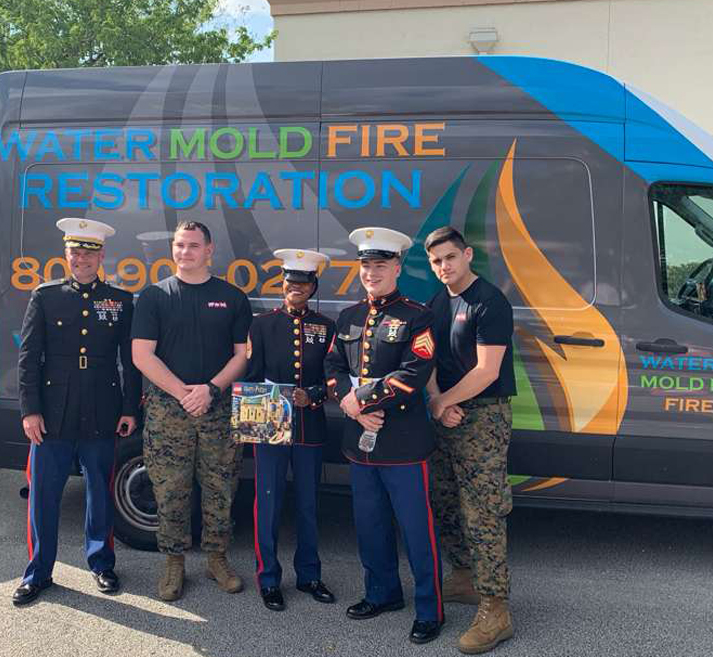
 Community & Military Support