Leak Detection for Fort Lauderdale Homes & Businesses
A leak you can't see is the most expensive kind. By the time a slab leak surfaces as warm spots on tile, a shower pan failure buckles the floor outside the bathroom, an icemaker line drips into a finished basement-style storage room, or a pool leak finally shows up on the water bill, the cavity behind that finish has already been wet for weeks and in Fort Lauderdale's 75%-humidity climate, that almost always means mold growth on top of the water damage. Water Mold Fire Restoration of Fort Lauderdale finds leaks of every kind: supply, drain, slab, pool, shower pan, appliance, irrigation and roof. We use both non-invasive methods (electronic acoustic, infrared thermal imaging, tracer gas, pressure testing) and, when the symptoms warrant it, targeted invasive verification (controlled access cuts, fixture removal, sub-slab access). Our crews dispatch from NW 36th Avenue and cover Broward County 24/7 for active leak emergencies.
We also offer Insurance Documentation Leak Detection an independent third-party leak inspection and written report for homeowners who already know what their leak is but need the documentation their insurance carrier requires.
Leak Types We Detect in Fort Lauderdale
"Leak detection" gets used as if every leak is the same kind, but the physics of finding a pressurized copper pinhole under a slab is nothing like locating a failing shower pan or tracing an icemaker supply line. Our crews see these categories on repeat across Fort Lauderdale and Broward County:
- Slab leaks in saltwater-corroded copper. Nearly every Fort Lauderdale home is slab-on-grade, with copper supply lines running through or just under the concrete. East of US-1, the combination of acidic soils, salt-air corrosion and electrolytic activity on pre-1990 copper produces a steady drip of pinhole slab leaks warm spots on tile, spinning meters with all fixtures off, water bills that climb 20-50% without explanation.
- Pool & spa leaks. Broward County is dense with in-ground pools, and Fort Lauderdale in particular has thousands of pools dating to the 1960s, 70s and 80s with original PVC and copper return/suction lines running under decks, lanais and pavers. Pool losing more than a quarter-inch per day above evaporation, or a spa that won't hold level overnight, has a leak that needs finding before it undermines the deck or rebar.
- Shower pan & wet-area leaks. Failed shower pans, cracked grout, broken tile membranes and leaking tub overflows are extremely common in Fort Lauderdale's 1970s-90s housing stock and high-rise condos. They surface as buckled flooring in the room adjacent to the bathroom, ceiling stains in the unit below, or persistent moisture along baseboards.
- Dishwasher leaks. Failed door gaskets, supply-line cracks at the brass elbow, and drain-hose failures behind the unit. The leak often runs into the floor beneath the cabinet for weeks before sub-floor swelling gives it away.
- Refrigerator & icemaker line leaks. The plastic icemaker supply line behind the refrigerator is one of the single most common interior leak sources in Fort Lauderdale homes we have seen icemaker lines fail and soak hardwood floors, subfloors and the rooms below for months before discovery.
- Washing machine hose & supply leaks. Rubber washing machine supply hoses age out in the Fort Lauderdale heat and humidity. Failures range from slow weep at the hose bib to catastrophic burst that releases hundreds of gallons in minutes. Pan leaks and standpipe overflow round out the category.
- Water heater leaks. Tank corrosion at the bottom seam, T&P valve discharge, supply-line failures at the top, and tankless unit failures. Garages and laundry-area water heaters are most common in Fort Lauderdale homes; closet-mounted units in condos cause the worst secondary damage.
- Toilet flange & wax-ring leaks. Slow seepage from a failing wax ring shows up as discoloration at the toilet base, ceiling stains in the unit below, or soft flooring around the toilet.
- Cast-iron drain failures in 1970s and 1980s condos. Many condos along the Galt Ocean Mile, the Intracoastal corridor and the Las Olas waterfront still have their original cast-iron drain stacks. After 40-50 years in a humid, coastal environment, those stacks corrode, scale, sag and fail often inside shared wall cavities where the leak is invisible from any single unit.
- A/C condensate leaks. Air conditioning systems in Fort Lauderdale run nearly every day of the year, producing gallons of condensate per system per day. Clogged or cracked condensate lines are one of the single most common ceiling-leak sources we respond to.
- Underground irrigation leaks. A buried lateral or valve failure can lose hundreds of gallons per day and easily mask itself behind already-lush landscaping. Telltale signs: an unusually bright green patch of grass, a sinking paver, or a climbing water bill with nothing else changed.
- Roof & window leaks from tropical-system rain. Roof leaks and window-frame leaks from wind-driven rain often present as interior staining far from the actual point of entry. Thermal imaging and moisture mapping trace the water back to the real source usually a flashing failure, cracked tile, or seal-gasket break that visual inspection missed.
Our Leak Detection Methods — Non-Invasive and Invasive
No single detection method finds every leak. The right approach depends on whether the leak is pressurized or drain-side, above grade or under slab, indoor or pool/irrigation, dry-side or wet-area. We default to non-invasive tools, then escalate to controlled invasive verification when symptoms warrant it.
Non-Invasive Methods (Default)
- Static & hydrostatic pressure testing. We isolate the supply system (or a specific circuit) and watch the pressure gauge. A sustained pressure drop confirms a leak; the rate of drop helps size it. Usually our first move.
- Electronic acoustic detection. Ground microphones and acoustic leak correlators listen for the ultrasonic signature of pressurized water escaping through a small opening. On a quiet slab, we can hear a slab leak through finished tile.
- Infrared thermal imaging. A thermographic camera maps surface temperature differentials across walls, floors and ceilings — hot-water slab leaks show clearly, and behind-wall cold-water leaks appear as evaporation-cooled patches. Also traces the true source of roof leaks that surface far from the point of entry.
- Tracer gas (hydrogen-nitrogen mix). For leaks too small to register acoustically, we pressurize the suspect line with a non-flammable hydrogen-nitrogen mix and use a gas sniffer at the surface to locate the exit point. Useful for hairline slab leaks and irrigation laterals.
- Sewer / drain line camera inspection. A push camera through a cleanout finds breaks, root intrusion, scale buildup and bellies in cast-iron and PVC drain lines.
- Dye testing. For pools, shower pans, toilet flanges and suspect roof penetrations, fluorescent dye tracks the water path and confirms the failure point.
- Moisture mapping. Calibrated moisture meters across walls and floors define the wet zone so the repair scope is exact — not larger than necessary, not smaller than the actual damage.
Invasive Methods (When Symptoms Warrant)
Non-invasive tools answer most questions, but not all. When the leak source is deeply buried, when multiple suspect sources need to be ruled out, or when a positive non-invasive find needs visual confirmation before a major repair, we move to controlled invasive verification:
- Targeted drywall access cuts. Small, surgical openings at the location pinpointed by acoustic or thermal detection. Sized to confirm the leak and inform the repair — not exploratory demolition.
- Fixture & appliance removal. Pulling a dishwasher, refrigerator, washing machine, toilet or vanity to access supply lines, drain connections and the floor beneath. Reinstalled when the detection is complete.
- Tile & shower pan inspection cuts. For confirmed wet-area leaks, controlled tile removal at the suspected pan or membrane failure point.
- Sub-slab access. On confirmed slab leaks where a repair (vs. reroute) is the chosen path, we core or saw-cut a minimum opening to expose the failed pipe.
Insurance Documentation Leak Detection — Third-Party Reports
A growing share of our Fort Lauderdale calls now come from homeowners and property managers who already know where their leak is. They found the burst icemaker line in the laundry room. They watched the shower pan finally give way after years of warning signs. They saw the water heater seam corrode through. What they need is not "find the leak." What they need is an independent, third-party leak inspection report formatted for their insurance carrier.
Florida's homeowners insurance environment tightened significantly with the 2022 (SB 2A) and 2023 reforms. Carriers now expect detailed cause-of-loss documentation before they pay out water claims, and a homeowner's own statement is not enough. Our Insurance Documentation Leak Detection service is purpose-built for this scenario:
- Independent on-site inspection of the known leak source.
- Photo documentation of the failed component and the resulting damage.
- Moisture mapping across the affected area to scope the loss.
- Cause-of-loss narrative identifying whether the failure was sudden and accidental (typically covered) versus long-term seepage (typically excluded).
- Written report formatted for direct submission to your insurance carrier, your public adjuster or your attorney.
- Rush turnaround available when claim deadlines are tight.
We work with all major Florida carriers including Citizens. The service is also commonly requested for real estate disputes, landlord-tenant claims, condo HOA disputes (where the failure point determines who pays for the loss), and post-loss documentation when the original repair was completed without formal scoping.
Signs You Have a Hidden Leak
- Water bill jumped 20% or more with no change in usage.
- Water meter spins with every fixture in the house turned off.
- Warm or damp spots on a tile or concrete floor.
- Pool drops more than a quarter inch per day above evaporation.
- Persistent musty smell with no visible mold.
- Drywall staining, baseboard buckling or peeling paint.
- Reduced water pressure at one or more fixtures.
- An unusually green or lush patch of grass in the lawn.
- Sinking pavers or a soft spot in landscaping near the home.
- Sound of running water inside walls with nothing in use.
Our Leak Detection Process
- Phone intake. We ask about the symptoms, water bill history, recent water events, property age and construction type. This tells us which equipment to load.
- On-site walkthrough & meter check. We verify the water meter is moving with all fixtures off, walk the property for visible cues, and take baseline moisture readings at suspect locations.
- System isolation & pressure testing. Hot vs cold supply, irrigation, pool circuits, sewer side — we isolate each system to confirm where the leak lives before we instrument-hunt for it.
- Instrument detection. Acoustic, thermal, tracer gas, camera and dye as the case requires.
- Pinpoint & mark. The leak gets marked at the surface within inches of its location so any repair opens only what's needed.
- Written report. Photos, thermal images, moisture maps, leak location, suspected cause-of-loss, and (where the symptoms have already caused damage) a documented scope for insurance submission.
- Repair coordination. We can perform the plumbing repair ourselves on most jobs, coordinate with your preferred plumber, or hand off the report for your contractor's use.
Where We Detect Leaks in Fort Lauderdale & Broward County
Our crews respond throughout Fort Lauderdale — including the waterfront homes of Las Olas Isles, Rio Vista, Coral Ridge, Harbor Beach and Bay Colony, the mid-century pool homes of Victoria Park and Coral Ridge Isles, the 1970s and 1980s condos along the Galt Ocean Mile and the Intracoastal corridor, and the historic bungalows of Sailboat Bend and Tarpon River. We also cover Wilton Manors, Oakland Park, Lauderdale-by-the-Sea, Pompano Beach, Plantation, Davie, Sunrise, Tamarac and Hollywood.
Fort Lauderdale Leak Detection FAQs
Both. Non-invasive is our default approach — electronic acoustic listening, infrared thermal imaging, tracer gas, and static and hydrostatic pressure testing locate most Fort Lauderdale leaks without opening drywall, tile or concrete. When the symptoms warrant it — multiple suspect sources, a leak in a deeply buried line, or confirming a positive find before repair — we move to controlled invasive verification: small targeted access cuts, fixture removal or sub-slab access. Even on invasive jobs, we limit the openings to the smallest scope that gets the answer.
Many Fort Lauderdale homeowners already know exactly where their leak came from — they found the burst icemaker line, saw the shower pan failing, or watched a dishwasher hose let go. What their insurance carrier won't accept is the homeowner's own description. We provide Insurance Documentation Leak Detection: an independent third-party leak inspection with photos, moisture mapping, cause-of-loss narrative and scope, formatted for direct submission to your carrier or public adjuster. Especially after Florida's 2022 and 2023 insurance reforms, carriers expect this level of documentation before paying out.
An unexplained spike almost always points to one of a handful of leaks: a slab leak in your supply line, a pool leak, an underground irrigation leak, a running toilet flapper, or a leaking refrigerator/ice-maker line. We isolate the source quickly with a pressure test of the main supply and targeted instrumentation.
Slab leaks are extremely common in Fort Lauderdale because nearly every home here is slab-on-grade, and coastal copper supply lines east of US-1 corrode faster than inland averages. We start with a static pressure test, isolate the hot vs cold side, then use ground microphones and infrared thermal imaging to pinpoint the leak location through the concrete. Most slab leaks can be pinpointed to within 6 to 12 inches without breaking the slab.
We rule out evaporation with a bucket test, then isolate whether the leak is in the structure (liner, tile, light, skimmer) or the plumbing (return lines, suction lines, equipment pad). Plumbing leaks get a pressure test of each circuit; structural leaks get dye testing and acoustic listening.
Generally, the resulting water damage from a sudden and accidental slab leak is covered under a standard Florida HO-3 policy, and many policies cover the access cost (opening the slab) with the right endorsement. The repair of the pipe itself is sometimes excluded. Florida's post-2022 insurance reforms tightened claim timelines and documentation requirements, so prompt detection and clear documentation matter more than ever.
Our Fort Lauderdale crews dispatch from our NW 36th Avenue facility and can typically be on site the same day for emergency calls within Broward County, with 24/7 availability for active leaks. Scheduled (non-emergency) detection generally books within 24 to 72 hours.
Call Fort Lauderdale's Leak Detection Team
Water Mold Fire Restoration of Fort Lauderdale5400 NW 36th Ave, Suite A
Fort Lauderdale, FL 33309
954-800-0801 · 24/7 Emergency Service
Water bill climbing, pool dropping, warm spot on the floor, or a stain you can't explain? Call 954-800-0801 — we'll find it before the next bill hits.
← Back to all Fort Lauderdale restoration services
 IICRC Certified Firm
 Satisfaction Guaranteed!
 24/7 Emergency Service
 Expert Technicians
 Direct Insurance Billing
 Unsurpassed Customer Service
 No Damage We Can’t Manage!
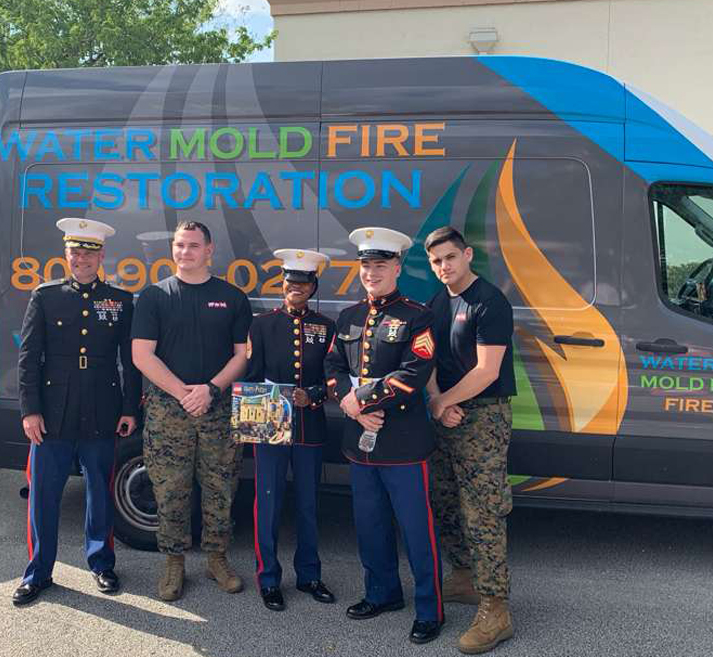
 Community & Military Support