Florida-Licensed Mold Removal & Remediation in Fort Lauderdale
Mold is not a maintenance issue in Fort Lauderdale it's a climate condition. With outdoor relative humidity averaging above 75% year round, more than 60 inches of annual rainfall, hurricane-season water intrusion and a building stock dominated by concrete block with furred-out drywall, the city gives mold every condition it needs to colonize. Water Mold Fire Restoration of Fort Lauderdale is a Florida-licensed mold remediator (FL Mold Remediator License #MRSR2655) handling everything from small contained bathroom jobs to whole-house remediations following water losses like the April 2023 rain event. Our crews follow the IICRC S520 Standard for Professional Mold Remediation and coordinate directly with independent FL-licensed mold assessors as Chapter 468 of the Florida Statutes requires.
Why Fort Lauderdale Properties Develop Mold
The mold calls we run across Broward County trace back to a handful of Fort Lauderdale-specific conditions. We see the same patterns in Las Olas waterfront homes, Coral Ridge mid-century ranches, Galt Ocean Mile high-rise condos and the rapidly redeveloping single-family stock in Flagler Village and Progresso:
- A/C condensate & air handler colonization. Fort Lauderdale air conditioning systems run almost every day of the year, producing constant condensate. Clogged drain lines, oversized units that short-cycle without dehumidifying, and dirty evaporator coils create the wet, dark, organic environment mold needs. Mold in the air handler distributes spores throughout the entire home.
- Slab leaks & behind-drywall moisture. Most Fort Lauderdale homes are slab-on-grade. Pinhole leaks in pre-1990 copper supply lines accelerated by acidic soils and saltwater intrusion in homes east of US-1 wick moisture up into baseboards and drywall, where mold colonizes the back face long before any visible staining appears.
- Hurricane & tropical-storm water intrusion. Wind-driven rain from systems like Hurricane Wilma (2005), Hurricane Irma (2017) and the April 2023 rain event the worst 24-hour rainfall in Florida history pushes water through roof-to-wall transitions, around window frames and under entry thresholds. If that moisture is not professionally dried within 48 to 72 hours, mold growth is essentially guaranteed.
- Attic mold from leaking tile roofs. Concrete and clay tile roofs are popular in Fort Lauderdale but crack and shift in tropical winds. Slow attic leaks combined with attic temperatures over 110°F and high humidity produce the dense black colonization commonly mistaken for "structural staining."
- Closed-up snowbird and vacation homes. Homes left unoccupied through summer with the A/C set high (or off) accumulate interior humidity that condenses on cool surfaces the back of furniture, inside closets, behind artwork. We see this pattern every September and October as seasonal residents return to Las Olas Isles, Bay Colony, Harbor Beach and the Galt Ocean Mile.
- Condo plumbing & shared-wall transfer. Fort Lauderdale has a large stock of 1970s and 1980s condos with original cast-iron drain stacks and shared wall cavities. A leak in a unit above can saturate drywall two floors down before it surfaces visibly, and mold can spread laterally through shared chases.
Florida Mold Licensing & What It Means for You
Florida is one of a small number of states that legally regulates mold-related services. Under Chapter 468, Part XVI of the Florida Statutes, anyone performing mold remediation for compensation must hold a state-issued Mold Remediator (MRSR) license and anyone performing mold assessment must hold a separate Mold Assessor (MRSA) license. Florida Statute § 468.8419 also prohibits the same individual or company from performing both assessment and remediation on the same project, and requires that the assessor and remediator have no shared financial interest in the outcome.
For property owners, that's a built-in consumer protection: an independent licensed assessor sets the protocol, the remediator executes it, and an independent licensed assessor verifies the work afterward. We operate under FL Mold Remediator License #MRSR2655 and routinely coordinate with independent FL-licensed mold assessors for the pre-remediation protocol and post-remediation verification (PRV). If your insurance carrier or property manager asks for our license, give them the MRSR2655 number.
Our Mold Remediation Process (IICRC S520)
- Review of the written assessment protocol. Before we begin, we work from a written protocol prepared by an independent FL-licensed mold assessor. The protocol defines the affected area, the materials to be removed, the containment requirements and the clearance criteria.
- Containment setup. We isolate the work area with 6-mil polyethylene barriers, seal HVAC vents and registers, and establish negative air pressure using HEPA air scrubbers exhausted outside the containment. This prevents cross-contamination during demolition.
- Personal protective equipment. Crews wear Tyvek suits, gloves, eye protection and N95 or half-face respirators with HEPA cartridges, scaled up for larger Condition 3 jobs.
- Removal of contaminated porous materials. Mold-impacted drywall, insulation, carpet, pad, baseboards and cabinetry are bagged inside containment and removed through a decontamination route. Salvageable semi-porous materials are HEPA-vacuumed and damp-wiped.
- HEPA filtration & surface cleaning. All remaining surfaces in the containment are HEPA-vacuumed and wiped with EPA-registered antimicrobial cleaners.
- Moisture source repair. Remediation that doesn't fix the moisture source is remediation that will fail. We coordinate plumbing, roofing or HVAC repairs as part of the job so the affected cavity stays dry.
- Post-remediation verification. An independent FL-licensed assessor performs visual inspection and air/surface sampling against the protocol's clearance criteria. Reconstruction does not start until clearance is documented.
Types of Mold We Remediate in Fort Lauderdale
The most common indoor molds we encounter on Broward County jobs include Stachybotrys chartarum ("black mold"), Aspergillus, Penicillium, Cladosporium and Chaetomium. Industry guidance from the EPA, CDC and IICRC treats any indoor mold growth as a problem regardless of species, and the S520 remediation protocol is essentially the same across genera. Identifying the specific organism is the assessor's job, not the remediator's we work from the assessor's identification and protocol.
Where We Remediate Mold in Fort Lauderdale & Broward County
Our Fort Lauderdale crews remediate mold throughout the city including Las Olas Isles, Rio Vista, Victoria Park, Coral Ridge, Harbor Beach, Bay Colony, Sailboat Bend, Flagler Village, Progresso, the Galt Ocean Mile and downtown high-rises and across the surrounding Broward communities of Wilton Manors, Oakland Park, Lauderdale-by-the-Sea, Pompano Beach, Plantation, Davie, Sunrise, Tamarac and Hollywood.
Fort Lauderdale Mold Remediation FAQs
Yes. Water Mold Fire Restoration of Fort Lauderdale operates under Florida Mold Remediator License MRSR2655, issued by the Florida Department of Business & Professional Regulation under Chapter 468, Part XVI of the Florida Statutes. Hiring an unlicensed remediator in Florida puts both the property owner and the workers at risk and can void insurance claims.
Fort Lauderdale's outdoor relative humidity rarely drops below 70%, ambient temperatures support mold growth year round, and 60+ inches of annual rainfall combined with hurricane season water intrusion gives mold every condition it needs. On top of that, most homes here are concrete-block construction with drywall fastened to wood furring strips when moisture gets behind that drywall, mold colonizes the cavity quickly and is difficult to detect from the visible side.
For most insurance-paid jobs in Florida, yes. Florida Statute 468.8419 prohibits the same company from performing both the assessment and the remediation on the same project, and requires that the assessor and remediator have no financial relationship on that job. We coordinate with independent FL-licensed mold assessors (MRSA license-holders) to provide a written protocol before we begin work and to verify our remediation after we finish.
Pricing depends on the affected square footage, the type of materials involved, the containment scope, and whether a moisture source repair is part of the job. Small contained jobs often run a few hundred dollars; large losses involving HVAC contamination, attic mold or whole-house water damage can run into the thousands. We provide written estimates after an on-site evaluation.
A small contained remediation typically takes 1 to 3 days. A larger job multi-room contamination, HVAC system cleaning, or remediation tied to a Category 3 water loss often runs 3 to 7 days, plus reconstruction time afterward. Final clearance is established by an independent post-remediation verification.
Stachybotrys chartarum gets the most attention because of mycotoxin concerns, but the EPA, CDC and IICRC all treat indoor mold growth as a problem regardless of species the same remediation protocol applies. If anyone in the home has asthma, allergies, immune suppression or unexplained respiratory symptoms, consult a physician; we are not medical providers.
Call Fort Lauderdale's Licensed Mold Remediator
Water Mold Fire Restoration of Fort Lauderdale5400 NW 36th Ave, Suite A
Fort Lauderdale, FL 33309
954-800-0801 · 24/7 · FL Mold Remediator License MRSR2655
Visible growth, musty smell or a recent water loss that didn't get dried fast enough? Call 954-800-0801 and we'll schedule an on-site evaluation.
← Back to all Fort Lauderdale restoration services
 IICRC Certified Firm
 Satisfaction Guaranteed!
 24/7 Emergency Service
 Expert Technicians
 Direct Insurance Billing
 Unsurpassed Customer Service
 No Damage We Can’t Manage!
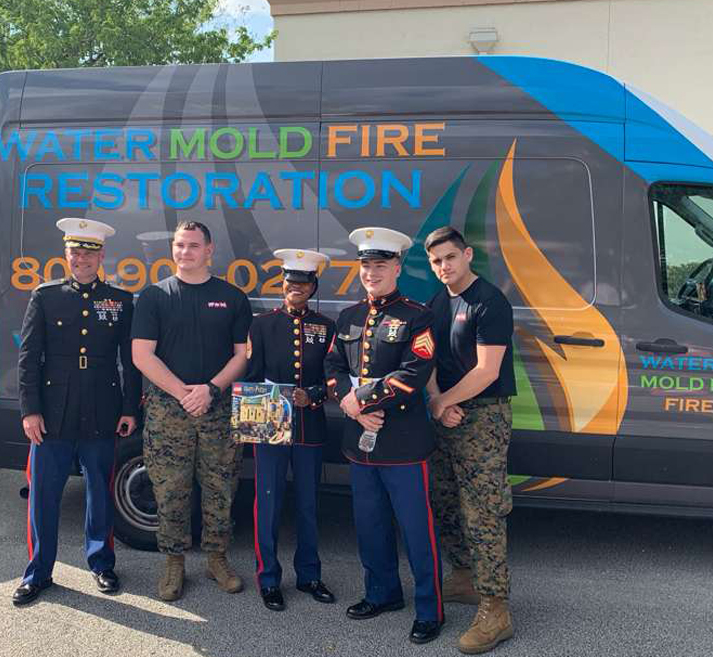
 Community & Military Support