Leak Detection for Miami Homes & Businesses
A leak you can't see is the most expensive kind. In a Miami high-rise it can also be a leak in someone else's unit two floors above — finding it requires coordination with condo engineering, not just thermal imaging in your own ceiling. Water Mold Fire Restoration of Miami finds leaks of every kind: supply, drain, slab, pool, shower pan, appliance, condo cross-unit, irrigation and roof. We use both non-invasive methods (electronic acoustic, infrared thermal imaging, tracer gas, pressure testing) and, when symptoms warrant, targeted invasive verification (controlled access cuts, fixture removal, sub-slab access). Our crews dispatch from our Biscayne Boulevard facility in downtown Miami and cover Miami-Dade County 24/7 for active leak emergencies.
We also offer Insurance Documentation Leak Detection — an independent third-party leak inspection and written report for Miami property owners who already know what their leak is but need the documentation their insurance carrier requires.
Leak Types We Detect in Miami
"Leak detection" gets used as if every leak is the same kind, but finding a pinhole copper supply leak under a slab in Coral Gables is nothing like locating a failing shower pan in a Brickell high-rise. Our crews see these categories repeat across Miami-Dade:
- High-rise condo cross-unit leaks. Miami's signature vertical density means leaks often originate floors above where they surface. Brickell, downtown, Sunny Isles, Aventura, Bal Harbour and Mid Beach buildings have shared supply risers and drain stacks that can carry water cross-unit for hours before the source is identified. Engineering coordination is part of the job.
- Slab leaks in saltwater-corroded copper. Single-family Miami stock in Coral Gables, Coconut Grove, Pinecrest, Palmetto Bay and the older Miami Shores corridors is slab-on-grade with copper supply. Saltwater intrusion, acidic soils and electrolytic activity produce pinhole leaks.
- Pool & spa leaks. Miami-Dade is dense with in-ground pools, particularly in Coral Gables, Coconut Grove, Pinecrest, Key Biscayne and Palmetto Bay. Pool losing more than a quarter-inch per day above evaporation has a leak that needs finding before it undermines the deck or rebar.
- Cast-iron drain failures in 1960s-80s condos. Original cast-iron drain stacks in vintage Miami condos have reached 50+ years in a humid coastal environment. Corrosion, scale, sagging and failure inside shared wall cavities make leak source identification difficult.
- Shower pan & wet-area leaks. Failed shower pans, cracked grout, broken tile membranes and leaking tub overflows in 1970s-90s Miami housing stock and high-rise condos. Surface as buckled flooring outside the bathroom or ceiling stains in the unit below.
- Dishwasher leaks. Failed door gaskets, supply-line cracks, drain-hose failures behind the unit.
- Refrigerator & icemaker line leaks. Plastic icemaker supply lines behind the refrigerator are one of the most common interior leak sources in Miami homes.
- Washing machine hose & supply leaks. Rubber washing machine hoses age out in Miami heat and humidity. Catastrophic burst can release hundreds of gallons in minutes.
- Water heater leaks. Tank corrosion at the bottom seam, T&P discharge, supply failures. Closet-mounted units in condos cause the worst secondary damage.
- A/C condensate leaks. Miami A/C runs nearly every day of the year. Clogged or cracked condensate lines produce slow ceiling leaks.
- Irrigation leaks. A buried lateral or valve failure can lose hundreds of gallons per day, masked by already-lush South Florida landscaping.
- Roof & window leaks from tropical-system rain. Often present as interior staining far from the actual point of entry. Thermal imaging traces water back to the real source.
Our Leak Detection Methods — Non-Invasive and Invasive
No single detection method finds every leak. We default to non-invasive tools, then escalate to controlled invasive verification when symptoms warrant it.
Non-Invasive Methods (Default)
- Static & hydrostatic pressure testing. Isolate the system, watch the gauge.
- Electronic acoustic detection. Ground microphones and acoustic correlators listen for pressurized water signatures.
- Infrared thermal imaging. Maps temperature differentials across walls, floors and ceilings.
- Tracer gas. Non-flammable hydrogen-nitrogen mix for leaks too small for acoustic detection.
- Sewer / drain line camera inspection. Push camera through cleanout for cast-iron and PVC drain diagnosis.
- Dye testing. Fluorescent dye for pools, shower pans, toilet flanges, roof penetrations.
- Moisture mapping. Defines the wet zone for exact repair scope.
Invasive Methods (When Symptoms Warrant)
- Targeted drywall access cuts. Surgical openings at acoustic/thermal pinpoint location.
- Fixture & appliance removal. Pull dishwasher, fridge, washing machine, toilet, vanity for direct access.
- Tile & shower pan inspection cuts. Controlled tile removal at suspected failure point.
- Sub-slab access. Minimum opening to expose confirmed slab leak.
Insurance Documentation Leak Detection — Third-Party Reports
A growing share of our Miami calls come from property owners who already know where their leak is. They found the burst icemaker line. They watched the shower pan finally give way. The condo upstairs cracked a supply line and their ceiling is the result. What they need is not "find the leak." What they need is an independent, third-party leak inspection report formatted for their insurance carrier.
Miami-Dade's insurance environment tightened harder than anywhere else in Florida after the 2022 (SB 2A) and 2023 reforms. Multiple private carriers have pulled out of Miami-Dade entirely, and the carriers that remain require detailed cause-of-loss documentation before paying out water claims. A homeowner's own statement is not enough. Our Insurance Documentation Leak Detection service is built for this scenario:
- Independent on-site inspection of the known leak source.
- Photo documentation of the failed component and resulting damage.
- Moisture mapping across the affected area.
- Cause-of-loss narrative (sudden and accidental versus long-term seepage).
- Written report formatted for direct submission to your carrier, public adjuster or attorney.
- Rush turnaround for tight claim deadlines.
We work with Citizens and the limited private market remaining in Miami-Dade. The service is also commonly requested for real estate disputes, landlord-tenant claims, and Miami condo HOA disputes (where the failure point determines who pays for the loss, particularly important for buildings now subject to post-Surfside milestone inspection requirements).
Signs You Have a Hidden Leak
- Water bill jumped 20% or more with no change in usage.
- Water meter spins with every fixture in the unit turned off.
- Warm or damp spots on a tile or concrete floor.
- Pool drops more than a quarter inch per day above evaporation.
- Ceiling stains in a condo unit (often from the unit above).
- Persistent musty smell with no visible mold.
- Drywall staining, baseboard buckling or peeling paint.
- Reduced water pressure at one or more fixtures.
- Unusually green or lush patch of grass in the lawn.
- Sound of running water inside walls with nothing in use.
Our Leak Detection Process
- Phone intake. Symptoms, water bill history, recent water events, property age, construction type, condo or single-family.
- On-site walkthrough & meter check.
- System isolation & pressure testing.
- Instrument detection. Acoustic, thermal, tracer gas, camera, dye as needed.
- Pinpoint & mark.
- Written report. For insurance submission where applicable.
- Repair coordination. Our plumbing repair team, your preferred plumber, or hand off to your contractor.
Where We Detect Leaks in Miami
Brickell, Downtown Miami, Edgewater, Wynwood, Little Havana, Coconut Grove, Coral Gables, South Beach, Mid Beach, North Beach, Bal Harbour, Sunny Isles Beach, Aventura, Key Biscayne, North Miami, Doral, Hialeah, Pinecrest, Palmetto Bay, Kendall, Homestead.
Miami Leak Detection FAQs
Both. Non-invasive default, controlled invasive verification when symptoms warrant.
Many Miami property owners need only the documentation. Our Insurance Documentation Leak Detection service provides an independent third-party report formatted for carriers — essential in Miami-Dade's tightened 2022-reform insurance environment.
Slab leak, pool leak, irrigation leak, running toilet, refrigerator/ice-maker line, or in condos a neighboring-unit leak feeding shared chases.
Static pressure test, isolate hot vs cold, ground microphones and infrared thermal imaging to pinpoint through concrete. Most slab leaks within 6-12 inches.
Static pressure testing, acoustic detection along shared risers, thermal imaging across shared walls and ceilings, coordination with building engineering. One of our most common Miami categories.
Generally the resulting water damage is covered under HO-3; access cost often covered with the right endorsement. Pipe repair sometimes excluded. Miami-Dade's tightened insurance environment makes documentation essential.
Call Miami's Leak Detection Team
Water Mold Fire Restoration of Miami100 Biscayne Blvd
Miami, FL 33132
305-999-5144 · miami@watermoldfire.net
24/7 Emergency Service
Water bill climbing, pool dropping, condo ceiling stained, or a stain you can't explain? Call 305-999-5144.
← Back to all Miami restoration services
 IICRC Certified Firm
 Satisfaction Guaranteed!
 24/7 Emergency Service
 Expert Technicians
 Direct Insurance Billing
 Unsurpassed Customer Service
 No Damage We Can’t Manage!
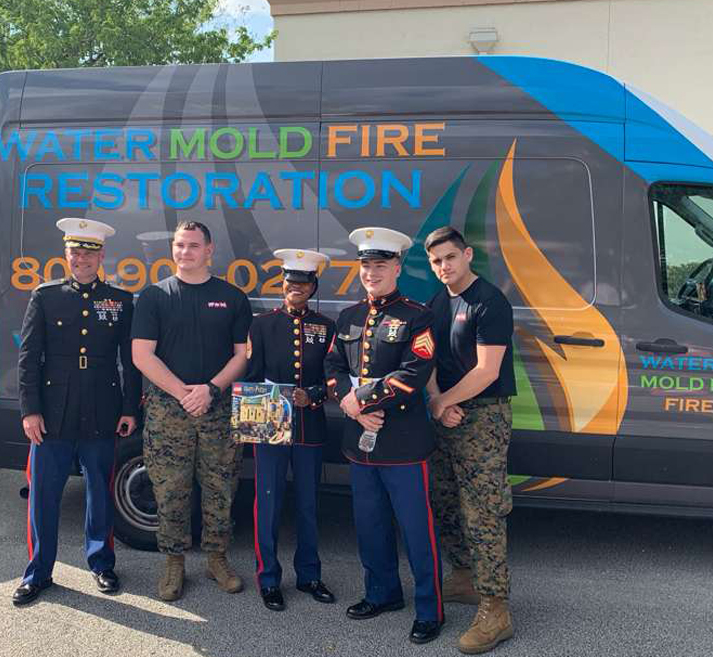
 Community & Military Support