24/7 Water Damage & Flood Cleanup for Miami Homes & Businesses
Water damage in Miami arrives from more directions than almost any other US city. It comes up through ground-floor units in Mid Beach and Edgewater during sunny-day king tides. It drives sideways through a 30th-floor balcony slider in Brickell during a tropical squall. It wells up out of an aging cast-iron stack in a 1960s Coconut Grove condo. And every few years it arrives as a named-storm event: Hurricane Andrew (1992) is still the benchmark, but Hurricane Wilma (2005), Hurricane Irma (2017) and every season since has produced its own wave of claims. Water Mold Fire Restoration of Miami handles all of it — IICRC-certified crews dispatched 24 hours a day from our Biscayne Boulevard facility in downtown Miami with truck-mounted extractors, commercial-grade dehumidifiers, thermal imaging cameras and the documentation discipline Florida insurance carriers now require post-2022 reforms.
The Miami Conditions That Drive Most Water Losses
We see the same loss patterns repeat across Miami-Dade County, and most of them trace back to Miami's specific geography, climate and building stock:
- King tide & sea-level flooding. Miami Beach now operates one of the largest municipal stormwater pump systems in the country, but seasonal king tides still routinely flood ground-floor units, garages and lobbies across Mid Beach, North Beach, Edgewater, the Venetian Islands and the low-lying corridors of Coral Gables. This is Category 3 brackish water under IICRC standards — it cannot simply be extracted and dried in place.
- Hurricane wind-driven rain through HVHZ envelopes. Even with the Miami-Dade HVHZ code — the most stringent residential construction code in the country — pre-2002 buildings have window, door and impact-glass assemblies that fail under sustained 80 mph-plus gusts. Hurricane Andrew's legacy is the code we have today; everything built before Andrew was tested and largely failed.
- High-rise condo plumbing failures. Miami's signature vertical density — Brickell, downtown, Sunny Isles, Aventura, Bal Harbour, Mid Beach — means plumbing failures cascade vertically. A supply line break on the 28th floor sends water through every unit below it. Older Miami condos along Collins Avenue and Biscayne Boulevard with original cast-iron drain stacks have similar exposure on the sanitary side. Cross-unit coordination, HOA approval and elevator scheduling become as critical as the actual cleanup.
- A/C condensate overflows. Air conditioning systems in Miami run essentially every day of the year, producing gallons of condensate per system per day. Clogged drain lines and short-cycling oversized units produce slow ceiling leaks that often go undetected for weeks — one of the single most common interior loss sources we respond to.
- Slab leaks in pre-1990 coastal copper. Single-family stock in Coral Gables, Coconut Grove, Pinecrest and Palmetto Bay typically sits on slab-on-grade foundations with copper supply lines. Miami's saline atmosphere and acidic soils accelerate pinhole leak formation in pre-1990 copper, particularly east of US-1.
- Surfside-driven inspection triggers. Since the June 2021 Champlain Towers South collapse and the subsequent state condo-safety reforms, water damage in Miami-Dade condos over 25 years old now routinely triggers structural review, mold assessment and engineering scrutiny that did not exist before. Restoration jobs that used to close in a week now run weeks longer for the documentation the post-Surfside environment demands.
Flood Cleanup & Flood Damage Restoration in Miami
Miami residents call any water in the house "a flood," but the insurance industry and the IICRC draw a hard line: a true flood is rising surface water from outside the building — storm surge from Biscayne Bay, overflowing canals, street flooding, hurricane runoff, king tide intrusion. By IICRC S500 standards, all floodwater is Category 3 ("black water") because it carries soil, hydrocarbons, pesticides, bacteria and sewage from miles around. It cannot simply be extracted and dried in place.
Our Miami flood damage cleanup process is built around that reality. We arrive in full PPE, extract standing floodwater with truck-mounted pumps, remove and dispose of contaminated porous materials, apply EPA-registered antimicrobials to remaining framing and slab, and deploy commercial drying equipment sized for the volume of water Miami flood events actually produce. We've responded to flooded ground floors, garages, lobbies and first-floor condos across the city, including seasonal Biscayne Bay overtopping in the Venetian Islands, Star Island, Hibiscus Island and the Brickell Key area.
Important note on insurance: standard Florida HO-3 homeowners policies do not cover flood damage. That coverage comes from a separate NFIP or private flood policy. We document cause-of-loss carefully on every job so the right carrier is billed for the right portion of the work — many Miami losses involve both wind-driven rain (homeowners) and flood (NFIP) on the same property.
Our Water Damage Restoration Process
Every job we run in Miami follows the IICRC S500 Standard for Professional Water Damage Restoration:
- Emergency response & assessment (Hour 1). Crew dispatch, source identification and shutoff, thermal imaging and moisture mapping. Documentation begins on minute one.
- Water extraction (Hours 1–6). Truck-mounted and portable extractors pull standing water. Cat 3 losses get full PPE and porous-material removal.
- Structural drying & dehumidification (Days 1–5). Air movers and LGR dehumidifiers create dry-air conditions. Miami's ambient humidity often extends this stage 24–48 hours past inland norms.
- Antimicrobial treatment & mold prevention. EPA-registered antimicrobials applied to wet materials — non-negotiable in Miami's climate.
- Daily monitoring & documentation. Moisture readings, temperature and RH logged daily until materials hit dry standard.
- Reconstruction. Drywall, flooring, cabinetry, paint and finish carpentry, all in-house, all permitted through Miami-Dade.
Water Damage Categories We Handle
- Category 1 (clean water). Broken supply lines, refrigerator and ice-maker lines, water heater failures, rainwater intrusion through a clean envelope.
- Category 2 (gray water). Dishwasher and washing machine discharge, toilet overflows (no feces), A/C condensate through contaminated pans.
- Category 3 (black water). Sewage backups, storm surge from Biscayne Bay, king tide saltwater intrusion, floodwater. Requires material removal, full PPE and verified post-remediation cleaning.
Florida Insurance & Documentation
Florida's homeowners insurance environment has tightened significantly since the 2022 and 2023 reforms (SB 2A and related claims-handling changes), and Miami-Dade has been hit harder than any other county. Carriers are stricter about cause-of-loss documentation; many private carriers have pulled out of Miami-Dade entirely, leaving Citizens as the carrier of last resort for thousands of properties. We build every job file the way an adjuster needs to see it: thermal images, moisture maps, daily readings, photo logs, and a clear written scope. We work with Citizens and all remaining major carriers, and we coordinate directly with your adjuster.
Where We Respond in Miami & Miami-Dade County
Our water damage crews respond throughout Miami and Miami-Dade County — Brickell, Downtown Miami, Edgewater, Wynwood, Little Havana, Coconut Grove, Coral Gables, South Beach, Mid Beach, North Beach, Bal Harbour, Sunny Isles Beach, Aventura, Key Biscayne, North Miami, Doral, Hialeah, Pinecrest, Palmetto Bay, Kendall and Homestead.
Miami Water Damage Restoration FAQs
Our Miami crews dispatch 24/7 from our Biscayne Boulevard facility in downtown Miami and target an on-site arrival of 60 minutes or less across Miami-Dade County. During named storms and king-tide events, we triage active leaks and Cat 3 sewage losses first.
Sudden and accidental water damage is generally covered under a standard Florida HO-3 policy. Rising flood water (storm surge, king tide, hurricane runoff) is not covered by a standard policy and requires separate NFIP or private flood insurance. Miami's insurance market has tightened further since 2022 reforms, so cause-of-loss documentation is critical.
Yes — Miami's vertical condo stock (Brickell, downtown, Sunny Isles, Aventura, Bal Harbour, Mid Beach) is one of our most active categories. We work routinely with Miami condo boards and property managers, coordinate freight-elevator access, and handle multi-unit cross-contamination scenarios.
Water damage is internal-origin (pipes, appliances, A/C, roof); flood damage is rising surface water from outside (storm surge, king tide, runoff). In Miami this distinction matters more than almost anywhere — king-tide events flood coastal properties multiple times per year and trigger NFIP claims, not HO-3 claims.
Extraction and drying typically run 3 to 5 days, often longer on coastal properties where outdoor RH stays above 75%. Reconstruction adds 1 to 3 weeks depending on Miami-Dade permit cycles, which can run longer than other Florida counties.
Call the restoration company first. Florida policies require you to mitigate further damage, and in Miami's climate mold colonizes within 24 to 48 hours. We document cause-of-loss for your adjuster, then coordinate with your insurer.
Call Miami's Water Damage Restoration Team
Water Mold Fire Restoration of Miami100 Biscayne Blvd
Miami, FL 33132
305-999-5144 · miami@watermoldfire.net
24/7 Emergency Service
Active water loss in Miami or Miami Beach? Call 305-999-5144 and a crew will be rolling.
← Back to all Miami restoration services
 IICRC Certified Firm
 Satisfaction Guaranteed!
 24/7 Emergency Service
 Expert Technicians
 Direct Insurance Billing
 Unsurpassed Customer Service
 No Damage We Can’t Manage!
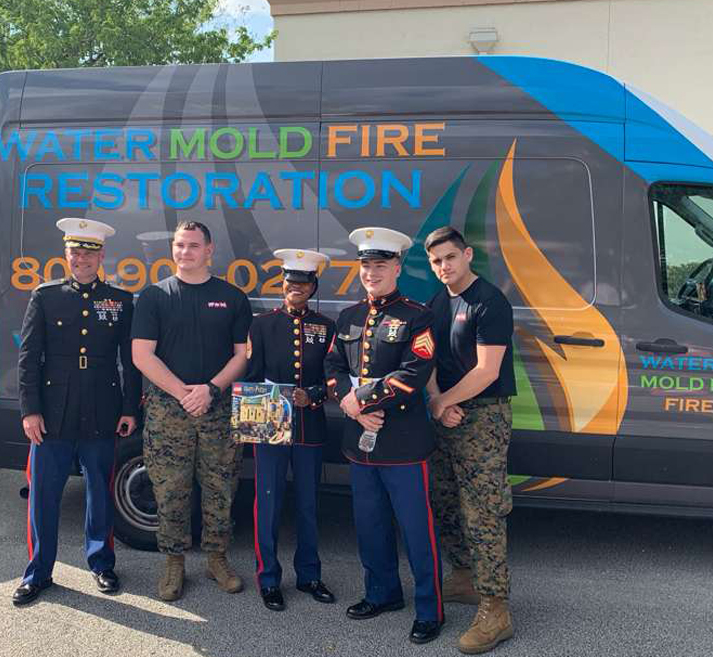
 Community & Military Support