Florida-Licensed Mold Removal & Remediation in Miami
Mold in Miami is not a maintenance issue — it's a climate condition. With outdoor relative humidity averaging 75-80% year round, more than 60 inches of annual rainfall, hurricane-season water intrusion and a building stock that runs from 1920s Coral Gables Mediterranean Revival homes to 1960s Brickell high-rises to 2020s Edgewater glass towers, Miami gives mold every condition it needs to colonize. Water Mold Fire Restoration of Miami is a Florida-licensed mold remediator under FL Mold Remediator License #MRSR2655, handling everything from small contained bathroom jobs to whole-property remediations following major water losses and Surfside-era condo inspections. Our crews follow the IICRC S520 Standard for Professional Mold Remediation and coordinate directly with independent FL-licensed mold assessors as Chapter 468 of the Florida Statutes requires.
Why Miami Properties Develop Mold
Mold calls across Miami-Dade trace back to a handful of city-specific conditions. We see the same patterns repeat in Brickell high-rises, Coral Gables ranches, South Beach Art Deco buildings, Coconut Grove bungalows, Hialeah single-family stock and Doral office park properties:
- High-rise condo HVAC cross-contamination. Miami's signature high-rise condo stock — Brickell, downtown, Sunny Isles, Aventura, Bal Harbour — has shared HVAC stacks, common drain risers and pressurized air-distribution systems that move spores between units. A single unit with hidden moisture can seed colonization across the floor above and below.
- Pre-1990 coastal copper supply leaks. Single-family Miami stock in Coral Gables, Coconut Grove, Pinecrest, Palmetto Bay and the older corridors of Miami Shores has copper supply lines aging out from acidic soils and saltwater intrusion. Pinhole leaks wick into baseboards and cabinets, and mold colonizes the cavity before any visible staining appears.
- Hurricane-driven water intrusion. Wind-driven rain from Hurricane Andrew (1992), Hurricane Wilma (2005), Hurricane Irma (2017) and the named storms since pushes water through roof-to-wall transitions, around window frames and under entry thresholds. Even with HVHZ envelopes, pre-2002 buildings see envelope failures, and any moisture left undried for 48-72 hours becomes a mold problem.
- King tide flooding in coastal ground floors. Miami Beach pump systems mitigate most street flooding, but ground-floor units in Mid Beach, North Beach, Edgewater and the Venetian Islands still see brackish water intrusion during fall king tides. Saltwater intrusion is Category 3 and a mold-spore vector all at once.
- Surfside-era post-water inspection triggers. Since the June 2021 Champlain Towers South collapse, water damage in Miami-Dade condos over 25 years old now routinely triggers structural review and mold assessment requirements that did not exist before 2021. Mold work in older Miami condos is now embedded in a larger inspection and compliance scope.
- Art Deco & Mediterranean Revival construction. South Beach Art Deco buildings (1930s) and Coral Gables Mediterranean Revival homes (1920s-30s) have construction details — lath-and-plaster walls, original tile roofs with unconditioned attic spaces, stucco-on-frame envelopes — that hold and conceal moisture differently than post-Andrew CBS construction. Mold patterns in these properties don't follow modern playbooks.
Florida Mold Licensing & What It Means for You
Florida regulates mold-related services under Chapter 468, Part XVI of the Florida Statutes. Anyone performing mold remediation for compensation must hold a state-issued Mold Remediator (MRSR) license, and anyone performing mold assessment must hold a separate Mold Assessor (MRSA) license. Florida Statute § 468.8419 also prohibits the same individual or company from performing both on the same project, and requires that the assessor and remediator have no shared financial interest in the outcome.
We operate under FL Mold Remediator License #MRSR2655 — a state credential that covers our Miami office as well as our Fort Lauderdale operations — and we coordinate with independent FL-licensed mold assessors for the pre-remediation protocol and post-remediation verification. If your insurance carrier, condo board or property manager asks for our license, give them the MRSR2655 number.
Our Mold Remediation Process (IICRC S520)
- Review of the written assessment protocol prepared by an independent FL-licensed mold assessor.
- Containment setup — 6-mil polyethylene barriers, sealed HVAC vents, negative air pressure with HEPA scrubbers exhausted outside containment.
- Personal protective equipment — Tyvek suits, gloves, eye protection, N95 or half-face HEPA respirators.
- Removal of contaminated porous materials — drywall, insulation, carpet, pad, baseboards, cabinetry, bagged inside containment and removed through a decontamination route.
- HEPA filtration & surface cleaning with EPA-registered antimicrobials.
- Moisture source repair — plumbing, roofing, HVAC, coordinated as part of the same job.
- Post-remediation verification by an independent FL-licensed assessor before reconstruction begins.
Types of Mold We Remediate in Miami
Common indoor molds we encounter on Miami-Dade jobs include Stachybotrys chartarum ("black mold"), Aspergillus, Penicillium, Cladosporium and Chaetomium. The EPA, CDC and IICRC treat any indoor mold growth as a problem regardless of species, and the S520 protocol is essentially the same across genera. Species identification is the assessor's job; we work from the assessor's protocol.
Where We Remediate Mold in Miami
Brickell, Downtown Miami, Edgewater, Wynwood, Little Havana, Coconut Grove, Coral Gables, South Beach, Mid Beach, North Beach, Bal Harbour, Sunny Isles Beach, Aventura, Key Biscayne, North Miami, Doral, Hialeah, Pinecrest, Palmetto Bay, Kendall, Homestead.
Miami Mold Remediation FAQs
Yes. We operate under Florida Mold Remediator License MRSR2655, issued under Chapter 468, Part XVI of the Florida Statutes. The license is a state credential covering our Miami office as well as our Fort Lauderdale operations.
75-80% year-round humidity, year-round growth temperatures, 60+ inches annual rainfall, hurricane water intrusion, and a building stock that runs from 1920s lath-and-plaster Mediterranean Revival to 2020s glass towers — Miami magnifies the climate factors that drive mold.
For most insurance-paid jobs, yes. Florida Statute 468.8419 prohibits same-company assessment + remediation on the same project. We coordinate with independent FL-licensed mold assessors for the protocol and verification.
Yes. Since the June 2021 Champlain Towers South collapse, water damage and mold growth in Miami-Dade condos over 25 years old can trigger structural review and engineering scrutiny that did not exist before 2021. We coordinate with structural engineers where required.
Small contained jobs run a few hundred dollars; large losses involving HVAC contamination, cross-unit condo migration or whole-property remediation can run into the thousands. Written estimates after on-site evaluation.
Small contained jobs: 1-3 days. Larger jobs: 3-7 days plus reconstruction. Final clearance via independent post-remediation verification.
EPA, CDC and IICRC treat indoor mold growth as a problem regardless of species — the same remediation protocol applies. For health-driven questions, consult a physician; we are not medical providers.
Call Miami's Licensed Mold Remediator
Water Mold Fire Restoration of Miami100 Biscayne Blvd
Miami, FL 33132
305-999-5144 · miami@watermoldfire.net
FL Mold Remediator License MRSR2655
Visible growth, musty smell, recent water loss or condo milestone inspection finding? Call 305-999-5144 and we'll schedule an on-site evaluation.
← Back to all Miami restoration services
 IICRC Certified Firm
 Satisfaction Guaranteed!
 24/7 Emergency Service
 Expert Technicians
 Direct Insurance Billing
 Unsurpassed Customer Service
 No Damage We Can’t Manage!
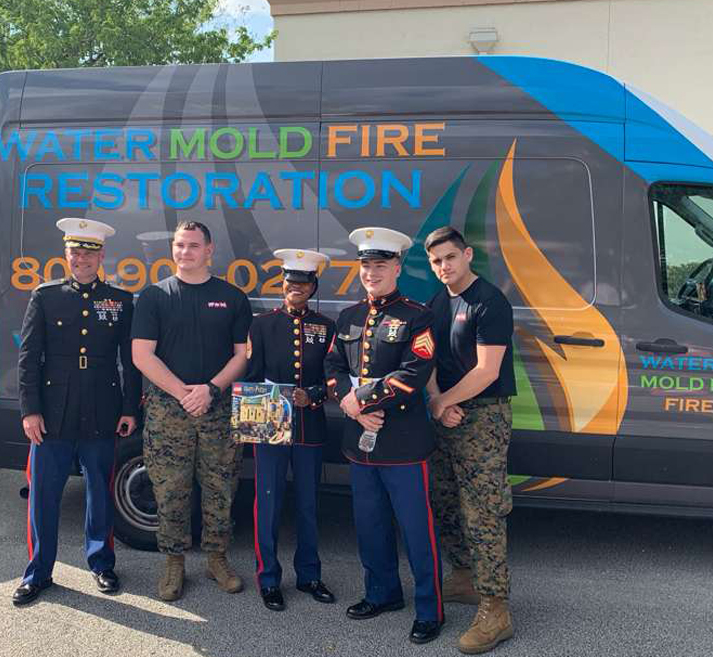
 Community & Military Support