Florida-Licensed Mold Inspection & Testing in Miami
Mold assessment in Florida is a regulated service. Anyone performing mold inspection or testing for compensation must hold an active state-issued Mold Assessor license, and an assessor cannot also bid the remediation on the same project. That separation exists for a reason — it keeps the findings honest. Water Mold Fire Restoration of Miami operates under FL Mold Assessor License #MRSA1639, and we perform independent mold inspections and laboratory testing across Miami-Dade County for real estate transactions, post-Surfside condo milestone inspections, insurance claims, post-water-damage properties, indoor air quality concerns and post-remediation verification. Our assessments meet ASTM and IICRC documentation standards and are accepted by every major Florida homeowners insurance carrier.
When Miami Properties Need a Mold Inspection
In a climate this favorable to mold and a market this dense with high-rise condos and historic homes, "I want to know what I'm buying" is among the most reasonable things a Miami property owner or buyer can ask. The most common scenarios:
- Pre-purchase real estate inspections. Miami's coastal high-rise condos, Brickell tower units, Sunny Isles oceanfront buildings, Coral Gables historic homes, and Coconut Grove bungalows all carry mold risk profiles that visual showings won't surface. Florida sellers must disclose known material defects, but undisclosed mold behind drywall is a common post-closing dispute — a pre-closing MRSA assessment prevents it.
- Surfside-era condo milestone inspections. Since June 2021, Miami-Dade condo buildings over 25 years old require milestone structural inspections under Florida's post-Surfside reforms. Many of these inspections turn up moisture intrusion and require formal mold assessment documentation for board records and engineering reports. We perform unit-level, common-area and building-wide assessments coordinated with structural engineers and HOA leadership.
- Post-water-damage assessments. After a pipe leak, A/C overflow, hurricane water intrusion, king-tide flooding event or condo cross-unit migration, an independent assessment tells you whether drying succeeded or whether mold has already colonized the cavity. Many Miami-Dade insurance carriers now require this written confirmation before closing out a water claim.
- Suspected hidden mold. Musty smell, unexplained respiratory symptoms, recurring condensation, visible staining at baseboards or ceiling edges. Visible mold is the symptom, not the source — we use moisture meters, thermal imaging and air sampling to locate what's behind the finish.
- Insurance claim documentation. Miami-Dade's insurance market has tightened harder than anywhere else in Florida since the 2022 reforms. Carriers expect MRSA-licensed documentation of cause-of-loss, scope and species. Our reports are written to meet that standard.
- Condo HOA & landlord-tenant disputes. Miami's vertical condo density produces ongoing disputes over whose unit the moisture source originated in and whose responsibility the resulting growth is. Independent assessment is usually the fastest path through a stalemate.
- Post-Remediation Verification (PRV). Independent verification that a completed mold remediation actually worked — required by FL law and condo bylaws for many Miami-Dade buildings.
Why MRSA Licensing & Independence Matter
Florida's mold-related services law (Chapter 468, Part XVI of the Florida Statutes) requires a state-issued license for both assessment (MRSA) and remediation (MRSR), and Statute § 468.8419 prohibits the same individual or company from performing both on the same project. It's a deliberate consumer-protection design: an assessor who is also angling to win the remediation contract has an incentive to oversize the findings. Keeping the two roles independent gives the property owner a defensible written protocol and a remediator who must execute against it.
We hold both licenses — MRSA1639 for assessment (this page) and MRSR2655 for remediation — under separate qualifying individuals, exactly as Florida law requires. We never use them on the same job. If a Miami competitor offers you both assessment and remediation on a single contract, that is itself a red flag worth questioning.
Our Mold Inspection & Testing Process
- Pre-inspection consult. Reason for assessment, property history, recent water events, occupant health concerns.
- On-site visual inspection. Systematic walkthrough with photo documentation.
- Moisture mapping & thermal imaging. Calibrated meters and thermographic camera locate hidden moisture.
- Air sampling (spore trap). Outdoor baseline + indoor samples for lab comparison.
- Surface sampling. Tape lifts, swabs, bulk samples for direct identification.
- AIHA-accredited lab analysis. Standard 3-5 business days; rush 24-48 hours.
- Written assessment report. Photos, moisture mapping, thermal images, lab results, interpretation, and (where mold is confirmed) a written remediation protocol.
Types of Testing We Perform
- Air sampling (spore trap). Indoor vs. outdoor airborne spore comparison.
- Surface sampling. Species ID via tape lift, swab, settled dust.
- Bulk sampling. Direct examination of suspect materials.
- HVAC sampling. Air handler and duct sampling for system contamination.
- Indoor Air Quality (IAQ) testing. Broader sampling for occupant health concerns.
- Post-Remediation Verification. Independent verification against original protocol clearance criteria.
Where We Inspect & Test in Miami
Brickell, Downtown Miami, Edgewater, Wynwood, Little Havana, Coconut Grove, Coral Gables, South Beach, Mid Beach, North Beach, Bal Harbour, Sunny Isles Beach, Aventura, Key Biscayne, North Miami, Doral, Hialeah, Pinecrest, Palmetto Bay, Kendall, Homestead. Real estate closings, condo board deadlines and insurance windows often run tight — we schedule rush appointments where the calendar allows.
Miami Mold Inspection & Testing FAQs
Yes. Florida Mold Assessor License MRSA1639, issued under Chapter 468, Part XVI of the Florida Statutes.
Strongly recommended, particularly for buildings over 25 years old post-Surfside. Miami high-rise condos have shared HVAC and drain systems that move moisture between units — an independent assessment gives you written documentation before closing.
Inspection is visual/instrument-based; testing is lab analysis of samples collected during inspection. Most Miami assessments include both.
Florida Statute 468.8419 prohibits it. We hold both MRSA1639 and MRSR2655 but never use them on the same project.
Yes. Miami-Dade condos over 25 years old now require milestone structural inspections that often trigger mold assessment work. We coordinate with engineering teams and condo boards.
Standard single-unit inspection with 2-3 air samples runs low hundreds; larger properties and building-wide scopes cost more. Written quote before sampling.
On-site 1-3 hours. Lab analysis 3-5 business days standard, 24-48 hours rush available.
Schedule a Miami Mold Inspection
Water Mold Fire Restoration of Miami100 Biscayne Blvd
Miami, FL 33132
305-999-5144 · miami@watermoldfire.net
FL Mold Assessor License MRSA1639
Real estate closing, condo milestone inspection, post-water-damage assessment or insurance documentation? Call 305-999-5144 to schedule.
← Back to all Miami restoration services
 IICRC Certified Firm
 Satisfaction Guaranteed!
 24/7 Emergency Service
 Expert Technicians
 Direct Insurance Billing
 Unsurpassed Customer Service
 No Damage We Can’t Manage!
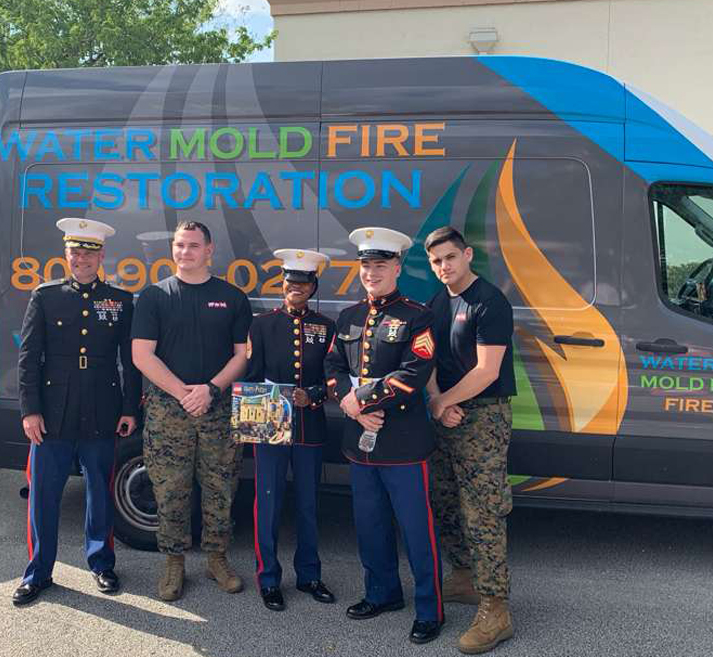
 Community & Military Support