Mold Inspection & Testing in Minneapolis
Minnesota does not license mold assessment professionals at the state level — unlike Florida (which licenses both assessors and remediators under Chapter 468 of the Florida Statutes), Texas, New York and a handful of other states. That means Twin Cities property owners evaluating an assessment quote have to weigh credentials that actually substantiate the work: industry certification, use of AIHA-accredited laboratories for sample analysis, and adherence to published assessment standards (ASTM and IICRC). Water Mold Fire Restoration of Minneapolis is IICRC Firm Certified, performs assessments to ASTM and IICRC documentation standards, and uses AIHA-accredited labs for all sample analysis. We perform inspections and testing for real estate transactions, post-frozen-pipe-burst and post-sewer-backup losses, ice dam attic assessments, basement and lake-home indoor air quality concerns, duplex and condo HOA disputes, insurance claims and post-remediation verification across Minneapolis, Saint Paul and the surrounding suburbs.
When Twin Cities Properties Need a Mold Inspection
In a market with damp basements as a near-universal feature, housing stock that runs back to the 1880s, and a winter cycle that produces predictable frozen-pipe-burst surges and annual ice-dam season, "I want to know what's actually in this property" is one of the most reasonable things a Twin Cities property owner or buyer can ask. The most common scenarios:
- Pre-purchase real estate inspections. Minneapolis and Saint Paul's housing inventory — Northeast Minneapolis duplexes and triplexes, South Minneapolis bungalows, American Foursquares, Mill District and North Loop loft conversions, Saint Paul Victorian houses, Highland Park and Macalester-Groveland single-family homes, lakefront properties around Lake Harriet, Bde Maka Ska, Calhoun and Nokomis — carries hidden-mold profiles that standard home inspections will not surface. Most Twin Cities home inspectors do not perform air sampling and are limited to visual checks and moisture meter readings. An independent mold assessment with air sampling tells you what's actually behind the drywall, in the basement floor cavity, in the attic insulation and in the HVAC system before you close.
- Post-frozen-pipe-burst assessments. After the January 2019, February 2021 and January 2024 polar vortex burst surges, thousands of Twin Cities homeowners had mitigation performed under enormous time pressure. Many bursts went undetected for days while owners were out of town. An independent assessment confirms whether the drying actually succeeded or whether mold has colonized behind finishes and inside framing cavities.
- Ice dam attic assessments. Late winter and spring ice dam meltwater enters attic insulation and roof sheathing, often invisibly. We perform targeted attic assessments after suspected ice dam intrusion to document the extent of moisture and any resulting mold before insurance closes out the water claim.
- Post-sewer-backup assessments. Sewer backup water is Category 3 ("black water") under industry standards and seeds aggressive mold colonization even after prompt cleanup. After heavy summer rainfall events that drive citywide backups, post-backup mold assessment work runs for months in the affected basements.
- Basement and crawlspace assessments. Twin Cities basements are almost universally damp because of clay-soil water tables. Field-stone foundations in vintage bungalows wick groundwater; poured concrete foundations crack at the cold joint; block foundations leak at the mortar lines. Visible staining, musty smell, recurring condensation on cold-water lines, peeling paint at the base of walls — all classic Twin Cities basement mold indicators that benefit from instrument and lab confirmation.
- Lake home and cabin assessments. Properties around Lake Minnetonka, White Bear Lake, Forest Lake and the Brainerd Lakes corridor that sit unconditioned for weeks at a time accumulate hidden moisture in walls, crawlspaces, three-season porches and HVAC systems. Pre-sale and end-of-season assessments are common; post-frozen-burst assessments at winterized cabins that weren't properly drained add a second category.
- Northeast Minneapolis duplex & condo HOA disputes. Twin Cities duplex, triplex, six-unit and condo stock produces recurring disputes over which unit's plumbing caused the leak and which party owns the resulting mold remediation. Independent neutral assessment is usually the fastest path through the stalemate.
- Indoor air quality (IAQ) testing. Unexplained respiratory symptoms, persistent musty smell, new-occupant complaints in a rental, or due-diligence baseline testing for a buyer with allergy or asthma concerns. We perform IAQ-focused sampling protocols beyond the standard mold scope when warranted.
- Insurance claim documentation. Minnesota insurance carriers increasingly require independent mold assessment documentation on water claims of significant size before closing them out. Our reports are written to meet that standard.
- Post-Remediation Verification (PRV). Independent verification that a completed mold remediation actually worked. EPA, IICRC and ASTM all recommend PRV by an independent third party on significant jobs.
Minnesota Mold Regulation & Why Independence Still Matters
Minnesota does not license mold assessment or mold remediation contractors. The Minnesota Department of Health publishes consumer guidance documents on indoor mold, but no individual or company license is required to perform either service. This is different from Florida, where Chapter 468, Part XVI of the Florida Statutes requires separate Mold Assessor and Mold Remediator licenses and prohibits the same company from doing both on the same project.
Minnesota doesn't impose that separation by law, but the published industry consensus — the EPA's Mold Remediation in Schools and Commercial Buildings guidance, the IICRC industry standards for mold remediation and assessment, and the ASTM standards for moisture and mold assessment — all recommend that mold assessment and mold remediation be performed by independent parties on significant jobs. The reasoning is the same in Minnesota as it is in Florida: an assessor who is also bidding the remediation contract has an incentive to oversize the findings, and a remediator performing its own clearance has an incentive to undersize them.
We follow that best practice voluntarily. We perform our own mold remediation service in Minnesota (a legal scope here), and we perform assessment and testing on the same property when warranted. For insurance-driven and large-scope jobs, we recommend independent third-party post-remediation verification — and we can coordinate with independent indoor air quality assessors when that separation matters to the claim or to the parties involved.
Our Mold Inspection & Testing Process
- Pre-inspection consult. Reason for assessment, property history, recent water events (frozen pipe burst, ice dam intrusion, sewer backup, snowmelt), occupant health concerns.
- On-site visual inspection. Systematic walkthrough with photo documentation. Basement, mechanical rooms, kitchen and bathroom plumbing chases, attic, HVAC closets and supply runs.
- Moisture mapping & thermal imaging. Calibrated meters and thermographic camera locate hidden moisture in walls, ceilings, floor cavities, attic decking and around plumbing penetrations.
- Air sampling (spore trap). Outdoor baseline + indoor samples for lab comparison.
- Surface sampling. Tape lifts, swabs, bulk samples for direct identification.
- AIHA-accredited lab analysis. Standard 3-5 business days; rush 24-48 hours.
- Written assessment report. Photos, moisture mapping, thermal images, lab results, interpretation, and (where mold is confirmed) a recommended remediation scope.
Types of Testing We Perform
- Air sampling (spore trap). Indoor vs. outdoor airborne spore comparison.
- Surface sampling. Species ID via tape lift, swab, settled dust.
- Bulk sampling. Direct examination of suspect materials.
- HVAC sampling. Air handler and duct sampling for system contamination.
- Basement & crawlspace sampling. Twin Cities bungalows, duplexes, Foursquares and pre-WWII single-family stock with damp foundations.
- Attic sampling. Ice-dam-origin attic mold detection in older Minneapolis and Saint Paul housing.
- Lake home sampling. Shoulder-season moisture and post-winterization assessments for properties around Lake Minnetonka, White Bear Lake and Forest Lake.
- Indoor Air Quality (IAQ) testing. Broader sampling for occupant health concerns.
- Post-Remediation Verification. Independent verification against the original remediation scope.
Where We Inspect & Test in the Twin Cities
All of Minneapolis (Northeast, Downtown, North Loop, Mill District, Loring Park, Uptown, Whittier, Lyn-Lake, Powderhorn, Phillips, Cedar-Riverside, U of M area, Como, Prospect Park, Seward, Longfellow, Nokomis, Linden Hills, Lake Harriet, Bde Maka Ska, Kenwood, Lowry Hill, Bryn Mawr, Camden, Near North, Folwell, the bungalow belt). All of Saint Paul (Summit Hill, Macalester-Groveland, Highland Park, Crocus Hill, Como, Frogtown, Saint Anthony Park, Hamline-Midway, the East Side). Suburban Edina, Saint Louis Park, Bloomington, Eden Prairie, Minnetonka, Wayzata, Plymouth, Maple Grove, Brooklyn Park, Roseville, Richfield, Eagan, Burnsville, Apple Valley, Woodbury, and lake-area properties around Lake Minnetonka, White Bear Lake and Forest Lake. Real estate closings and insurance deadlines often run tight — we schedule rush appointments where the calendar allows.
Minneapolis Mold Inspection & Testing FAQs
No. Minnesota does not require state licensure for mold assessment or remediation. The meaningful credentials are IICRC Firm certification, adherence to ASTM and IICRC assessment standards, and use of AIHA-accredited laboratories.
Strongly recommended for any pre-WWII Northeast duplex, South Minneapolis bungalow, American Foursquare or Saint Paul Victorian. Standard Twin Cities home inspections typically do not include air sampling. Basement, attic and HVAC moisture profiles are not visible from the showing walkthrough.
Inspection is visual/instrument-based; testing is lab analysis of samples collected during inspection. Most Twin Cities assessments include both.
EPA, IICRC and ASTM all recommend independent third-party PRV on significant jobs — even though Minnesota doesn't require it. Conflict-of-interest removal: an assessor bidding the remediation has incentive to oversize; a remediator self-clearing has incentive to undersize.
Yes, if water sat more than 48 hours before mitigation, or if mitigation was rushed during a citywide event (January 2019, February 2021, January 2024 polar vortex bursts; recurring February-through-April ice dam season). Independent assessment confirms drying succeeded and mold did not colonize.
Yes — one of our most distinctive Twin Cities scopes. Lake Minnetonka, White Bear Lake, Forest Lake and the Brainerd Lakes corridor. Shoulder-season moisture and post-winterization assessments.
Yes. Duplex, triplex and condo disputes over leak responsibility are a recurring Twin Cities category. Independent neutral documentation gives all parties a defensible basis for the responsibility decision.
Standard single-family / condo inspection with 2-3 air samples runs low hundreds; larger properties and building-wide scopes cost more. Written quote before sampling.
On-site 1-3 hours. Lab analysis 3-5 business days standard, 24-48 hours rush available.
Schedule a Minneapolis Mold Inspection
Water Mold Fire Restoration of Minneapolis1920 Central Avenue NE
Minneapolis, MN 55418
651-395-7036 · minneapolis@watermoldfire.net
IICRC Firm Certified
Real estate closing, post-frozen-pipe-burst assessment, ice dam attic concern, lake-home pre-sale verification, basement IAQ question or duplex HOA dispute? Call 651-395-7036 to schedule.
← Back to all Minneapolis restoration services
 IICRC Certified Firm
 Satisfaction Guaranteed!
 24/7 Emergency Service
 Expert Technicians
 Direct Insurance Billing
 Unsurpassed Customer Service
 No Damage We Can’t Manage!
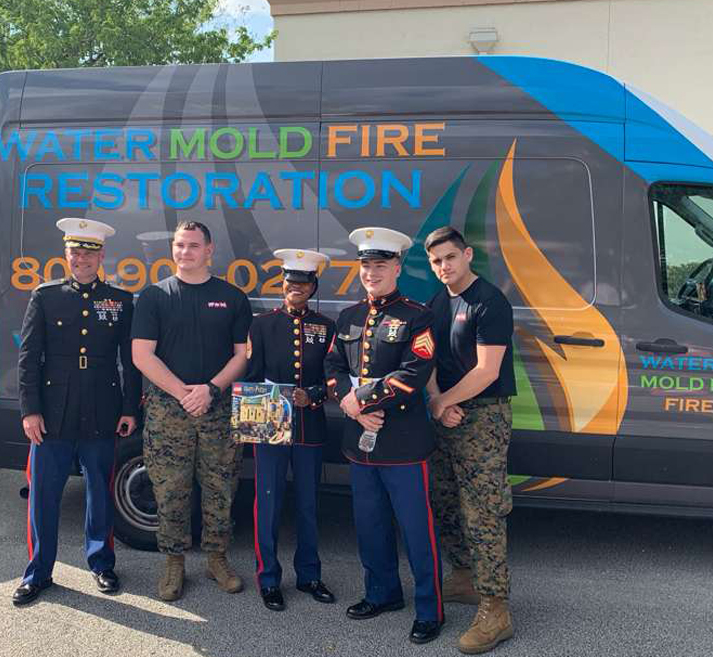
 Community & Military Support