24/7 Water Damage & Basement Flood Cleanup for Minneapolis Homes & Businesses
Water damage in Minneapolis has its own calendar. January and February bring the frozen pipe burst wave — supply lines in unheated basements, exterior walls of vintage Northeast Minneapolis duplexes, three-season porches in South Minneapolis bungalows and the lake homes around Minnetonka freeze, expand and let go, often while owners are out of town for the cold snap. The late January 2019 polar vortex (Minneapolis-Saint Paul International hit -28°F actual with wind chills below -55°F), the February 2021 outbreak and the January 2024 cold wave each produced citywide bursts measured in the thousands. March and April bring ice dam meltwater and spring snowmelt basement flooding. Summer brings sewer backups from heavy thunderstorm rainfall, sump pump failures during power outages, and occasional severe storm and hail envelope damage. Year-round, supply line breaks, A/C condensate overflows and washer-line failures in finished basements and condo units produce the steady baseline. Water Mold Fire Restoration of Minneapolis handles all of it — IICRC Firm Certified, with crews dispatched 24 hours a day from our facility on Central Avenue NE in Northeast Minneapolis, truck-mounted extractors, commercial-grade dehumidifiers and thermal imaging cameras.
The Twin Cities Conditions That Drive Most Water Losses
We see the same loss patterns repeat across Minneapolis, Saint Paul and the inner-ring suburbs, and most of them trace back to the Twin Cities' specific climate, infrastructure and building stock:
- Frozen pipe bursts (Jan–Feb). Twin Cities supply-line plumbing fails predictably below zero, and catastrophically when sub-zero temperatures hold for multiple days. The worst exposure is in vintage Northeast Minneapolis duplexes and triplexes with exterior-wall plumbing, unheated basement runs in pre-WWII bungalows across South Minneapolis, three-season porches that were plumbed for laundry or a bar sink, lake homes and cabins left winterized but not always properly drained, and the increasingly common scenario of a snowbird owner returning from Florida or Arizona to find a property that froze and burst weeks earlier. A single half-inch supply line can release hundreds of gallons per hour. We arrive at properties that have been flooding for days on a regular basis through the cold months.
- Ice dam meltwater intrusion. Heavy Twin Cities snow load combined with under-insulated attic spaces and poorly-vented eaves produces the classic ice dam: meltwater from snow over the warmer center of the roof flows to cold eaves, refreezes, and forms an ice ridge that traps subsequent meltwater behind it. The trapped water backs up under shingles into attics, ceiling cavities and top-floor units. We see this from late January through early April across the metro — older South Minneapolis bungalows with original cellulose attic insulation, Northeast Minneapolis duplexes with knee-wall attic conditions, and any Twin Cities property with a low-slope porch roof are the most common candidates.
- Spring snowmelt basement flooding. Twin Cities winters routinely deposit 50-70+ inches of snow. The spring thaw releases that water faster than still-frozen deep soils can absorb it, elevating the water table, pressuring foundation cracks, overwhelming neighborhood storm drains, and pushing the Mississippi River and Minnehaha Creek up against riverfront and creekside properties. Marshall Terrace, low-lying corridors of the Como neighborhood, and the Minnehaha Creek corridor are recurring annual flooding zones.
- Sewer backups during heavy rain. Older Twin Cities neighborhoods carry combined or partially-combined sewer infrastructure that overwhelms during heavy summer thunderstorm rainfall. Backflow comes up through basement floor drains, laundry standpipes and showers as Category 3 contaminated water. The August 2024 flash flooding events drove a wave of sewer-backup remediation work across the affected neighborhoods.
- Sump pump failures. Twin Cities clay soils and elevated water tables mean most finished basements rely on continuous sump pump operation. Power outages during severe summer storms, mechanical failure, switch failure or simply an undersized unit during a heavy rain event produces basement flooding within hours. A battery backup or water-powered secondary pump prevents most of these losses; many homes don't have one.
- High-rise condo & loft plumbing failures. Downtown Minneapolis, the North Loop, the Mill District and the downtown Saint Paul condo stock all share plumbing risers and HVAC stacks. A supply line break on an upper floor sends water through every unit below it. Converted Mill District lofts with original 19th-century brick and timber construction and retrofitted modern plumbing have particular exposure when the retrofit work was rushed during conversion.
- Original-era plumbing in vintage Twin Cities stock. Pre-WWII Twin Cities housing — the Northeast Minneapolis duplex stock, South Minneapolis bungalows, Saint Paul Victorian houses, Highland Park and Macalester-Groveland single-family homes — still carries galvanized supply pipe and cast-iron drain stacks in many cases. Galvanized pipe pinholes and fails from the inside out after 60-80 years; cast iron rusts through at the hub joints. Slow chronic leaks compound over months.
Frozen Pipe Burst Response in Minneapolis
Frozen pipe bursts are the single most common water emergency we respond to from late December through early March. The mechanism is straightforward: water expands roughly 9% as it freezes; supply lines are sealed pressurized systems with no room for expansion; something gives. Copper splits along the length of the freeze, CPVC fractures, PEX usually survives but its fittings often don't. The actual burst typically happens not at peak cold but during the thaw — the ice plug that has been holding pressure melts back enough to release water through the split.
Our frozen-pipe-burst response is built for the citywide surge conditions that Twin Cities polar vortex events produce. We arrive, locate and isolate the burst, shut off supply at the building main if needed, extract standing water, set up structural drying equipment (heat plus dehumidification when ambient temperatures are working against evaporation), and document the cause-of-loss for the insurance claim. Reconstruction — drywall, flooring, cabinetry, sometimes electrical and supply line replacement — is coordinated through licensed Twin Cities subcontractors and properly permitted through the City of Minneapolis or Saint Paul as applicable.
Basement Flooding, Snowmelt & Sewer Backup Cleanup
Minneapolis basements flood for several distinct reasons — spring snowmelt groundwater intrusion, sewer backups during heavy rain, sump pump failures, and surface water intrusion through foundation cracks — and the insurance treatment of each is different. Sewer backups are Category 3 contaminated water under industry standards, carry raw sewage, and require full PPE, porous-material removal, antimicrobial treatment and verified cleaning. Sump pump failures generally start as Category 1 or 2 (clean groundwater) but degrade to Category 3 quickly if they go undetected for more than a day. Surface flooding through foundation cracks is treated as flood under most insurance policies and is not covered by a standard homeowners policy without a separate flood endorsement.
Our basement flood cleanup process is built around that reality. We arrive in full PPE for any backup involving sewer water, extract standing water with truck-mounted pumps, remove and dispose of contaminated porous materials, apply EPA-registered antimicrobials to remaining framing and slab, and deploy commercial drying equipment sized for the volume Twin Cities basement floods actually produce. Finished basements with drywall, carpet, drop ceilings and built-in cabinetry get a more aggressive removal scope than unfinished mechanical basements.
Important note on insurance: standard Minnesota HO-3 homeowners policies do not include sewer backup, sump pump failure or flood coverage. Sewer/drain backup coverage is a separate endorsement most carriers offer; surface flooding requires NFIP or private flood insurance. We document cause-of-loss carefully on every job so the right carrier is billed for the right portion of the work.
Our Water Damage Restoration Process
Every job we run in the Twin Cities follows the IICRC S500 Standard for Professional Water Damage Restoration — the published industry consensus standard:
- Emergency response & assessment (Hour 1). Crew dispatch, source identification and shutoff, thermal imaging and moisture mapping. Documentation begins on minute one.
- Water extraction (Hours 1–6). Truck-mounted and portable extractors pull standing water. Category 3 sewer-backup losses get full PPE and porous-material removal.
- Structural drying & dehumidification (Days 1–5). Air movers and LGR dehumidifiers create dry-air conditions. Winter jobs add supplemental heat because cold ambient temperatures slow evaporation.
- Antimicrobial treatment & mold prevention. EPA-registered antimicrobials applied to wet materials — mold colonizes within 48 hours regardless of climate.
- Daily monitoring & documentation. Moisture readings, temperature and RH logged daily until materials hit dry standard.
- Reconstruction. Drywall, flooring, cabinetry, paint and finish carpentry, coordinated with licensed Twin Cities trade subcontractors and properly permitted through the relevant city building department.
Water Damage Categories We Handle
- Category 1 (clean water). Broken supply lines, refrigerator and ice-maker lines, water heater failures, frozen pipe bursts on the supply side, snowmelt intrusion through a clean envelope.
- Category 2 (gray water). Dishwasher and washing machine discharge, toilet overflows (no feces), A/C condensate through contaminated pans, sump pump failures going stale.
- Category 3 (black water). Sewer backups, toilet overflows with feces, river floodwater, surface floodwater. Requires material removal, full PPE and verified post-remediation cleaning.
Minnesota Insurance & Documentation
Minnesota's homeowners insurance market is more stable than the Southeast hurricane markets, but the policy structure has its own Twin Cities-specific traps. Sudden and accidental water damage from supply-line and appliance failures is covered under a standard HO-3 policy. Frozen pipe bursts are covered if the home was reasonably heated — carriers will deny if they determine the home was vacant or unheated for an extended period before the burst, which matters for snowbird homeowners and lake-cabin owners who leave properties unoccupied for weeks. Sewer/drain backup coverage is a separate endorsement that many Twin Cities homeowners only realize they needed after the first backup. Sump pump failure is typically tied to the sewer backup rider. Surface flooding requires a separate NFIP or private flood policy. We build every job file the way a Minnesota adjuster needs to see it: thermal images, moisture maps, daily readings, photo logs and a clear written scope, and we coordinate directly with your adjuster.
Where We Respond in the Twin Cities
Our water damage crews respond throughout Minneapolis, Saint Paul and the inner-ring suburbs — all of Northeast Minneapolis (Logan Park, Marshall Terrace, Sheridan, Audubon Park, Windom Park, Holland, Bottineau, Columbia Park, St. Anthony East and West), Downtown, North Loop, Mill District, Loring Park, Uptown, Whittier, Lyn-Lake, the Wedge, Powderhorn, Phillips, Cedar-Riverside, the University of Minnesota area, Como, Prospect Park, Seward, Longfellow, Nokomis, Linden Hills, Lake Harriet, Bde Maka Ska, Kenwood, Lowry Hill, Bryn Mawr, Camden, Near North, Folwell and the South Minneapolis bungalow belt. Across the river: downtown Saint Paul, Summit Hill, Macalester-Groveland, Highland Park, Crocus Hill, Como, Frogtown, Saint Anthony Park, Hamline-Midway and the East Side. Suburban coverage: Edina, Saint Louis Park, Bloomington, Eden Prairie, Minnetonka, Wayzata, Plymouth, Maple Grove, Brooklyn Park, Roseville, Richfield, Eagan, Burnsville, Apple Valley, Woodbury, and the lake communities around Lake Minnetonka, White Bear Lake and Forest Lake.
Minneapolis Water Damage Restoration FAQs
Our Minneapolis crews dispatch 24/7 from our facility on Central Avenue NE in Northeast Minneapolis and target an on-site arrival of 60 minutes or less across the Twin Cities. During polar vortex events we triage active leaks and Category 3 sewer-backup losses first.
Generally yes, if the home was reasonably heated. Sewer backup, sump pump failure and surface flooding are NOT covered by standard HO-3 and require separate endorsements or flood insurance through the NFIP.
Heavy winter snow accumulation releases meltwater faster than still-frozen deep soils can absorb it, elevating the water table, pressuring foundation cracks, overwhelming neighborhood storm drains, and pushing the Mississippi River and Minnehaha Creek up against riverfront and creekside properties.
Heavy snow on roofs combined with interior heat creates eave-line ice dams that force meltwater back up under shingles into attics, ceiling cavities and top-floor living spaces. Damage often appears weeks after the cold snap that caused it.
Yes — Category 3 ("black water"). Contains raw sewage and pathogens. Requires full PPE, porous-material removal, antimicrobial treatment and verified cleaning.
Extraction and drying 3 to 5 days, often longer in vintage construction with thick plaster and dense framing. Cold winter ambient temperatures slow evaporation, so we add supplemental heat. Reconstruction adds 1 to 4 weeks depending on scope and Minneapolis or Saint Paul permit timing.
Call the restoration company first. Minnesota policies require mitigation. Mold colonizes within 24-48 hours. We document cause-of-loss for your adjuster, then coordinate with your insurer.
Call Minneapolis's Water Damage Restoration Team
Water Mold Fire Restoration of Minneapolis1920 Central Avenue NE
Minneapolis, MN 55418
651-395-7036 · minneapolis@watermoldfire.net
24/7 Emergency Service
IICRC Firm Certified
Active frozen pipe burst, ice dam meltwater, basement sewer backup or any water loss in the Twin Cities? Call 651-395-7036 and a crew will be rolling.
← Back to all Minneapolis restoration services
 IICRC Certified Firm
 Satisfaction Guaranteed!
 24/7 Emergency Service
 Expert Technicians
 Direct Insurance Billing
 Unsurpassed Customer Service
 No Damage We Can’t Manage!
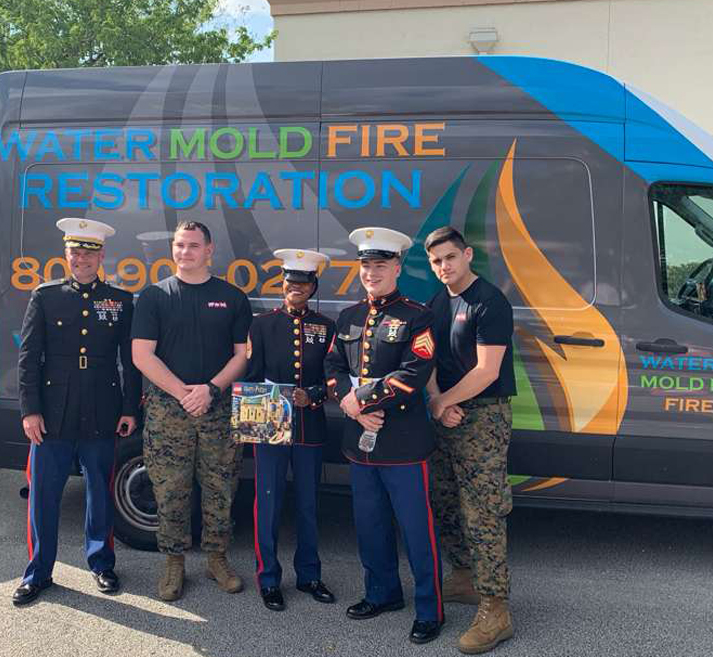
 Community & Military Support