Property Restoration in Washington, DC
Water Mold Fire Restoration of Washington DC serves homeowners, condo associations, property managers and business owners across all four quadrants of the District and the surrounding DMV. From the Federal-era and Victorian brick rowhouses of Capitol Hill, Logan Circle, Shaw, U Street and Georgetown, to the Wardman rowhouses that fill Petworth, Park View and Bloomingdale, the 1920s and '30s apartment houses of Cleveland Park and Woodley Park, the Embassy Row mansions along Massachusetts Avenue, the Foggy Bottom and West End mid-rise condos, and the new high-rise towers of NoMa, the Capitol Riverfront and the Southwest Waterfront, DC's building inventory is uniquely varied — and each era fails in uniquely different ways when water, mold or fire damage hits. Our local crews dispatch 24/7 from our Foggy Bottom office on Pennsylvania Avenue NW, with response coverage across the entire District, Arlington and Alexandria in Northern Virginia, and the inner-ring Maryland suburbs of Bethesda, Chevy Chase, Silver Spring and Hyattsville. We are IICRC Firm Certified — the firm-level certification from the recognized industry standards body for water damage, mold and fire restoration.
Why DC Properties Need a Local Restoration Company
Washington's climate, infrastructure and building stock create restoration challenges no out-of-area franchise was trained to handle. DC sits at the southern end of the mid-Atlantic storm corridor and the northern edge of the sub-tropical humidity belt — the metro takes hurricane remnants moving up from the Caribbean and Gulf, severe summer thunderstorm complexes moving in from the Appalachians, and occasional major winter storms that drop snow accumulations most northern cities would recognize. The defining recent event for the DC restoration industry remains the June 2012 derecho, which swept across the mid-Atlantic on a single Friday evening with 80-100 mph straight-line winds, knocked out power to more than a million customers across the DMV for as long as ten days during peak summer heat, brought down thousands of trees onto homes and vehicles, and produced months of restoration work across the region. Hurricane Isabel in September 2003 pushed Potomac and Anacostia tidal surge into Georgetown's lower streets, the Southwest Waterfront and Old Town Alexandria. Hurricane Agnes in June 1972 remains the worst flood event in DC area history. And the July 8, 2019 flash flooding dropped roughly three to four inches of rain on Northwest DC in one hour, inundated parts of Pennsylvania Avenue, flooded the lower floors of historic government buildings, and overwhelmed basement infrastructure across Foggy Bottom, the West End and Federal Triangle.
Washington's other defining risks are seasonal and structural. Summer humidity — DC sits in a humid subtropical climate zone, with July and August outdoor relative humidity routinely above 70-75% — gives mold every condition it needs to colonize wet materials within 48 hours. Combined sewer overflows still affect the older parts of the system that the DC Clean Rivers Project and the Anacostia River Tunnel were specifically built to mitigate; basement backups in DC rowhouses during heavy summer thunderstorm rainfall remain a recurring residential category. Winter freeze-thaw cycles produce occasional frozen-pipe bursts in unheated basements, garden units and exterior-wall plumbing of pre-WWII rowhouses; the District is not Minneapolis, but a January polar vortex visit still releases enough cold to fail vulnerable plumbing. Add a building stock that runs from 1820s Federal brick rowhouses to 2020s glass condo towers — with century-old galvanized supply pipe and cast-iron drain stacks still in service across much of the historic rowhouse inventory — and you have a market where water, mold and fire restoration are year-round, not seasonal, problems.
Our Washington DC Services
Our DC Credentials
Washington, DC does not require a District-level license to perform water damage restoration, mold remediation, mold inspection or fire damage restoration. The District regulates general contractors and many building trades through the DC Department of Licensing and Consumer Protection and permits construction work through the DC Department of Buildings, but it does not license restoration specialties specifically. That means DC property owners have to evaluate restoration companies on the credentials that actually matter: industry certification and adherence to the published consensus standards.
IICRC Firm Certified. Firm-level certification from the Institute of Inspection, Cleaning and Restoration Certification — the recognized industry standards body for water damage restoration (industry standard IICRC S500), mold remediation (industry standard IICRC S520) and fire and smoke damage restoration (industry standard IICRC S700). Firm certification means the company itself operates under IICRC standards, not just individual technicians holding cards. IICRC Firm status is recognized by insurance carriers, indoor air quality professionals and the courts as the meaningful restoration credential where state or District licensure is not required.
DC Neighborhoods & DMV Coverage
Our DC crews respond throughout the District and the inner DMV. Northwest: Foggy Bottom, West End, Georgetown, Burleith, Glover Park, Palisades, Spring Valley, AU Park, Tenleytown, Friendship Heights, Chevy Chase DC, Cleveland Park, Woodley Park, Kalorama, Dupont Circle, Logan Circle, U Street, Shaw, Mount Vernon Triangle, Penn Quarter, Chinatown, Downtown, Adams Morgan, Mount Pleasant, Columbia Heights, Petworth, Park View, Brightwood, Takoma DC. Northeast: Brookland, Edgewood, Eckington, NoMa, Trinidad, H Street, Atlas District, Capitol Hill North, Michigan Park, Woodridge, Riggs Park, Fort Lincoln, Deanwood. Southeast: Capitol Hill South, Navy Yard, Capitol Riverfront, Anacostia, Historic Anacostia, Congress Heights, Hillcrest, Fairlawn. Southwest: Southwest Waterfront, the Wharf, Buzzard Point, L'Enfant Plaza, Bellevue. Northern Virginia: Arlington, Rosslyn, Courthouse, Clarendon, Ballston, Crystal City, Pentagon City, Alexandria, Old Town, Del Ray, McLean, Falls Church, Vienna, Tysons. Suburban Maryland: Bethesda, Chevy Chase MD, Silver Spring, Takoma Park, College Park, Hyattsville, Mount Rainier, Rockville.
Contact Water Mold Fire Restoration of Washington DC
Water Mold Fire Restoration of Washington DC2200 Pennsylvania Avenue NW
Washington, DC 20037
202-650-0299 · washingtondc@watermoldfire.net
24/7 Emergency Service
IICRC Firm Certified
 IICRC Certified Firm
 Satisfaction Guaranteed!
 24/7 Emergency Service
 Expert Technicians
 Direct Insurance Billing
 Unsurpassed Customer Service
 No Damage We Can’t Manage!
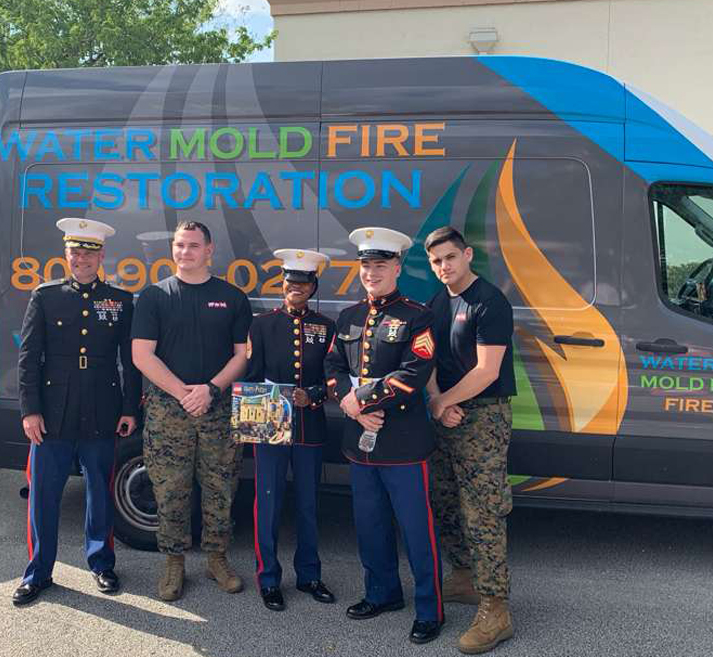
 Community & Military Support