Property Restoration in Minneapolis, MN
Water Mold Fire Restoration of Minneapolis serves homeowners, condo associations, property managers and business owners across the Twin Cities and the surrounding suburbs. From the vintage duplexes and bungalows of Northeast Minneapolis to the American Foursquares of South Minneapolis, the Mill District lofts converted from century-old flour mills, the lakefront Tudors and Mediterranean Revivals around Lake Harriet and Bde Maka Ska, and the lake homes ringing Minnetonka and the western suburbs, the Twin Cities building stock is uniquely varied — and each era fails in uniquely different ways when water, mold or fire damage hits. Our local crews dispatch 24/7 from our facility on Central Avenue NE in Northeast Minneapolis, with response coverage across Minneapolis, Saint Paul, the inner-ring suburbs and the lake communities. We are IICRC Firm Certified — the firm-level certification from the recognized industry standards body for water damage, mold and fire restoration.
Why Minneapolis Properties Need a Local Restoration Company
Minneapolis's climate, infrastructure and building stock create restoration challenges no out-of-state franchise was trained to handle. The single largest driver of residential water losses in this market is something restoration companies in most of the country almost never see at Minneapolis intensity: frozen pipe bursts. When the Twin Cities drops below zero — as it did during the late January 2019 polar vortex (Minneapolis-Saint Paul International hit -28°F actual temperature with wind chills below -55°F), the February 2021 cold outbreak, and the January 2024 cold snap — supply lines in unheated basements, exterior walls of vintage Northeast Minneapolis duplexes, three-season porches in South Minneapolis bungalows and the lake homes around Minnetonka all freeze, expand and burst. A single half-inch supply line can release hundreds of gallons per hour, often while owners are out of town for the cold snap. Every Twin Cities polar vortex produces a week-long surge of burst-pipe water losses across the metro.
Minneapolis's other defining seasonal risks are ice dams in late winter and spring snowmelt flooding in March and April. Heavy snow on Twin Cities roofs combined with interior heat creates eave-line ice dams that force meltwater back up under shingles and into attics, ceiling cavities and upper-floor units — a recurring annual category we see at scale every February through April. Spring snowmelt overwhelms storm drains in neighborhoods like Marshall Terrace, Northeast Logan Park, the Como neighborhood near the U of M and along the Minnehaha Creek corridor, and pushes the Mississippi River up against Northeast and downtown riverfront properties. Summer brings severe thunderstorm wind events, recurring Twin Cities hail (the metro sits in the Upper Midwest hail corridor — multiple billion-dollar hail events have hit the region over the past decade), and the occasional derecho. Add the city's high water table, century-old housing stock with field-stone foundations, original galvanized supply pipe and cast-iron drain stacks still in service across pre-WWII Northeast and South Minneapolis, and you have a market where water, mold and fire restoration are year-round, not seasonal, problems.
Our Minneapolis Services
Our Minneapolis Credentials
Minnesota does not require a state-level license to perform water damage restoration, mold remediation, mold inspection or fire damage restoration — the state regulates building contractors and many trades, but does not license restoration specialties specifically. That means Twin Cities property owners have to evaluate restoration companies on the credentials that actually matter: industry certification and adherence to the published consensus standards.
IICRC Firm Certified. Firm-level certification from the Institute of Inspection, Cleaning and Restoration Certification — the recognized industry standards body for water damage restoration (industry standard IICRC S500), mold remediation (industry standard IICRC S520) and fire and smoke damage restoration (industry standard IICRC S700). Firm certification means the company itself operates under IICRC standards, not just individual technicians holding cards. IICRC Firm status is recognized by insurance carriers, indoor air quality professionals and the courts as the meaningful restoration credential where state licensure is not required.
Twin Cities Neighborhoods & Suburbs We Serve
Our Minneapolis crews respond throughout the Twin Cities and the inner-ring suburbs, including Northeast Minneapolis (Logan Park, Marshall Terrace, Sheridan, Audubon Park, Windom Park, Holland, Bottineau, Beltrami, Columbia Park, Waite Park, St. Anthony East and West), Downtown, North Loop, Mill District, Loring Park, Stevens Square, Uptown, Whittier, Lyn-Lake, the Wedge, Powderhorn, Phillips, Cedar-Riverside, the University of Minnesota area, Como, Prospect Park, Seward, Longfellow, Nokomis, Linden Hills, Lake Harriet, Bde Maka Ska, Kenwood, Lowry Hill, Bryn Mawr, Camden, Near North, Folwell and the South Minneapolis bungalow belt. Across the river: downtown Saint Paul, Summit Hill, Macalester-Groveland, Highland Park, Crocus Hill, Como, Frogtown, Saint Anthony Park, Hamline-Midway and the East Side. Suburban coverage includes Edina, Saint Louis Park, Bloomington, Eden Prairie, Minnetonka, Wayzata, Plymouth, Maple Grove, Brooklyn Park, Roseville, Richfield, Eagan, Burnsville, Apple Valley and Woodbury, plus the lake communities around Lake Minnetonka, White Bear Lake and Forest Lake.
Contact Water Mold Fire Restoration of Minneapolis
Water Mold Fire Restoration of Minneapolis1920 Central Avenue NE
Minneapolis, MN 55418
651-395-7036 · minneapolis@watermoldfire.net
24/7 Emergency Service
IICRC Firm Certified
 IICRC Certified Firm
 Satisfaction Guaranteed!
 24/7 Emergency Service
 Expert Technicians
 Direct Insurance Billing
 Unsurpassed Customer Service
 No Damage We Can’t Manage!
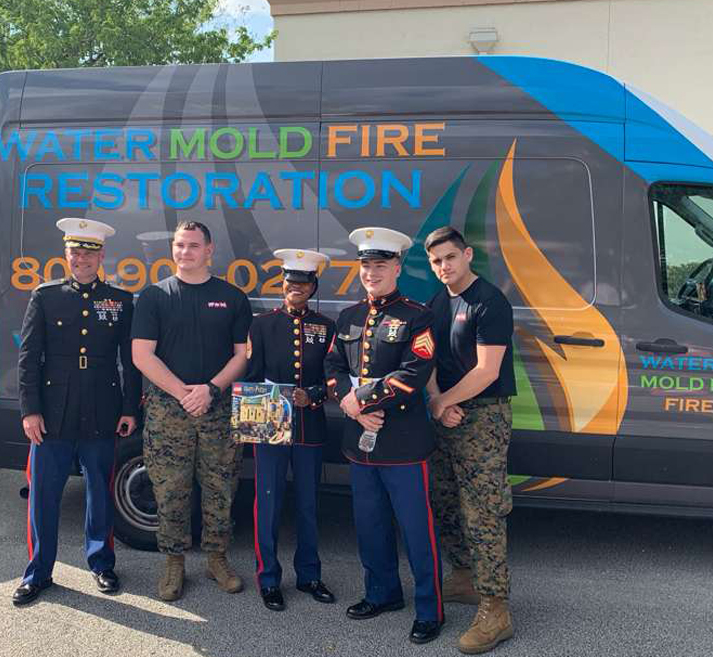
 Community & Military Support